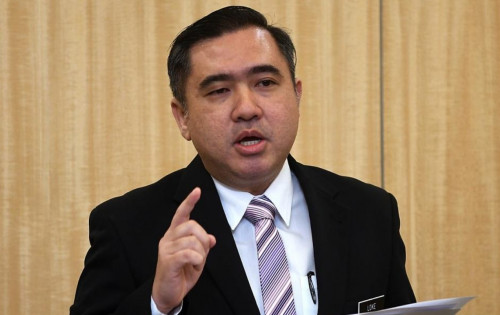
COMPANIES must become more dynamic and offer fairer, higher wages to ensure economic growth translates into better living standards and stronger disposable incomes for Malaysians, Deputy Finance Minister Liew Chin Tong said.
He said wage growth and stronger corporate performance were among the most important factors in ensuring the benefits of economic expansion reached more people.
"Translating economic growth into people's well-being requires various approaches, including assistance.
"This means we need more dynamic companies that can pay higher wages, as this is the most important factor," he said during the oral question-and-answer session in the Dewan Rakyat today.
He added that the government had raised the minimum wage, while government-linked investment companies (GLICs) and government-linked companies (GLCs) would increase their wage levels from RM3,100 to RM3,400.
Liew was responding to a supplementary question from Mohd Syahir Che Sulaiman (PN-Bachok), who asked whether cash assistance and subsidies were sufficient to improve the financial position of lower-income households.
On the country's fiscal position, Liew acknowledged that public finances faced significant challenges this year amid what he described as the most serious global economic shock since the 2008 financial crisis.
However, he said various government intervention measures, including the Budi MADANI RON95 (BUDI95) programme, had helped cushion the impact of rising fuel prices.
He also called for a broader parliamentary debate on the country's taxation framework, including proposals to reintroduce the Goods and Services Tax (GST).
Liew said the existing Sales and Services Tax (SST) system involved about 130,000 companies collecting taxes on behalf of the government, compared with an estimated 900,000 companies that would be required under GST.
He was responding to a supplementary question from Mohd Sany Hamzan (PH-Hulu Langat) on the possibility of bringing back GST.
In his reply to the original question, Liew said economic growth alone was insufficient to determine whether national prosperity was translating into improved public well-being.
He said strong economic performance reflected achievements at the macroeconomic level while providing a foundation for broader socioeconomic improvements.
A resilient economy could raise real incomes, strengthen purchasing power and improve household living standards, he said.
Economic expansion and investment also created employment opportunities and increased workers' income potential, while giving small businesses and self-employed individuals greater opportunities to grow their earnings.
He added that stronger economic activity would also improve the government's fiscal capacity to provide public services, financial assistance and subsidies to ease the cost of living.
Meanwhile, forty-six employers have been prosecuted for failing to pay workers the prescribed RM1,700 minimum monthly wage, following nationwide enforcement inspections that uncovered 204 employers in violation of the law.
Deputy Human Resources Minister Datuk Khairul Firdaus Akbar Khan said the Labour Department conducted 28,259 inspections at employers' premises across various sectors, including micro businesses, as of Aug 31.
He said 128 investigation papers were opened over the violations, resulting in 46 prosecutions and fines totalling RM56,900.
"Of the 28,259 inspections conducted up to Aug 31, 2026, a total of 204 employers were found to have failed to comply with the Minimum Wages Order 2024, and compliance notices were issued for corrective action," he told the Dewan Rakyat.
Among those prosecuted were a manufacturing company fined RM8,000 and a services company fined RM24,000 for paying workers below the statutory minimum.
Khairul Firdaus was responding to Datuk Abdul Khalib Abdullah (PN-Rompin), who sought clarification on employers' compliance with the minimum wage requirement and enforcement measures involving rural micro businesses facing rising operating costs.
He said the Labour Department had also received 264 complaints involving minimum wage violations, of which 233 had been resolved, with 185 found to have merit.
Separately, 585 labour cases were recorded, with 477 resolved and payment orders amounting to RM894,646.73 issued.
The Minimum Wages Order 2024, which took effect on Feb 1 last year, sets the minimum monthly wage at RM1,700 for private sector employees regardless of industry or business size.
On the planned increase to RM2,000 from June 1 next year, Khairul Firdaus said micro, small and medium enterprises with annual sales below RM50 million would be exempted.
The exemption, announced under Budget 2027, is intended to protect smaller businesses from financial pressures while ensuring the sustainability of the higher wage policy. - November 23, 2026