
KUALA LUMPUR – The various Covid-19 stimulus packages announced by the government thus far seem more focused on immediate and interim measures than longer term ones, says a study by the Institute for Democracy and Economic Affairs (Ideas).
In a policy paper titled Post-Covid-19 Recovery: Building SME Resilience tabled and presented by its director of research Laurence Todd at a webinar today, Ideas said although these short-term solutions are timely and helpful in preventing a far more severe economic collapse, they are insufficient for a more sustainable long-run recovery and resetting of the economy.
“These packages comprised mainly of stopgap measures, as the bulk of the allocations were aimed at job and income protection,” it said.
Ideas pointed out that based on its ‘3R Framework’ – respond, recover and reset – measures taken by the government mainly focus on responding, which it described as solving immediate issues to maintain employment security and business resilience to offset economic shock.
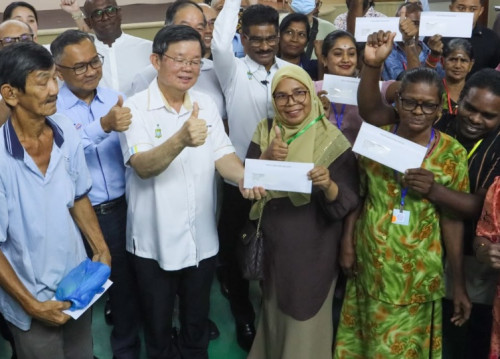
Examples of these actions are cash transfers and wage subsidies.
However, little attention is given to recovering. This refers to measures that help businesses and individuals revive and rebound amid market changes, including by reskilling and offering loan options.
Similarly resetting, which entails reconstructing and repositioning SMEs to build resilience via investment in automation and digitalisation among others, has also not been given due focus.
“Besides that, there have been concerns on the effectiveness of the stimulus packages in helping businesses survive. Hence, future policy direction should focus on the long-run economic recovery strategies," it said.
To date, six stimulus packages amounting to RM320 billion have been announced by the current and previous governments.
The latest of these is the RM15 billion Malaysian Economic and Rakyat’s Protection Assistance Package (Permai), which was detailed by Prime Minister Tan Sri Muhyiddin Yassin on January 18.
Ideas’ policy paper pointed out that the Covid-19 pandemic has helped to highlight structural challenges within the country’s economy, including gaps within the policy frameworks that have impeded growth.
For one, it highlighted the need for the government’s crisis-response measures to be addressed to better prepare for future crises. It noted that many of the current measures may not have benefited the majority of SMEs due to implementation gaps.
Among other things, there have been delays in the disbursement of cash subsidies; disbursement of capital relief funds may have been skewed towards existing customers of private banks; and untargeted cash subsidies mean that most of the credits may have been spent on larger and notable brands – not SMEs.
Focus on automation, digitalisation needed
Another policy framework that requires improvement is the public policy nudge towards automation and digitalisation, which Ideas claims needs to be matched with current industry needs and capabilities.
It noted that SMEs may not have fully benefited from the government’s initiatives on this front due to limitations in capacity and available talents in the field, with grants and loans aimed at the fourth industrial revolution targeted more towards high-tech projects that SMEs would not normally have the technical skills to undertake.
Initiatives to get retailers onto e-commerce have also not accounted for major costs and skills needed for a sustainable pivot towards digitalisation.
Additionally, there has been a lack of effective communication between policymakers and industry stakeholders.
Ideas said another gap within the government’s policy framework is that regulatory reforms, which it said is needed to increase adaptability of industry players to all situations.
For instance, it points out that lack of coordination between federal and state governments has resulted in long waiting time for project approvals. There are also burdensome guidelines on obtaining necessary licenses, which has de-incentivised businesses to formalise. – The Vibes, January 27, 2021