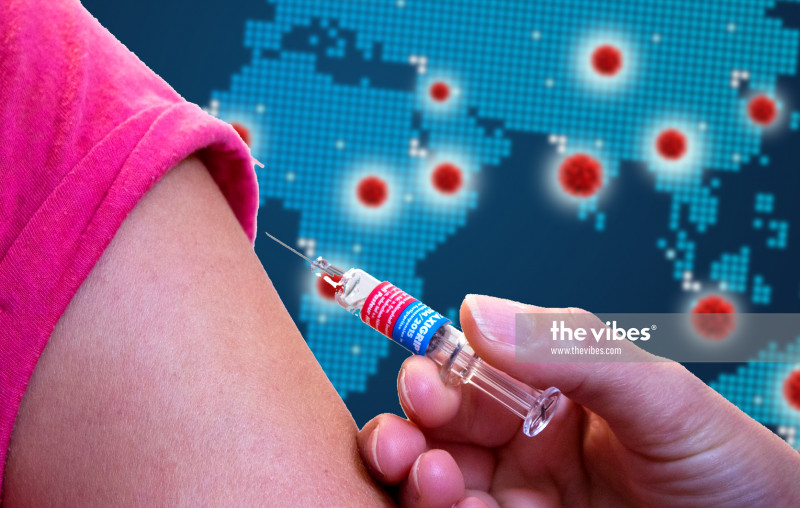
KUALA LUMPUR – The government has been urged to introduce halal certification for Covid-19 vaccine to avoid quarters from doubting its halal status and using it as an excuse to refuse the vaccination.
Malaysian Pharmacists Society president Amrahi Buang said the issue of Covid-19 vaccines being halal should not be disputed as currently most of them contain no animal-derived ingredients, with some already certified halal in other countries.
“As such, we can ascertain the vaccine is halal, the next step is to introduce the halal certification... if we do that, it is better, and this can be done by Pharmaniaga or Duopharma, which are responsible for obtaining and supplying the Covid-19 vaccine doses for the country,” he said in the programme Koresponden broadcast live on Bernama TV today.
He said the Pfizer Covid-19 vaccine sold under the brand name Comirnaty, for example, is developed using a new technology known as the messenger ribonucleic acid (mRNA), and contains no animal-derived ingredients.
As for the Covid-19 vaccine produced by Chinese pharmaceutical company Sinovac, he said it had been certified halal by the Indonesian Ulama Council, with authorities from the republic having gone to China to see for themselves the contents of the vaccine.
He said Minister in the Prime Minister’s Department (Religious Affairs) Datuk Seri Zulkifli Mohamad Al-Bakri had recently announced that the Special Muzakarah Committee of the National Council for Islamic Religious Affairs (MKI), which convened its meeting last December 3, had agreed that the use of the Covid-19 vaccine is compulsory (wajib) for groups that have been identified by the government and permissible (harus) for others.
Amrahi said it is illogical to say that the Covid-19 vaccine that will be used in the country is not safe as the safety aspects of taking the Covid-19 vaccination have always been given priority by the government.
“Any vaccine that is brought into the Malaysian market must be registered and approved by the National Pharmaceutical Regulatory Agency (NPRA)... whereby, in the registration process, three things have to be complied with: quality, safety and effectiveness.
“Like any medicines, including vaccines, when it enters the body, the acceptance and response of every individual is different... that is why, monitoring of the side effects is necessary, and it should be reported to the NPRA if there are adverse effects of the vaccine,” he added. – Bernama, February 11, 2021