
KUCHING – Two politicians in Sarawak disagree when it comes to the herd immunity target in August.
“Yes, it is doable,” said Aspirasi Parti president Lina Soo, although Bukit Assek assemblyman Irene Chang of DAP begged to differ.
“Simple maths will tell us that it is impossible to achieve the target of vaccinating 70% of Sarawak’s population by August to achieve herd immunity,” said Chang.
Soo, on the other hand, said it is not an “overzealous plan” by the state to set a target for vaccinating 70% of its population by August.
She lauded the state government for this initiative, saying it can be done, and flexed some numbers to prove her point.
“Our population is small, 70% is only about two million Sarawakians.
“So yes, it is achievable,” Soo told The Vibes, adding that the government “must target to vaccinate two million Sarawakians”.
“If not, life cannot return to normalcy.”
However, Chang, also crunching some numbers, told The Vibes: “I understand that to achieve herd immunity against Covid-19, at least 70-80% of the population in the state needs to be vaccinated.”
Quoting an online survey conducted on February 18 by state Assistant Housing and Local Government Minister Annuar Rapaee, she said it was revealed that only some 44% of the respondents agreed to be vaccinated.
“More than half are either indecisive or disagreed to participate in the vaccination programme,” she said.
Assuming that the online survey was not exclusive to Sarawakians, then the percentage falls even far less than the minimum requirement of 70%.
“Also, in Sarawak, around 45% of the population live in rural areas. That leaves around 55% in urban areas.
“Simple math will tell us that it is impossible to achieve 70%, because the survey only involved those with access to the internet, which means it only asked those in urban or semi-urban/rural areas.
“The state government will need to do a lot more work to educate and spread awareness on the efficacy of the vaccine in order to get at least 90% of the people in urban areas on board the vaccination programme,” she said.
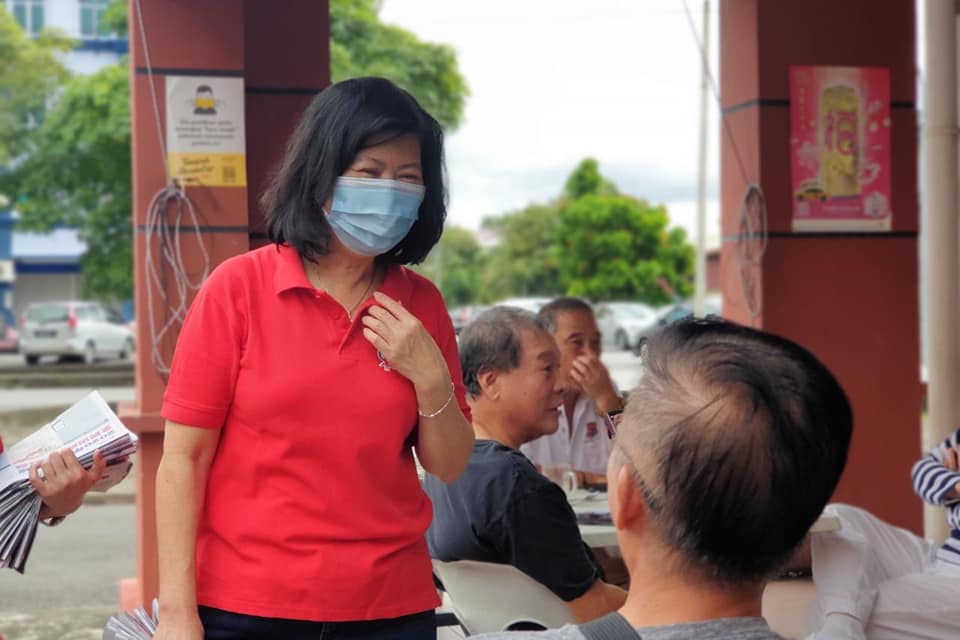
Chang said there are also logistical problems with reaching the interior, as the vaccine needs to be preserved under certain conditions.
“Assuming that the 70-80% includes those in the rural areas, what is the government’s plan to include these them in the inoculation programme?”
Choice of vaccine
Meanwhile, Soo said the state government must not force the vaccine on those who are reluctant to take it.
“The people have to be fully informed and make informed decisions without coercion, as this will go against the grain of human rights.”
She added that since there are two types of vaccines available, people must be allowed to choose the one they prefer.
“Both types of vaccines, the conventional one formulated from the inactivated virus and the latest mRNA-type, must be made available for people to choose.
“This option should be made available for those who wish for a choice, even if they are required to pay for being selective.” – The Vibes, February 25, 2021