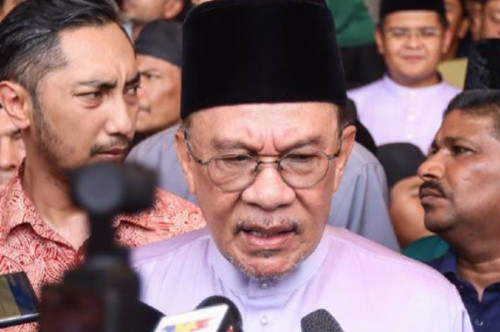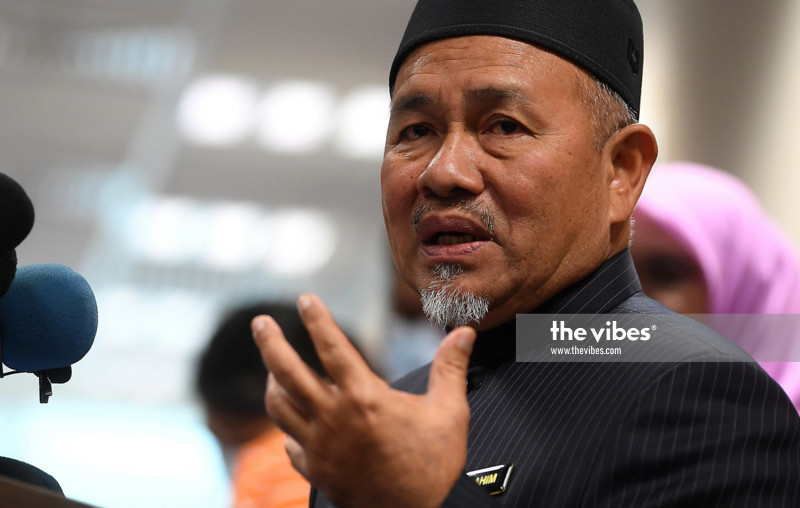
IPOH – Building a joint water treatment plant (LRA) in the main river basin between neighbouring states can save construction costs and help treat raw water into clean water supply for the people, said Environment and Water Minister Datuk Seri Tuan Ibrahim Tuan Man.
In fact, he said this is among his ministry’s suggestions to make optimal use of river water, rather than just letting it flow into sea.
“We have this idea to have neighbouring states share the LRA so clean water can be supplied to both states.
“If one LRA can supply clean water to two states, we can definitely save costs. But of course, this needs further discussions at the state level,” he told reporters attending the launch of the state-level World Water Day by Perak Mentri Besar Datuk Saarani Mohamad at the Amanjaya Convention Centre here today.
The minister said any two neighbouring states can discuss this matter among themselves, and the ministry is ready to offer consultation and support needed for the construction of the LRAs to ensure a win-win situation for all quarters.
In his speech earlier, Tuan Ibrahim said two of the three project packages for the construction of the Regional Sewage Treatment Plant and Sewerage Pipeline Network in Papan, Kinta, worth almost RM2 billion, are expected to be completed by November this year.
He said the packages include the construction of a 157km sewerage pipeline, 14 pump stations, and one regional sewage treatment plant with a capacity to cater to 1.5 million people.
“Through this project, 277 small-scale LRAs around Ipoh will be closed, which will inadvertently prevent water pollution due to wastewater discharge.
“I would also propose that the state government look into potential collaboration with Indah Water Konsortium and Perak Water Board in implementing joint billing and sustainable water recycling project for industrial purposes,” he explained.
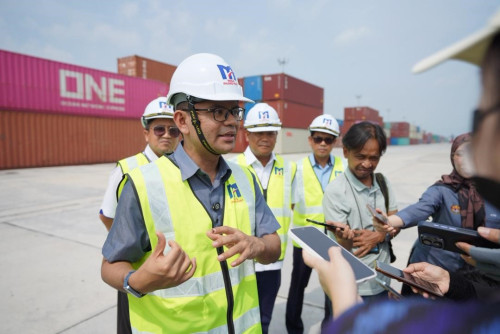
In another development, Tuan Ibrahim said Malaysian authorities will order a container ship from the United States, which is suspected of trying to illegally bring plastic waste into the country, to return to the US once documentary and physical inspections are completed.
He said the detailed inspections will be carried out on the ship in accordance with the Basel Convention.
“When the ship docks at Port Klang, we will carefully check the condition of the plastic waste in the container.
“We will also inform the competent authority in the US on the import of plastic waste and whether the waste was contaminated with scheduled waste or chemicals, before sending them back to the country of origin,” he said.
Two days ago, Tuan Ibrahim was reported as saying that the Environment Department, the authority in the control of cross-border plastic waste under the Basel Convention, which came into effect on January 1, 2021, found there are no applications for the import of plastic waste received from the exporting country.
In principle, the Basel Convention allows the movement of hazardous waste across borders only if the exporting country does not have the facilities to properly treat and dispose of it or if the hazardous waste is required as raw material for recovery or recycling in the importing country. – Bernama, March 22, 2021