BUKIT MERTAJAM – The Penang government has called on Putrajaya to intervene in the state’s water dispute with Kedah.
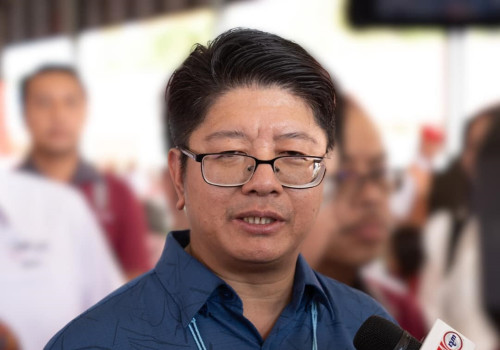
Chief Minister Chow Kon Yeow said he hopes the ministry involved will play its role to safeguard the public’s interest with regard to the issue.
“We (Penang) really hope that the ministry responsible will do its part and look into what has been proposed or announced (by Kedah Menteri Besar Muhammad Sanusi Md Nor) so as to safeguard the interests of all parties.
“In fact, we are not preventing Kedah from building any dams or other structures to store water in efforts to prevent floods or (for the purpose of) water treatment, but they (Kedah) need to remember that the same rights exist for other states, based on the principle of riparian rights… this is what we are fighting for,” he told a press conference here today.
He was asked to comment on Penang’s plan to take legal action against the neighbouring state should any project involving Sg Muda threatens its own water supply.
Chow said Sanusi’s statement on the possibility of Penang getting “muddy water” from Sg Muda if it refuses to pay raw water charges to Kedah disrespects the principle of riparian rights.
On Wednesday, the menteri besar was reported as saying Kedah plans to implement a riverside water catchment project, involving the construction of tanks, to stabilise Sg Muda’s level during the dry season.
He said barrages will also be built to stabilise the river’s level to ensure water concessionaire Syarikat Air Darul Aman Sdn Bhd’s pumps are not rendered inoperable when the level drops.
Sanusi said Kedah has never closed its doors to Penang when it comes to water negotiations, and welcomes discussions to set the rate for raw water charges.
The next day, Chow said Penang will seek legal action against Kedah if the latter’s project involving Sg Muda threatens his state’s water supply.
Penang relies on Sg Muda for its raw water needs, drawing supply from where the river flows from Kedah through the state’s mainland areas.
Riparian water rights involve a system for allocating water to those who possess land along the source’s path. It has its origins in English common law. – Bernama, March 27, 2021