_Petaling_Jaya_-_AZIM_RAHMAN_3.jpg)

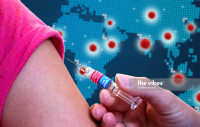
KUALA LUMPUR – The handful of Covid-19 vaccines currently being administered and considered for use are effective against the SARS-CoV-2 virus and its emerging mutating strains, such as the UK-detected B.1.1. and the South African-detected B.1.351.
The vaccines are also effective against the newer strains – B.1.470 and B.1.160 – recently recorded in Sarawak, said a Malaysian epidemiologist.
Speaking to The Vibes, University Putra Malaysia’s Dr Malina Osman said: “Based on current and latest data, studies have shown that the available vaccines are effective against all these variants.”
Malina, who is associate professor in epidemiology and biostatistics in the varsity’s Medicine and Health Sciences’ Faculty’s Medical Microbiology Department, said so far, no study has proven the failure of any of these vaccines against any strains of the virus.
When asked if these vaccines can also prevent reinfection, she said, while she does not have data on this, to her understanding, those who have been vaccinated will be protected from Covid-19.
“Should it (reinfection) happen, the symptoms themselves will not be severe, and there will be less serious complications.”
On whether she foresees the emergence of newer variants and continued initiatives towards developing more potent vaccines, she said scientists are continuing their research to produce vaccines relevant to the current circulating SARS-CoV-2 strains in the community.

“We have observed earlier, for example with influenza vaccines, every year, they produce a new type of vaccine because the circulating influenza strain mutates and has a different make-up compared with strains detected the previous year.
“We are currently dealing with a historic pandemic where entire bodies of scientists and clinicians globally are sharing information related to it, not only from the point of scientific information related to the virus and outbreaks, but also on the genetic sequence of the virus in order to keep working on vaccines.
“Preventive measures related to public health have also been carried out with up-to-date policies internationally. It is with these kinds of initiatives that we hope to end the war against Covid-19 globally.”
Malina added that if everybody complied strictly with health standard operating procedures and other guidelines, as well as register to be vaccinated, the pandemic could be eliminated by early next year.
On whether Malaysia’s vaccination programme is on the road to achieving herd immunity, she said: “As an epidemiologist, I would say yes and am confident.
...we face many challenges to public acceptance due to information on social media that confuses the public and causes them to adopt a less serious attitude towards participating in the vaccination campaign.
“However, on the field, we face many challenges to public acceptance due to information on social media that confuses the public and causes them to adopt a less serious attitude towards participating in the vaccination campaign.
“Policymakers have provided proper channels to allow public participation. I hope stern action can be taken against those who spread lies on vaccines and the vaccination programme.
“We also have to utilise the available resources to help the registration process and expedite the vaccination activity. This can be done by involving private clinics and hospitals, universities clinics, and through collaborations with other ministries, workplace management and public amenities.”
The National Covid-19 Immunisation Programme started on February 24. To date, 893,032 doses have been administered with only about 1% of the population fully vaccinated, while 546,762 have received at least one dose.
Just 33.9% of the population are registered for the vaccination programme through the MySejahtera app. At least 80% of the population needs to be vaccinated to achieve herd immunity.
The vaccines currently approved for use are from Pfizer-BioNTech and China’s Sinovac Biotech. The Russian-made Sputnik V, UK’s AstraZeneca and China’s CanSino vaccines are awaiting approval from the National Pharmaceutical Regulatory Agency. – The Vibes, April 9, 2021