
KOTA KINABALU – “Unwritten arrangements” between the Immigration Department and employers are said to be the reason why it is possible for non-expatriate migrant workers to bring along their families to Sabah.
This is despite the practice being expressly prohibited in their work permits, said the state chapter of the Malaysian Trades Union Congress (MTUC).
The issue gets worse when they start having children in the state, Sabah MTUC secretary Catherine Jikunan told The Vibes.
“For migrant workers earning below RM5,000 a month, in their offer letters and work permits, it is stated that they cannot bring their families here, and they cannot get married in Malaysia.”
Work permits for migrants fall under the purview of the Immigration Department.
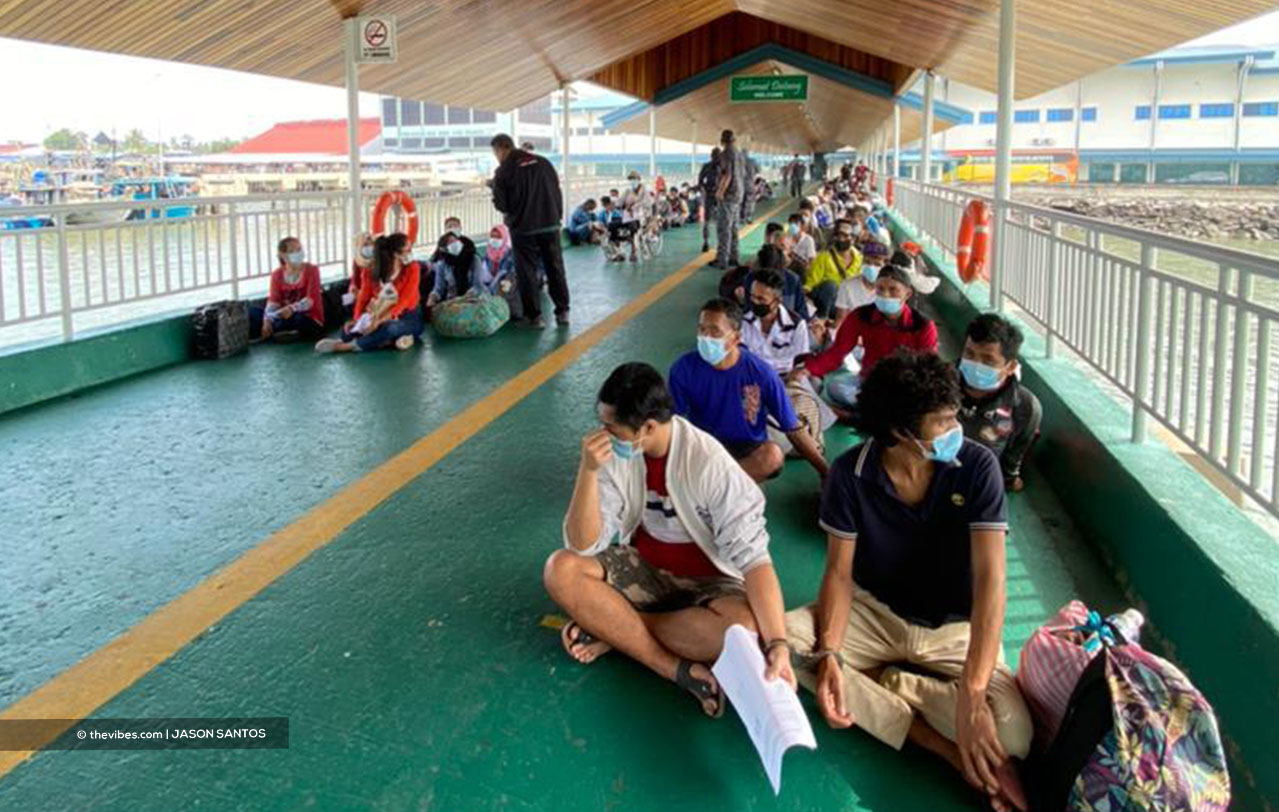
Only those earning above RM5,000 per month and professional expatriates are allowed to bring their families to live with them in Sabah.
However, many of the state’s migrant workers in 3D – dirty, dangerous and difficult – sectors, such as plantation and construction, who earn less than RM5,000, have families staying with them.
These family members can be seen at workers’ quarters in palm oil estates, timber camps and construction sites.
It is understood that some of their children have given birth in Sabah, either at hospital or at home, raising the issue of nationality.
Jikunan said there have been discussions with local authorities to raise these workers’ income above RM5,000, but employers are not giving a positive response.
“We discussed the matter of the Sabah Labour Ordinance, and we proposed that monthly salaries be raised to between RM5,000 and RM10,000.
“But the response was not what we had expected. Besides, locals will want these jobs if such salaries are offered, and there will be no need for employers to hire migrants.”
She said the process of hiring migrants is difficult, and obtaining a work permit requires the endorsement of the Immigration Department and Sabah Labour Department – both of which have different sets of policies.
There is also the possibility of employers hiring both husband and wife, or the workers getting married and having children here, she said.
This makes the situation more complicated, said Jikunan, adding that some employers do not inform the authorities about such cases.
“Maybe the employers are also unaware and did not check on what’s happening among their migrant workers, who may already have many children in Sabah.
“This is a clear violation of their work permits, and the employers are supposed to repatriate them.”
She said many of them are still “hiding” at their workplace.

Former Indonesian vice-consul general Darmawan Purba said Sabah has no right to regulate the republic’s nationals, and that his countrymen must first adhere to Indonesia’s immigration law.
The Malaysian government cannot regulate Indonesian migrant workers via hiring schemes, as some work permits last over a decade, he said.
“Foreign workers risk losing their nationalities if the Malaysian and state governments continue to introduce such schemes.”
He said Sabah should grant them permanent resident status, and that some of his countrymen have overstayed in the state, along with their families, for over 20 years.
Under the Sabah Labour Ordinance Cap 67, he said, foreign workers are not allowed to get married while still under contract, or bring their wives and children to the state.
There is no Philippine consular office in Sabah, with a mobile consular office being the only option for Filipino migrants to renew their passports. – The Vibes, May 15, 2021