
KUALA LUMPUR – Putrajaya’s order for a probe into a Mandarin news segment on state broadcaster RTM for using the term “militant” to describe Hamas is raising questions about government intervention in the media.
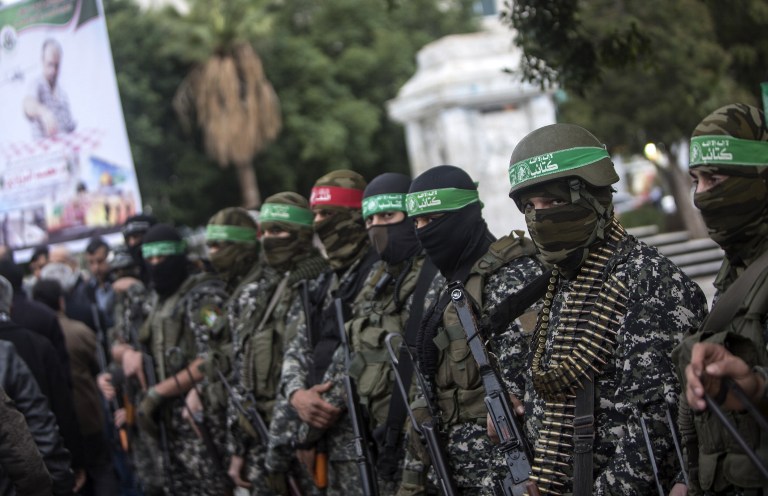
While not many would agree with attempts to classify the Palestine Islamic Resistance Movement as a militant group, this is not the first time the word “militant” or “terrorist” has been used to describe Hamas.
Canada, the European Union, Japan and the United States have classified Hamas as a terrorist organisation, while Australia, New Zealand, Paraguay and the United Kingdom have only categorised the organisation’s military wing as terrorists.
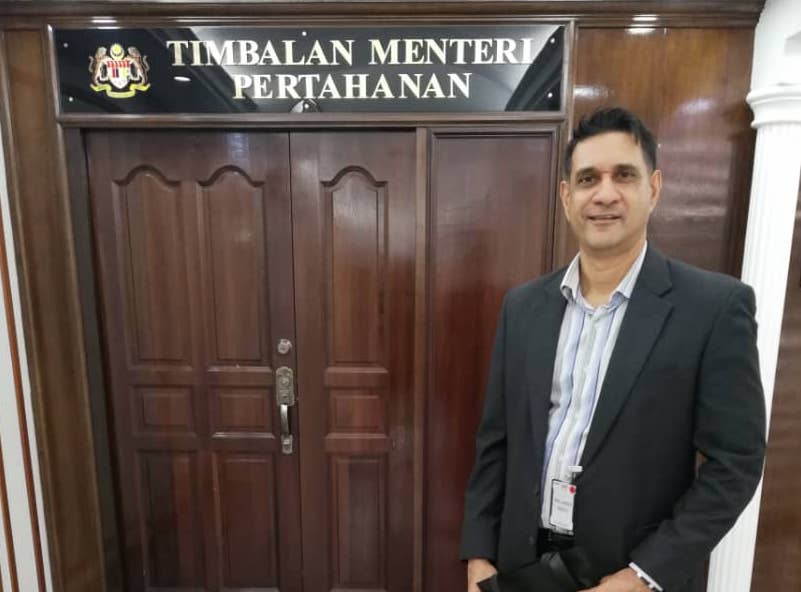
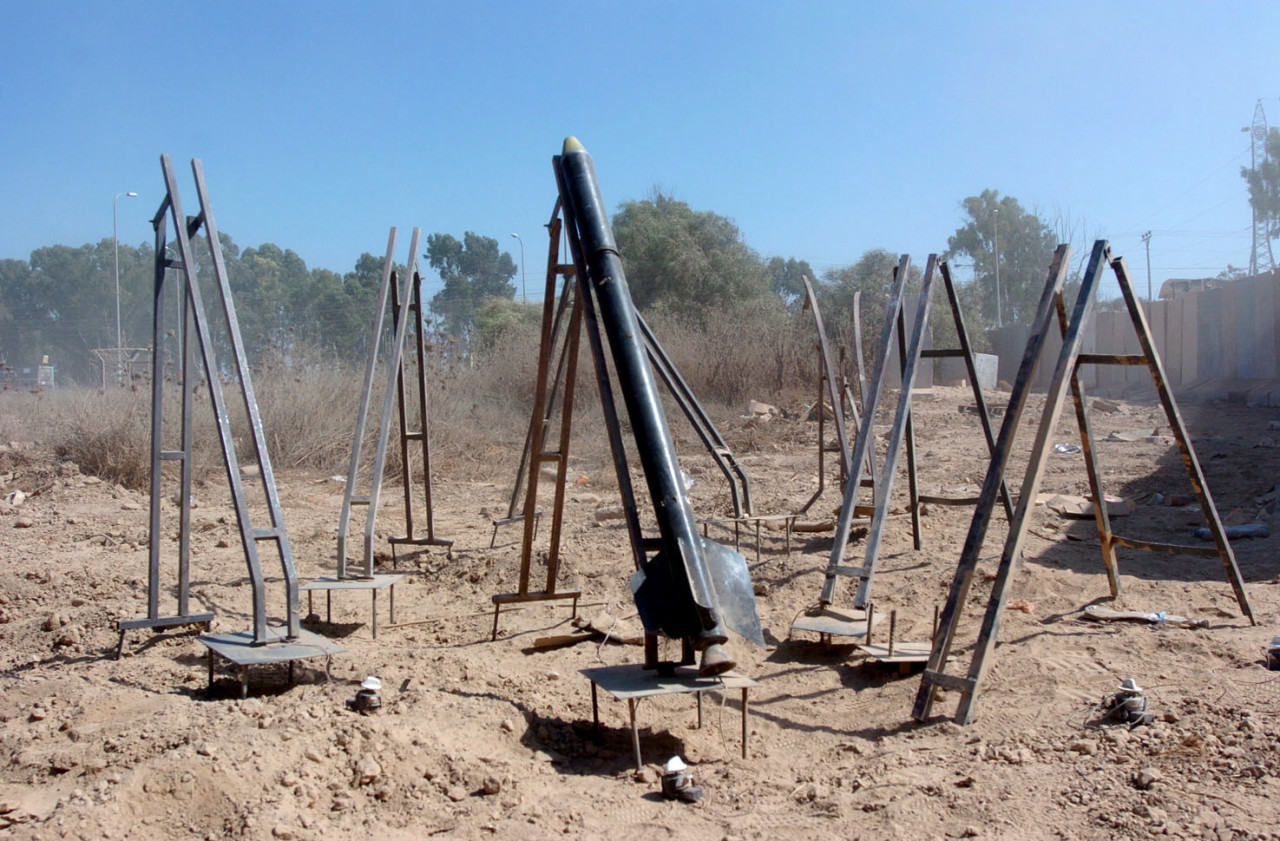
Andrin Raj, director of the Nordic Counter-Terrorism Network, and adviser and associate of the Security and Violent Extremism Research Centre, University of Indonesia, said Hamas is made up of two wings – a political arm and a militant one.
“Malaysia’s foreign policy since the era of former prime minister Tun Dr Mahathir Mohamad has been in support of Palestine due to the fact that it is a Muslim state.
“Malaysia’s leniency towards Hamas is more focused on its politics.
“Malaysia does not support the terrorist organisation of Hamas,” said Andrin.
While it is fine for governments to support a peace process or political arm requesting assistance for a resolution, he said it is crucial in the context of the Israel-Palestine conflict for Malaysia to understand the duality of Hamas.
Andrin said both Hamas’ arms are intertwined and work together.
“When it comes to politics, it tends to separate itself to make it easier to identify the good and bad boy.
“The issue here is how does Malaysia identify both. This is a political issue.
“We, as a counter-terrorism centre, are of the view that countries need to adhere to the international conduct of recognising armed groups as a terror group under the United Nations Security Council.
“Malaysia being part of the United Nations, has to adhere to certain security protocols.”
Legitimacy of support between Hamas and Tamil Tigers
As to whether there is a disconnect on how the Malaysian government views Hamas and its supporters, against, for example, supporters of the Liberation Tigers of Tamil Eelam (LTTE), Andrin cautioned it is important to first draw distinctions.
In 2019, 12 men, including two lawmakers, were charged in court for supporting the LTTE.
But before one analyses that decision to prosecute the 12 individuals, it may be crucial to understand what happened after the Tamil freedom fighting movement fell.
Andrin explained that, after the downfall of the LTTE, to assist the Sri Lankan government in the assimilation and rehabilitation process of former LTTE members, funding and assistance by NGOs was allowed by the Sri Lankan state.
This, Andrin said, allowed legitimacy for outside support of former LTTE members through the Sri Lankan government in support of their well-being, assimilation and rehabilitation.
“When the arrest took place, the press did not identify if they (the LTTE 12) were a legitimate organisation supporting reassimilation of former LTTE members in support of the Sri Lankan government.
Malaysia considers Hamas a political organisation, and (it) has never done attacks on Malaysian soil.”
“All the press mentioned was that they were LTTE supporters, which may cause people to think they are supporting terrorism,” Andrin said.
Further, it is important to draw a distinction between Hamas and LTTE in the context of Malaysia, given the latter has been associated with attacking a former Sri Lankan ambassador to Malaysia.
“The Sri Lankan ambassador was attacked at a Malaysian airport. Whether the attacker was an LTTE supporter, sympathiser or member, it was never mentioned,” Aldrin said.
Thus, the difference between Hamas and LTTE, especially for the Sri Lankan and Malaysian government, is that the LTTE has performed an attack on Malaysian soil against a Sri Lankan official.
“Although I mentioned that Hamas’ political and militant wings are intertwined, Malaysia considers Hamas a political organisation, and (it) has never done attacks on Malaysian soil.
UNGA rejects application recognising Hamas as terror group
While there are countries that choose to recognise Hamas or its militant wing only as a terrorist group, Malaysia is not alone in its leniency towards the multi-dimensional organisation.
Brazil, China, Egypt, Iran, Norway, Qatar, Russia, Syria and Turkey do not see Hamas as a terror organisation.
In 2018, the United Nations General Assembly rejected an American application to recognise Hamas as a terror group.
Further, Palestine and Hamas are not the only players in this conflict, and Israel has not been entirely innocent either.
In addition to the 2015 US State Department’s Country Reports on Human Rights Practices recognising a problem of institutional discrimination against Arab-Israeli citizens (also identified as Palestinian) by Israel, the Jewish state still holds the West Bank as an occupied territory.
Similar to other ‘liberation movements’
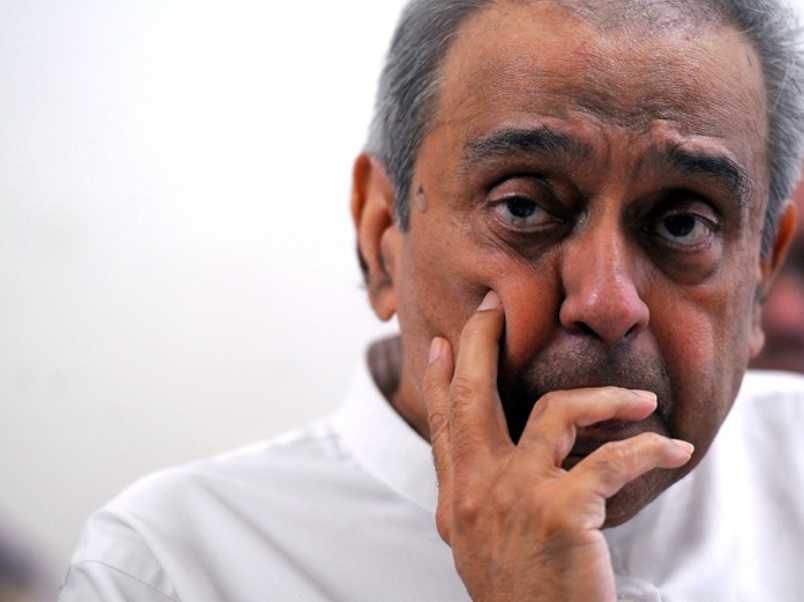
Sharing a similar view is International Movement for a Just World president Chandra Muzaffar, who said many do not agree with attempts to classify Hamas as a militant group.
This is especially so when put in the context of Hamas fighting for the liberation of its people.
“It is a liberation movement. There is the use of certain tactics that are questionable, but it applies to every liberation movement in history.
“They would refer, for instance, to the African National Congress (ANC) under Nelson Mandela, which also resorted to violence at some point.
“But no one would regard Mandela or the ANC as militant. They were basically fighting for the freedom and liberation of the people during apartheid,” Chandra told The Vibes.
He also suggested that it would be right to inquire why the Mandarin news segment used the term “militant”.
It would not be wrong to merely request an explanation, he said, especially because RTM is a government channel.
Govt’s interference in press freedom
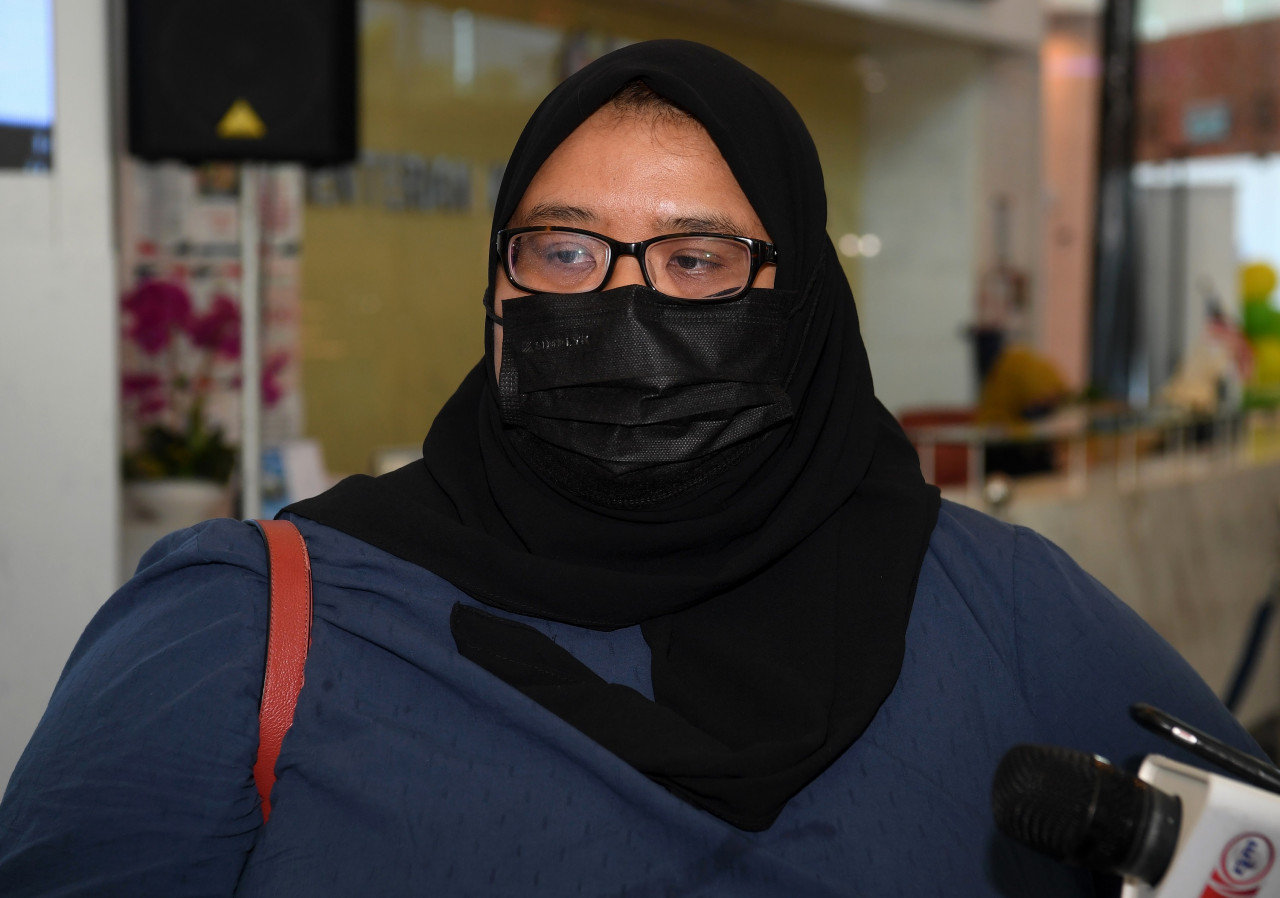
On whether such intervention by Putrajaya can be deemed interference of press freedom, National Union of Journalists president Farah Marshita explained it may only be to seek clarification.
However, Farah said the government should not seek to change the terminologies being used.
“It basically restricts press freedom and causes journalists to feel like they are being watched and dictated upon,” Farah told The Vibes.
However, she did acknowledge the situation as complicated, given the fact that RTM is a government-funded channel.
“This is where it gets tricky. They are funded by the government, and it is somewhat of a known fact that they are sort of like the mouthpiece of the administration, and they may have to do things according to who pays them.
“I am not saying it is okay, but we understand how it works. When it comes to other media, it should not be the case,” Farah added.
She went to explain that, regardless of who pays a journalist, the freedom to report is of utmost importance.
“In the end, it is the public who consumes the content,” she said. – The Vibes, May 18, 2021