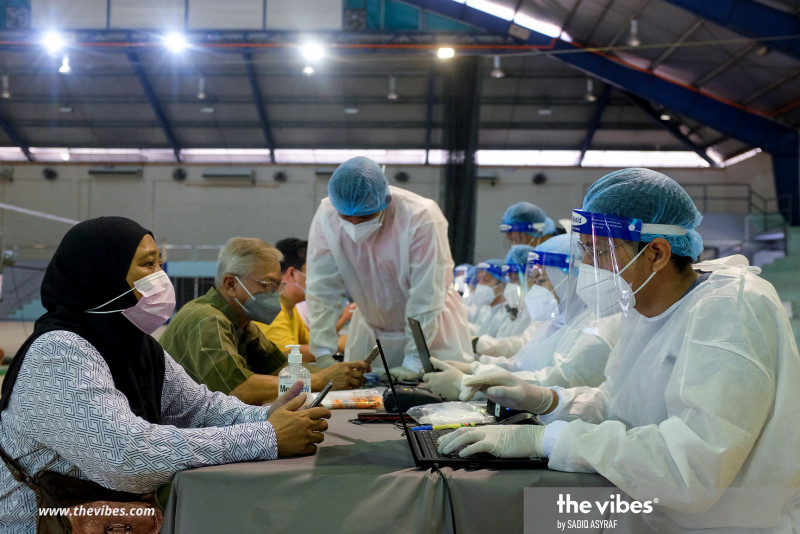

KUALA LUMPUR – As the struggle to contain Covid-19 shows no sign of abating, senior doctors and a former health minister are backing a call by the Malaysian Medical Association (MMA) to bring in housemen awaiting posting, medical students, nursing students and medical assistants with basic medical knowledge and training to aid the government.
MMA chairman Prof Datuk Dr Subramaniam Muniandy had last Sunday said the country’s health system is on the verge of collapse due to manpower shortages in the Health Ministry (MoH).
He had said that housemen, students and assistants can undertake documentation and contact-tracing work, thereby releasing senior doctors and nurses to treat patients.
Responding to the recommendation, senior consultant paediatrician Datuk Dr Amar-Singh HSS said the government should go a step further by harnessing graduate medical students who have performed well and are in their final year to provide assistance to Malaysia’s beleaguered public healthcare system.
“I agree with the call to rope in more manpower. I don’t think we should rope in students, but we graduate them immediately. Right now, their training has been in limbo for a while,” the retired government doctor told The Vibes.
The graduation of students of nursing and medicine, and those studying to be lab technicians and pharmacists, who are in their final year should be expedited, he added.
“The universities will know who are the weak students and not graduate them. The good students who have been assessed over the four- or five-year period should be graduated.
“They should then be given a job with MoH immediately. Much of our learning comes from work.
“I’m not compromising on the quality of the students, but we need all hands on deck to support this emergency, which has never been seen before, an emergency of biblical proportions.”
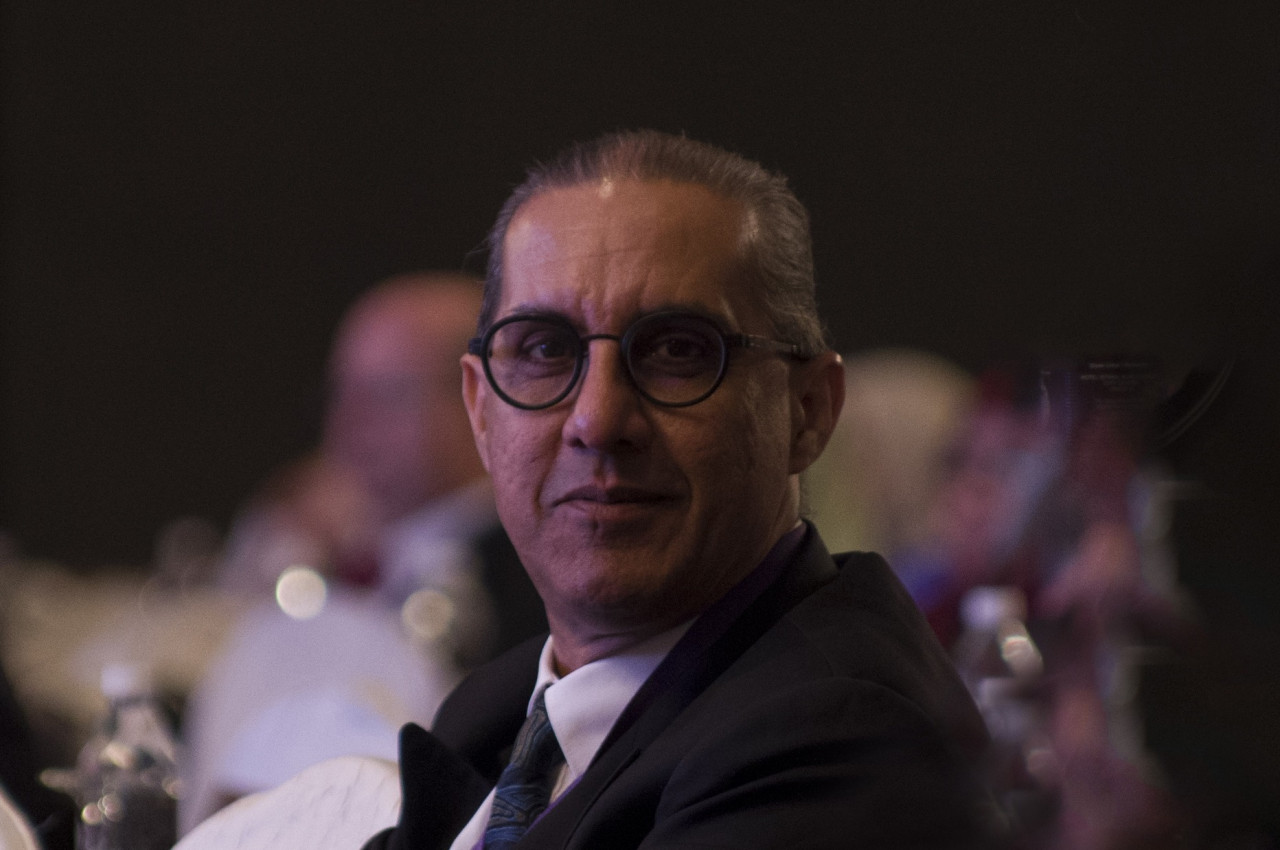
Dr Amar, who is former head of Clinical Research Centre Perak and RPB Ipoh Hospital’s Paediatric Department, also advised the government to stop giving doctors, nurses and other allied health workers contracts, and instead grant them full-time employment.
He said this is one way to give them hope, as many reports of contract doctors leaving their positions due to fear and exhaustion have surfaced.
He also called for new graduates to be given permanent jobs that can then inject a degree of hope into the system to combat the sense of anguish pervasive among medical workers.
Clinical immunologist Dr Amir Hamzah said it is a good idea to rope in medical students, but cautioned the government that training might cause a few hiccups at the start of the programme.
“I’m wondering if there’s enough numbers but I suppose every bit helps.
“But the question is: who is supervising them? We will need people to oversee them and ensure they won’t slow down the documentation process.
“A single, seasoned medical officer might be able to do the work of 10 housemen faster. So, there must be some training first. It may disrupt the process slightly (at the start), but I think it’s a good idea if there are many medical graduates who are in waiting.”
Make use of health NGOs
Similarly, former health minister Datuk Seri Dr Dzulkefly Ahmad said he concurred with MMA’s call to increase MoH’s human resources, especially for contact-tracing work, and managing the Covid-19 assessment centres (CACs) and low-risk coronavirus centres, such as the one at the Malaysia Agro Exposition Park Serdang (MAEPS).
He recommended that the government mobilise health NGOs to back the CACs and make them more efficient, as well as strengthen the finding, tracing, testing, isolation and support system through pop-up testing booths and drive-in facilities in virus hotspots.
“The CAC model needs serious reappraisal to make it more efficient and avoid congestion. Mobilise general practitioners and other health NGOs to do the triaging in CACs.”
To reduce the volume of infected persons at the centres, he said Categories 1 and 2 patients should be home-monitored using existing digital tools, such as the internet of things.
“They must be monitored closely and effectively. Create a team dedicated to do home monitoring.
“MAEPS should be only for those who really have no choice (Category 3).”
Another private general practitioner, who requested anonymity, agreed with MMA in that students will be a great boon when it comes to documentation.
He shared his experience in treating a Category 3 patient who sought medical assistance at Tung Shin Hospital, and how the documentation process, coupled with transferring the patient to Kuala Lumpur Hospital (HKL), had taken hours.
“There’s a lot of paperwork. All you need is one case and it takes up your time.
“I had one patient in Tung Shin; he came in at midnight, and his condition was so bad I called up the specialist. From what he told us, we knew he needed to be intubated and ventilated.
“That one case kept me awake the whole night as I tried calling every hospital in Kuala Lumpur. Finally, the patient was sent to HKL at 1pm the next day. He was intubated at the ICU. He had to wait 13 hours.” – The Vibes, May 19, 2021