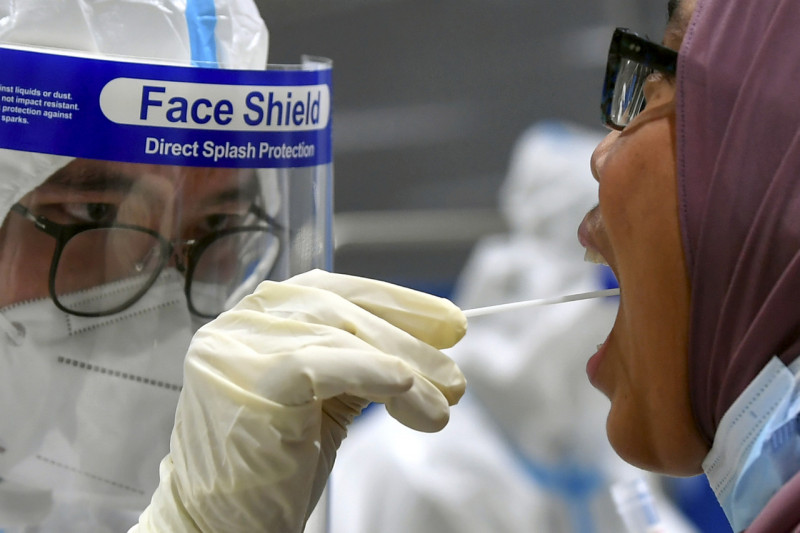
KUALA LUMPUR – The Health Ministry must explain the drop in Covid-19 testing last month compared with May, despite mass screening promises, said Kulai MP Teo Nie Ching.
The Johor lawmaker said prior to the full lockdown on June 1, Health Director-General Tan Sri Dr Noor Hisham Abdullah said the ministry will be doing targeted screening in the field using antigen rapid test kits (RTK-Ag).
Malaysia had screened 2,661,888 people in May, but only 2,491,232 in June, she said in a statement.
“The Health Ministry owes us an answer. Not only has the government failed to conduct mass screening, it also does not allow some elected representatives to conduct targeted mass screening.”
Teo alleged that the Batu Pahat Health Office has rejected applications filed by Parit Yaani assemblyman Aminolhuda Hassan (June 9) and Yong Peng assemblyman Chew Peck Choo (July 1) to conduct RTK-Ag testing.
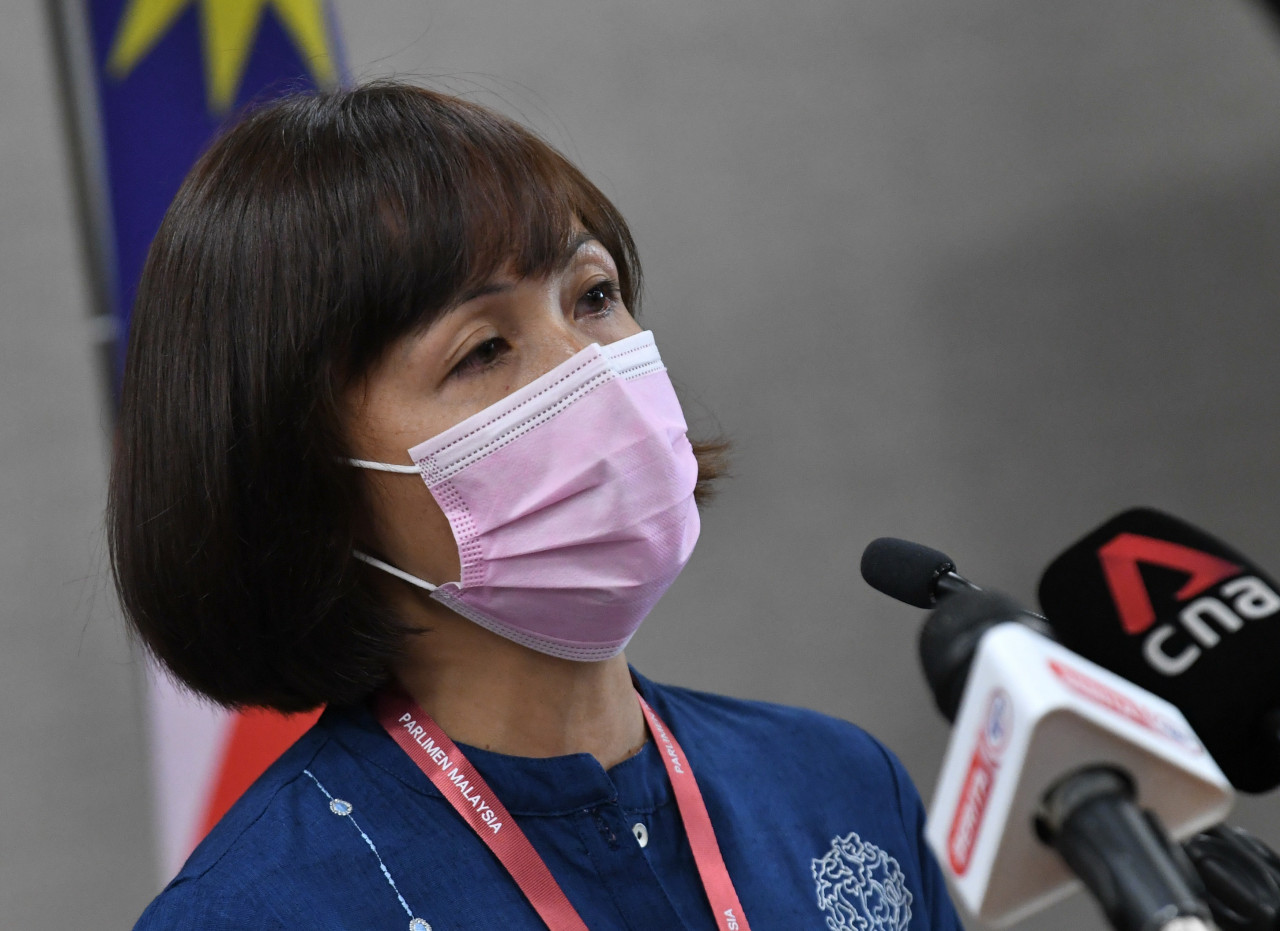
“The ministry should explain why it stopped elected representatives from offering free or subsidised screening for the public. Although the number of screening gradually increases in July, we have already wasted one month.
“The ministry needs to drastically increase its targeted testing and allow all elected reps to organise subsidised screening programmes so we can test at least 1%, approximately 300,000 tests, a day as a contingency to deal with any further outbreak in the future.
“Malaysia recorded 199 deaths yesterday, and the positive rate was as high as 12.51%. This is after 51 days of full lockdown and two weeks of enhanced movement control order in most of the Klang Valley.
“Clearly, our country is not on the right path to win the battle against Covid-19. So, the question is what have we done wrong?”
Meanwhile, Bandar Kuching MP Dr Kelvin Yii urged the government to have a comprehensive national testing strategy to counter the failure to detect hidden Covid-19 cases and outbreaks.
“Yesterday, our country recorded 95,772 tests, but a high positive rate at 12.51%, which is more than twice than what the World Health Organisation recommends (less than 5%).
“This not only shows that the pandemic is out of control, but also that we are severely under-testing, and as a result, we may be failing to detect hidden cases and outbreaks in the community.
“The fundamentals of any infectious disease control are quick detection and fast isolation. For these two fundamentals to succeed, there must be sufficient screening and efficient contact tracing. Failure to adhere to these fundamentals is the main reason the government to control the current pandemic.
“If we do not significantly ramp up testing and tracing, we will not know how many carriers can spread the virus, and the longer we take to isolate them, the higher the amount of people (who are at risk),” he said in a statement today.

Yii also highlighted the record-high 199 deaths yesterday, of which 33 were listed as “brought in dead”.
“This proves how widespread the virus is in our community, the lack of testing, and the breakdown of contact tracing as we see a significant percentage of people dying at home even before getting the needed medical care at hospital.
“That is why the government must build a national capacity to test at least 250,000 to 300,000 people a day by adjusting its strategy away from limited screening and over reliance on PCR tests, and mobilising all stakeholders, including private clinics and hospitals, and empowering factories and workplaces, as well as individuals to do self-testing via self-test kits.
“That is why the second prong of this national testing strategy is to prepare the people for the new normal, which will include frequent and continuous testing – either before going to work or attend a social event.”
He said the government, through the medical device authority, must ensure the sensitivity and specificity of the test kits, and subsidise them to make sure them affordable and accessible for all industries and individuals.
“For industries, clear testing standard operating procedures (SOPs), which include frequency of testing, can be formulated based on the risk assessment of each industry. For example, high-risk industries can have more frequent testing.
“This must be accompanied by comprehensive reporting SOPs for people to inform the authorities of a positive test, and for it to be connected to the national system for contact tracing and case reporting.
“Those who have asymptomatic or mild symptoms can be home-quarantined and monitored virtually via video calls by healthcare officers.
“Anyone with symptoms or signs of deterioration (Categories 3 to 5) must be brought to hospital for immediate care.” – The Vibes, July 22, 2021