

KOTA KINABALU – The public healthcare system’s inability to absorb new medical officers into service is partly due to the number of graduates churned out by private institutions and the perceived opaque hiring process.
While the doctor-to-population ratio in Malaysia is below the World Health Organisation (WHO) recommendation, the government’s stop-gap measure is to have them work on contract.
WHO recommends a ratio of 1:254. The national ratio stands at 1:454, while Sarawak’s is 1:650 and Sabah (1:860).
Malaysia has about 51,000 doctors in government service, of whom 23,000 are hired on a contract basis. It is understood that only around 4% of contract junior doctors are absorbed into the civil service each year.
Parti Sosialis Malaysia chairman Dr Michael Jeyakumar Devaraj said failure to regulate the education system is to blame.
“We have the Malaysian Qualifications Register and Malaysian Medical Council to regulate the standards of education provided by universities, and the Higher Education Ministry to determine the quota (of medical graduates).”
In 2000, Malaysia had just 10 universities and colleges offering medical courses, but by 2012, there were another 22 with these programmes, he said.
Of the 22 institutions, 17 are private colleges.
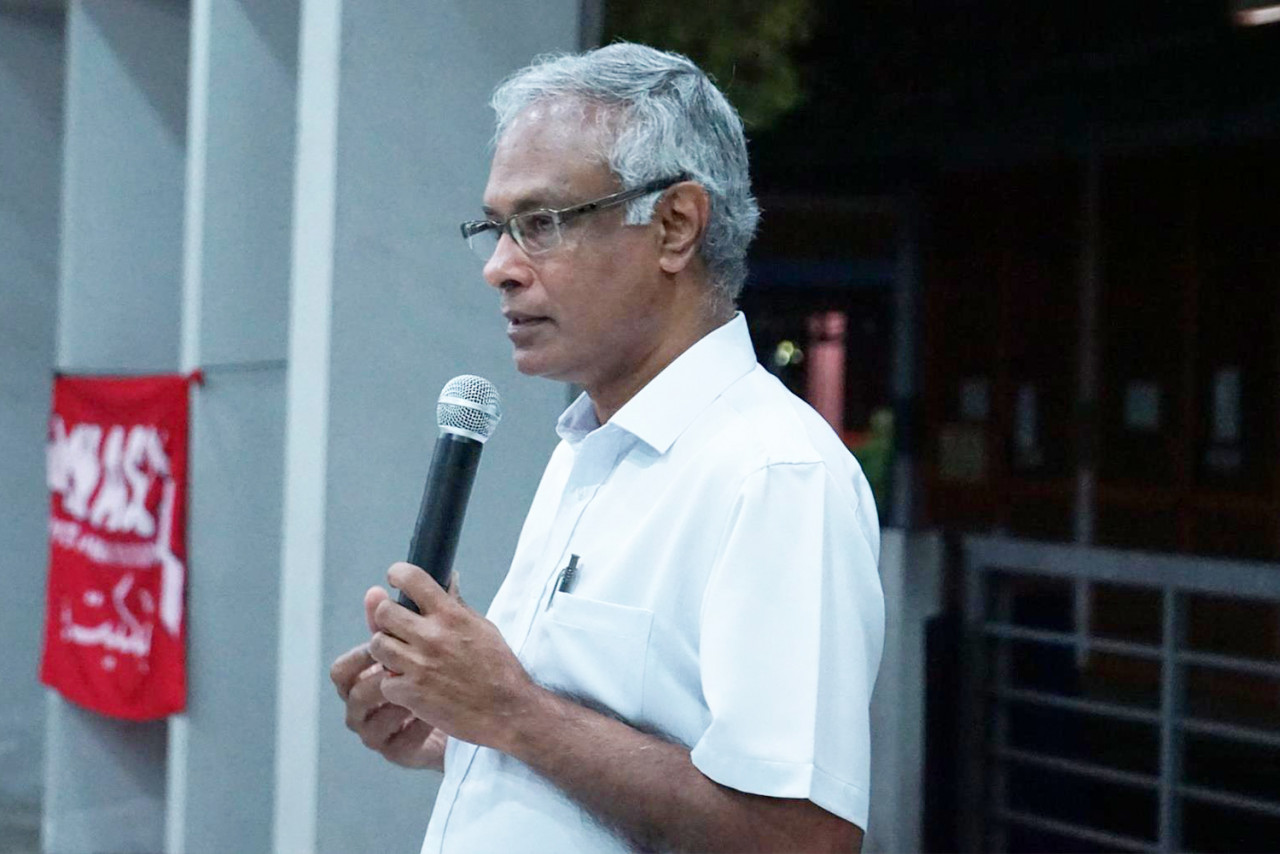
Dr Jeyakumar said the issue is aggravated by the hiring freeze in the civil service, which results in cohorts of doctors staring at unemployment once their contracts expire.
He proposed that the government limit the number of private institutions offering medical courses or merge them so as to reduce medical graduates.
Only then will they be hired or absorbed into service, depending on the government’s capabilities, said Dr Jeyakumar, who was part of a recent online discussion organised by the Wisdom Foundation.
Lack of transparency in hiring
Sabah Malaysian Medical Association (MMA) chairman Dr Harivinthan Sellappan said the surge in the number of doctors in the country is compounded by overseas graduates.
More and more foreign universities are being recognised by the government, he said.
“There are no long-term pragmatic solutions, and now, we are at the end of the five years looking for a solution.”
He said only two weeks ago, the number of permanent doctor posts offered went up from 789 to 1,089.
There is a lack of transparency on the criteria for a permanent position, he said, and completing one’s housemanship is not enough.
At this point, more than 80% of junior doctors have completed their housemanship, he said.

Decentralisation not the way forward
Although there has been talk of decentralising the country’s healthcare system, Dr Jeyakumar said this does not address current issues, and only makes it more difficult to provide affordable services.
He pointed to the United States, where varying district incomes reflect the quality of healthcare provided – meaning urban areas have better services.
This will result in the concentration of doctors and specialists in wealthier districts, he said.
“Malaysia is already seeing a similar problem, with 70% of specialists being at private hospitals.”
He said the country is running on a low salary base to attract investments, and if the income threshold is raised, it will scare off investors.
There is wage suppression in Malaysia. We are keeping salaries low to remain competitive with other countries in the region. Malaysia pays a tenth of the salary earned in Australia, for instance.”
It is learnt that the country earns about RM700 million annually from its public healthcare system, which runs on a RM30 billion budget.
MMA Section Concerning House Officers, Medical Officers and Specialists chairman Dr Vijay Ganasan said the country should be given at least five years to mull over the matter before decentralising its healthcare system.

He suggested that public hospital charges be increased for those who can afford it.
Although Malaysians have been financially impacted by the Covid-19 pandemic, he said, the RM1 hospital fee has been in place since 1982.
“We maintain that the poor can pay the RM1 fee, but others can pay more.”
He said it is also time for the government to revisit the mooted sugar tax, pointing out that nations like the US have raised billions from it.
If Malaysia can make RM2 billion from the tax, the monies can have many uses, including resolving the contract doctor issue, he said.
He also proposed that the same be done with the tobacco tax to tackle the financial problems plaguing healthcare.
Doctors without permanent posts joined the #HartalDoktorKontrak movement recently despite the government’s offer to extend their contracts.
In a statement, the group said: “Offering us years of contract is not a solution; it’s a sugar-coated statement to shut us up. We know well how the system works. We are not buying it. Nobody wise enough will accept it.
“Stop giving us a half-baked solution by people who are not even in this field, or don’t know how the system works. Maybe (they) don’t even bother to think thoroughly about it because the problem is not theirs.
“Give us a clear plan, a clear solution for our career. Can we afford to lose more and more people now?”
Putrajaya’s offer is largely seen as a stop-gap measure amid cries from health frontliners seeking job security.
The government said it will extend the appointments of contract medical and dental officers by up to four years. – The Vibes, August 2, 2021













.jpeg)