KUALA LUMPUR – Attorney-General Tan Sri Idrus Harun’s view on the issue of the prime minister’s confidence vote goes against the Yang di-Pertuan Agong’s decree on August 18, said Pasir Gudang MP Hassan Abdul Karim.
The PKR lawmaker is of the opinion that such a vote will not erode the king’s powers, as said by Idrus earlier today.
“If the prime minister already has majority support via statutory declarations and the formation of a complete cabinet, including the positive and responsible attitude of the opposition bloc, there is no reason for him to fear a confidence vote.
“But if (Prime Minister Datuk Seri) Ismail Sabri (Yaakob) does not accede to the Agong’s request, the prime minister’s legitimacy will continue to be questioned like his predecessor Tan Sri Muhyiddin Yassin.
“The new prime minister will be seen as a leader who is afraid of his own shadow if he refuses to table the confidence vote.”
Agong Al-Sultan Abdullah Ri’ayatuddin Al-Mustafa Billah Shah’s decree is clear, said Hassan in a statement.
“There is merit in His Majesty’s decree. It points to the royal institution’s desire to empower the Dewan Rakyat.
“The Agong wants to share power with the Dewan Rakyat, an institution of the people’s power under the parliamentary democracy system that derives its strength from the public mandate.”
_twitter_pic_2.jpg)
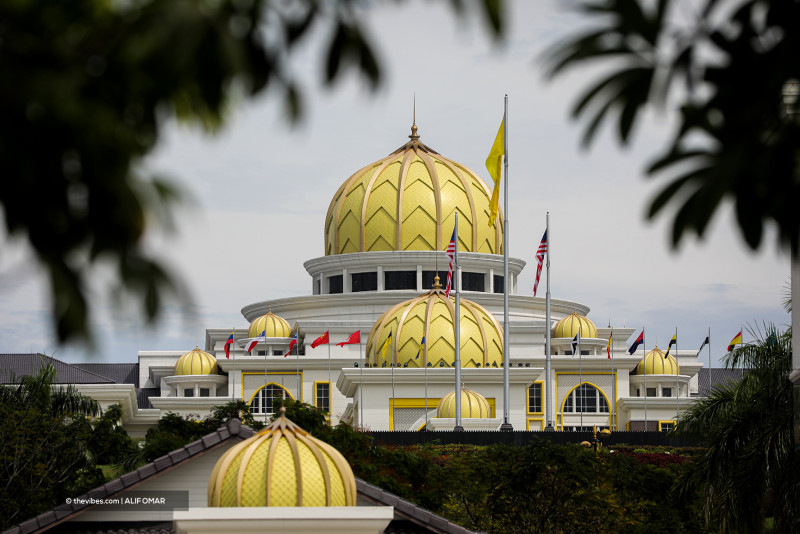
He said Ismail Sabri’s appointment was made by the king at Istana Negara, and not in Parliament using His Majesty’s discretionary powers under Article 40(2) of the federal constitution.
“Ismail Sabri was appointed by the Agong because he garnered the support of 114 MPs via SDs submitted to Istana Negara. The 114 figure fulfils the interpretation of ‘majority support’ under the requirements of Article 43(2)(a) of the federal constitution.
“So, Ismail Sabri has to respect the Agong’s decree and table a motion on a confidence vote in the Dewan Rakyat.
“If the prime minister and his cabinet comply with the Agong’s proposition, a convention based on the federal constitution is established, where the legitimacy of the prime minister and his cabinet can be determined in the Dewan Rakyat. The newly formed government will be seen as strong and capable if it passes the confidence vote when Parliament convenes.
“The motion that will be brought about by the government should be given priority in the Dewan Rakyat under Standing Order 15(1), which states that government business takes precedence.
“So far, there has been no motion of no confidence against the prime minister brought by opposition MPs or backbenchers. Opposition leader Datuk Seri Anwar Ibrahim has made a public statement that the opposition bloc will not complicate the confidence vote.
“So, the burden of responsibility to meet the Agong’s fair demands rests on the shoulders of Ismail Sabri.”
Meanwhile, DAP veteran and Iskandar Puteri MP Lim Kit Siang said Idrus should not stray into the political minefield, and instead, keep to his role as the government’s legal adviser.
In a statement, he said the AG’s comments on the matter “are all politics and no law”.
“Is Ismail Sabri afraid that his majority of 114 MPs has disappeared in less than a month and that he could not get a majority of at least 111 MPs to vote in support of him as prime minister when Parliament meets on September 14?
“The question now is whether Ismail Sabri is going to disregard the Agong’s decree in one of his first acts as the ninth prime minister when Parliament meets.
“It should be noted that the third prime minister (Tun) Hussein Onn and the fifth prime minister (Tun) Abdullah Ahmad Badawi sought a confidence vote in their first acts in Parliament.”

Idrus in a statement earlier today said the appointment of the prime minister and formation of the government were done according to the law.
He said the constitution empowers the king to appoint a prime minister from among Dewan Rakyat members whom His Majesty believes has majority support.
“If the appointment of a new prime minister still requires legitimisation by any parties other than His Majesty, this means that His Majesty’s absolute power can be overcome by others.
“Such a move is inconsistent with the provisions of the federal constitution. It also negates His Majesty’s powers as enshrined in the federal constitution.
“Based on this, there is no need to legitimise the appointment of the prime minister and the government that has been formed, (which was done) in accordance with the law.”
He said Ismail Sabri’s appointment by the Agong on August 21 is in line with Articles 40(2)(a) and 43(2)(a) of the constitution.
“Article 40(2)(a), which provides the Agong with discretionary powers to appoint a prime minister, should be read in conjunction with Article 43(2)(a), which states that the prime minister shall be appointed from among members of the Dewan Rakyat at His Majesty’s discretion, whom he believes commands majority support.
“It is clear that the Agong has a constitutional responsibility and absolute powers to appoint a prime minister.” – The Vibes, September 4, 2021