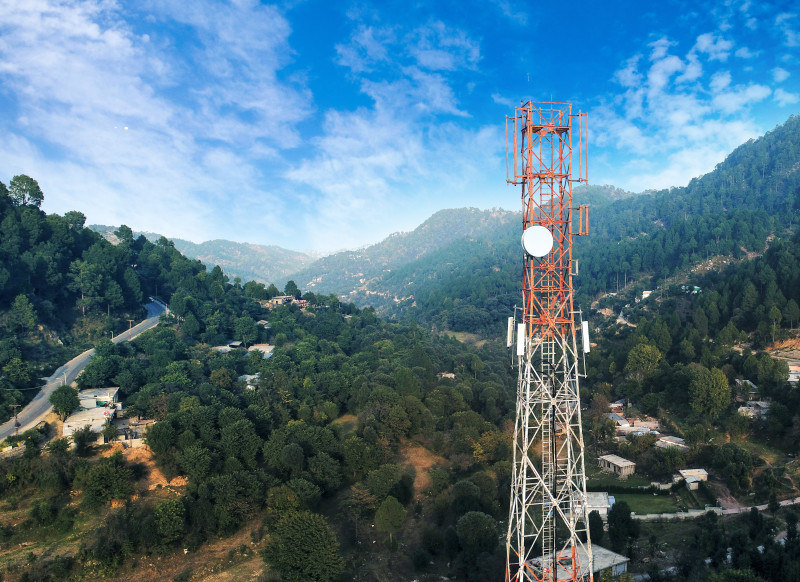
KUALA LUMPUR – 4G availability in Malaysia is now at an average of 88.8% - an increase of 2.8 percentage points since the implementation of the Jalinan Digital Negara (Jendela) initiative a year ago, according to analytics company Opensignal.
In a market insight entitled “Assessing Jendela initiative progress to retire 3G and deliver ubiquitous 4G to Malaysians”, Opensignal data analyst Hardik Khatri said users in sparsely populated regions of Peninsular Malaysia have seen substantial progress in 4G availability – up to 2-2.3 times greater than the national average.
“Terengganu saw the biggest increase of 6.4 percentage points, followed closely by Pahang, which saw a growth of 5.6 percentage points.
“Meanwhile, users in the sparsely populated regions of Sabah and Sarawak also saw small improvements of 2.2 and 2.8 percentage points,” he said, adding that data taken from 90 days from August 1, 2021 was compared with the same period in 2020.
He said the data showed that smartphone users in two of Malaysia’s least populated regions, Sabah and Sarawak, have seen the greatest increases of 15.4% and 12.5% in the number of 4G-covered locations, respectively – 6.7 points and 3.9 points higher than that seen nationally (8.7%).
Hardik said that the Jendela initiative has helped Malaysian operators address the varying mobile network experience across different regions and bring 4G connectivity to less populated regions of the country through the expansion of 4G-covered locations.
“This has enabled users to spend time on more efficient 4G networks in areas that were previously only covered by 3G, or had coverage issues before.
“According to our data, the Jendela initiative is helping to bridge this digital divide and strengthen existing networks in the country as it advances towards commercialising 5G,” he added.
Meanwhile, Hardik said Malaysia has also seen a greater decline of 3G availability nationally, as percentage points decreased by 3.6 points to 12.3%.
“The biggest drop in 3G availability was seen in the same regions that saw some of the largest increases in 4G availability – Terengganu, Pahang, and Kelantan saw a decline of 8.4 to 5.3 percentage points.
“However, there remains room for improvement as users still spend a significant proportion of time on slower and less efficient 3G networks, especially in the sparsely populated regions of Sabah and Sarawak in East Malaysia where users saw the highest 3G availability of 17.4% and 17.1%, respectively,” he said. – Bernama, November 25, 2021