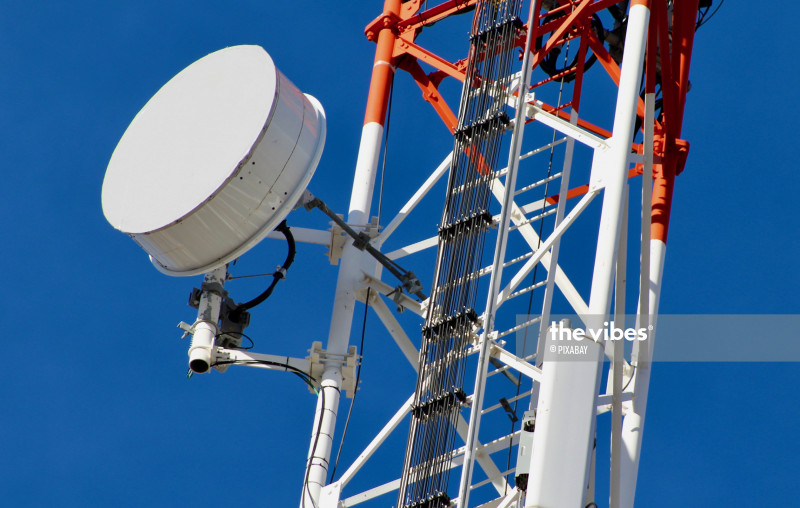

KUALA LUMPUR – Despite the reluctance of telecommunications companies to embrace a solely government-run 5G network, consumers stand to become the biggest gainers from an expedited roll-out of the latest mobile broadband service, said industry experts.
Technology architect Steven Wong, whose background includes the telecommunications industry, said the delay of the 5G roll-out was a key issue that currently affected mobile broadband customers.
He added that the delays in making 5G broadband available in Malaysia were partly because telco companies currently experienced challenges in coming up with a “good business base” to drive operations of the 5G service.
“Telcos, which are usually publicly listed or private companies, always have to look after their costs. That’s how they look at their investments – how they can get the returns on their investments (into infrastructure),” he told The Vibes.
The roll-out of the government 5G network service, under its special purpose vehicle Digital Nasional Bhd (DNB), has become a contentious point among its detractors.
Although prices have not been confirmed, Finance Minister Datuk Seri Tengku Zafrul Tengku Abdul Aziz had previously assured that telcos would pay less than RM0.20 per gigabyte (GB) for 5G connections.
Currently, the average revenue per use, based on published accounts of the telcos, averages between RM43 and RM47 per month, with consumption of data per user ranging between 22GB and 25GB per month for 4G connections.
On average, customers are charged approximately RM2/GB, while the costs for telcos to produce 4G speeds range between RM1.50 and RM1.70.
Wong said the government’s move to have an independent company build the infrastructure and sell the bandwidth out to all telcos via wholesale pricing was key to making the 5G roll-out faster, as opposed to separate companies setting up their own facilities.
“The bulk of costs for telcos come from the network investment and expansion because infrastructure expansion is the biggest cost of everything, followed by their headcount cost.
“But from a consumer point of view, I think it makes plenty of sense. In terms of the speed of getting the service, I think this is the way to go.”
The perspective of the companies, he said, is that the move will position the market toward becoming monopolised.
He pointed to the country’s High-Speed Broadband (HSBB) project, which was carried out in a similar fashion to the model proposed by DNB.
“The prices started out competitive, before gradually becoming uncompetitive. This means to say that the average costs for the industry elsewhere around the region went down, but locally were stagnant to a certain extent.”
Wong said price stagnation in Malaysia had remained until former communications and multimedia minister Gobind Singh Deo directed the HSBB project operators to reduce broadband costs to consumers.
“This is a side effect of having one party monopolise the backbone (of the national broadband network).
“From a consumer standpoint, if the government had a policy to expedite the roll-out of 5G, and a policy that allowed companies to remain competitive with rates being reviewed over time, I think that would be a good move.”
Disadvantages for telcos
Conversely, Wong said telco companies would have a different view on the matter altogether as there were several disadvantages for them.
“Firstly, it’s the level of coverage. Second is pricing, and third is after-sales and services, or customer service.”
He said if the telco companies did not have control over the 5G networks, they could only compete through pricing.
“In this case, the telcos are very reluctant (to share a single network) because the only game they can play is ‘price wars' and competing through customer service.
“But the problem with customer service is that it is very expensive (for the telcos), so in reality the consumer market is price-sensitive.”
He added that the telcos are reluctant to sign contracts with a sole network provider as they would be locked to the agreement for up to 10 years on average.
“They (telcos) are reluctant because there will be no room to manoeuvre due to fixed costs. The business model has to be profitable for them.”
James Beltran, the deputy chairman at Melewar Holdings, which provides strategic and investment oversight for public-listed entities involved in numerous sectors such as financial services and communications, echoed Wong’s take on the issue.
Beltran agreed that the wholesaling of data by a single entity such as DNB to all telcos would be far better for consumers, as opposed to having separate and overlapping 5G network plans and infrastructure.
“In theory and on paper, it makes more sense to consolidate infrastructure capital expenditure spend, as opposed to each operator undertaking the aforesaid (separate networks).
“We will however never be able to validate that, as the projections by the operators as to how much they will be spending will remain theoretical.”
Other industry sources have argued that a government-run network can fetch up to 30% in cost savings in terms of spectrum efficiency.
“Allocating one contiguous 5G spectrum instead of multiple others for various mobile network operators (MNOs) is similar to building four or five duplicated single-lane highways covering smaller geographic locations.
“DNB has been mandated to build a solid multi-lane traffic highway with much better coverage in urban and rural areas, which would not only satisfy the needs of MNOs, but more importantly, serve the customers much better.”
Consumers want faster 5G roll-out
Mechanical engineer Ainal Syafeek Noorazmi, 37, said apart from offering cheaper prices, the mobile internet coverage in the country also needs to be upgraded immediately.
“Of course, everyone wants a service that is cheap, but it must be remembered that the speed and stability of internet access is very important at this time.
“Before 5G coverage is expanded to the whole country in stages, 4G coverage needs to be improved because the internet has become a necessity in the life of the new norm today.”
Quantity surveyor, Diana Yusof, 35, said 5G coverage has become a necessity for her.
“A stable internet network is now a necessity to ensure that our daily lives become more seamless.
“So, the price of 5G coverage should be affordable so that the less fortunate also have the opportunity to enjoy this advanced technology.” – The Vibes, December 9, 2021