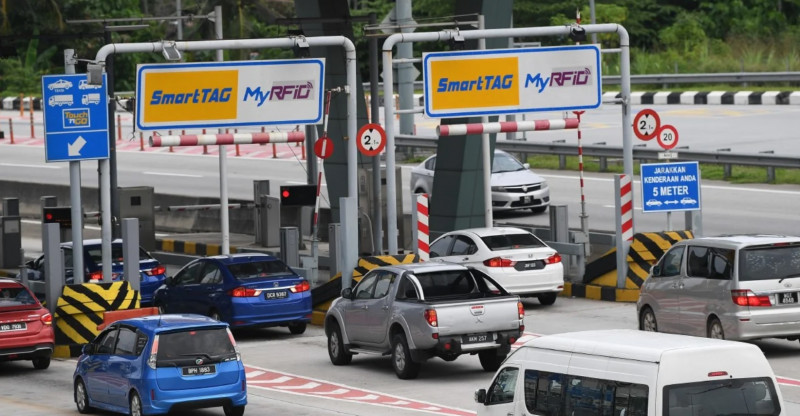
KUALA LUMPUR – The government’s decision to implement toll payment using Radio Frequency Identification (RFID) technology on the main stretch of the North-South Expressway (PLUS) from Juru, Penang, to Skudai, Johor, effective January 15 received mixed reactions from various parties.
For Federation of Malaysian Consumer Associations deputy president Mohd Yusof Abdul Rahman, the policy is in line with the government’s intention to modernise toll payments and reduce congestion at toll plazas.
“We see in Singapore, which does not have tolls, travelling is faster because there is no need for motorists to stop, scan or touch the card and so on, like what we are doing now,” he said when contacted.
According to PLUS, toll payment via RFID was first introduced in 2018 at selected expressways as an initial step for the implementation of toll transactions without the presence of toll plazas through the multi-lane free flow system.
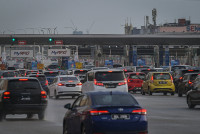
However, Yusof said the current 20 RFID routes at nine PLUS toll plazas are still barred, causing highway users to slow down.
He said the value-added facility offered by RFID, which could be utilised online, should be well-received by the public.
“As many people say, to top up Touch ‘n Go is a hassle. You have to stop at convenience stores or petrol stations, and you have to have cash because cashless top-up is not possible.
“So RFID provides an easier option because the top-up can be done on smartphones either using a debit or credit card, or online banking. It also has a direct top-up feature using e-wallets,” he added.
He welcomed the move to implement the RFID in stages as not all highway users currently had access to RFID tags due to the lack of information on the system.
“The option given to motorists to use Touch ‘n Go and Smart Tag for a certain period of time is appropriate until everyone has access to RFID. Then, PLUS can gradually eliminate the existing payment methods and switch to RFID completely,” he said, suggesting that more promotions be made by PLUS regarding RFID for the benefit of consumers.
Referring to the negative reaction voiced by some netizens over the government’s move, Yusof said a similar situation occurred during the transition from the cash payment system to the Touch ‘n Go one at toll plazas.
It did not take long for the public to accept the change (from cash payment to Touch ‘n Go). It shows our people are prepared to accept changes.
“As more and more people use the facility, the response will be more positive. Many people do not agree now because not many people use it,” he added.
However, Malaysian Muslim Consumers Association activist leader Datuk Nadzim Johan questioned whether there was an urgent need for RFID to be implemented with most people currently facing difficulties due to the Covid-19 pandemic.
He said although PLUS had clarified that Touch ‘n Go and Smart Tag could still be used, it was still “bad news” for some people.
“Even though it is just an announcement and the existing payment method is still running, it is causing some people to become more stressed,” he said.
He also raised concerns over how those in the rural areas may have problems installing RFID on their vehicles, as well as technical issues – such as the transfer of one’s current balance in Touch ‘n Go and Smart Tags to RFID.
“There must be a guarantee that there will be no additional costs on users,” he said, hoping that PLUS would provide more information on the implementation of RFID.
According to the RFID website, the system is currently being used by 1,269,957 users nationwide.
Deputy Works Minister Datuk Arthur Joseph Kurup told the Dewan Negara recently that the ministry was targeting 60% usage of RFID technology for toll payments by the end of 2022 and that the use of Touch ‘n Go and SmartTag cards may be stopped by the end of 2023. – Bernama, January 2, 2022