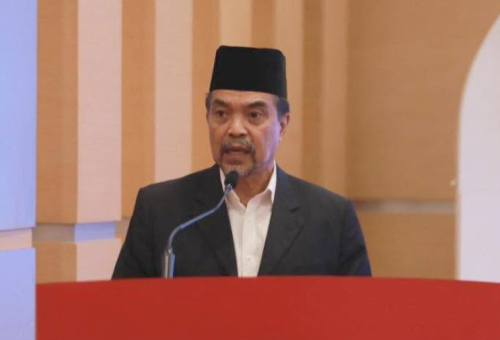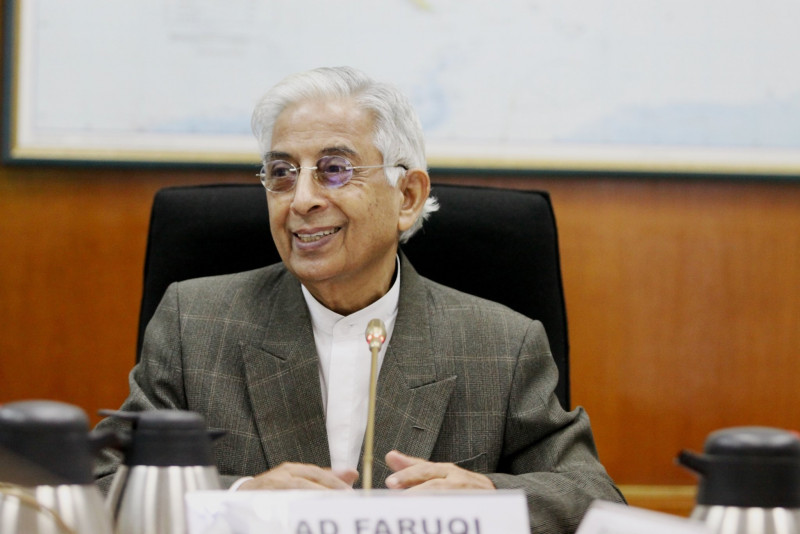

KOTA KINABALU – The Inter-Governmental Committee (IGC) report can be used as an aiding document for the purpose of interpreting the recent constitutional amendments pertaining to the Malaysian Agreement 1963 (MA63), said Datuk Shad Saleem Faruqi.
The constitutional law expert said when the amendments were made in Parliament late last year, it also indirectly constitutionalised the IGC report.
This, he said, is due to Article VIII of MA63, which makes clear reference to the IGC in 1962, where it states that “the government of the Federation of Malaya, North Borneo and Sarawak will take such legislative, executive or other actions as may be required to implement the assurances, undertakings and recommendations contained in Chapter 3 of, and Annexes A and B to, the Report of the Inter-Governmental Committee signed on 27th February 1963, in so far as they are not implemented by express provision of the constitution of Malaysia.”
On whether the recommendations, assurances and undertakings related to the guidelines and directives in the IGC report are legally enforceable, Shad said their status is similar to the status of directive principles in India’s and Germany’s respective constitutions.
However, the courts can use them as aids to interpretation,” he said in a recent webinar on the significance of the 2021 constitutional amendments for Sabah and Sarawak.
Having said this, Shad explained that there are provisions in the IGC that cover religion, immigration, education, citizenship, financial provisions, judiciary and the special position of indigenous peoples.
He noted that these have been partly overlooked or possibly breached under post-1963 laws and practises.
For instance, he said Section 26(4) of the IGC report states that when the Federal Court hears a case arising in a Borneo state, at least one judge should have Bornean judicial experience.
“This IGC prescription was rejected as having no force of law in the cases of Keruntum v Director of Forests (2018) and TR Sandah Tabau v Director of Forests (2019).
I think these two decisions now need review. These two decisions must take note of the IGC report.
“In the future, the Federal Court must overrule itself in these two decisions,” he said.
Shad also said Sabah’s 40% net revenue entitlement is fully enforceable, as this was incorporated in Article 112C and the 10th Schedule Part IV of the federal constitution.
“Research by a University Malaya Master’s student, Mazlianie Mohd Lan, also revealed that in the 1964 Estimates and Revenue Expenditure, there is a precise mention of the 40% grant allocation to Sabah.
“However, from 1969 onwards, such mention was no longer evident,” he said.
Paragraph 24(9)(i)(c) of the IGC report, Shad noted, calls for the joint appointment of an independent assessor for the said purpose.
Shad noted there are special protections for Sabah and Sarawak in relation to the 8th Schedule, where Parliament has the power to insert certain provisions into the state constitutions, or remove those found inconsistent with the federal constitution.
“In the 8th Schedule of the federal constitution, all state constitutions must have essential provisions.
“If the state constitutions do not fall in line with the federal constitution, the federal has the power to insert these provisions into the state constitutions.
However, in relation to Sabah and Sarawak, MA63 and the IGC report say it is not Parliament (that determines such a matter).
“It is the courts that will decide whether the constitutions of Sabah and Sarawak are in line with the 8th Schedule,” said Shad, adding that the two Borneo states have special protection on such matters.
On the Election Commission, Shad said although Article 114(1) provides for the composition of the electoral body, there is no requirement that a member should be from Sabah and Sarawak.
However, Shad pointed out that the IGC report on Paragraph 25(1) requires one member to be from Sabah or Sarawak.
As for the term “Borneo states”, Shad said it all appears under the 2021 federal constitution amendments, the provisions of MA63, the IGC Report, and the vocabulary of the Borneo states which have been constitutionalised.
He opined that a judicial approach is needed in interpreting the federal constitution, adding that existing provisions must be interpreted as far as possible in harmony with the aforementioned historical documents. – The Vibes, January 31, 2022