


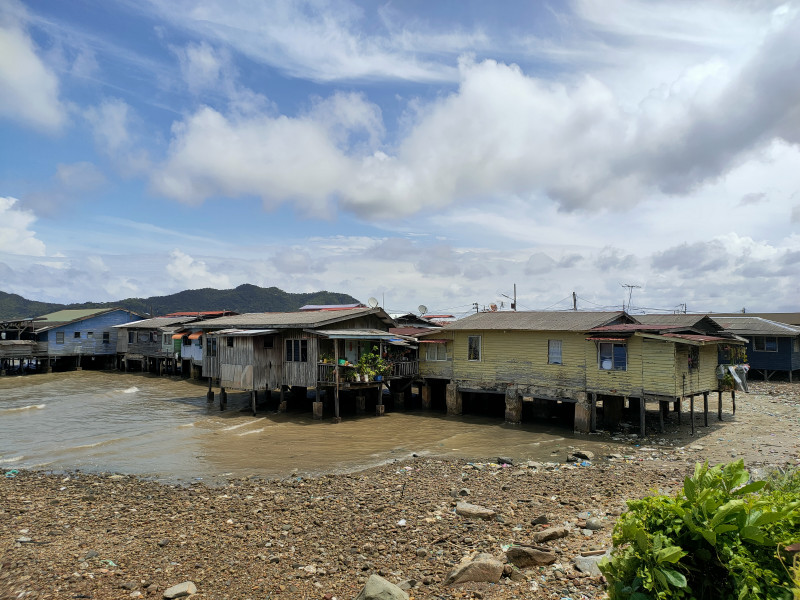

SANDAKAN – For decades, water villages comprising thousands of houses along the Sandakan bay have been without a sewage system, resulting in human waste being flushed directly into the Sulu Sea without being treated.
In fact, the situation may have worsened over the past century with the influx of illegal immigrants near the Batu Sapi area resulting in the mushrooming of squatter villages which are mostly erected on water.
In the Batu Sapi constituency alone, there is an island zone with 14 water villages estimated to house over 1,000 families. This excludes water villages constructed along the coastal area of Batu Sapi which have another 14 villages – both squatter villages and official villages that have been gazetted by the government.
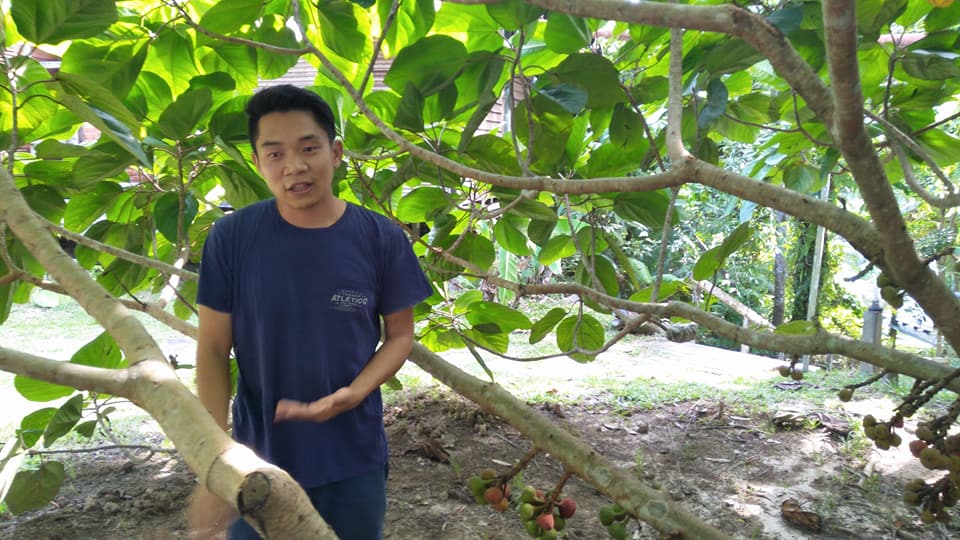
In Sandakan constituency, around a five-minute drive from the town centre, is Sim-Sim, a historical water village that has possibly been around since Sandakan was founded in 1879.
Consisting of Kg Sim-Sim, Kg Melayu Bumiputera, and Rancangan Rumah Murah, Sim-Sim has about 900 houses and over 7,000 residents. It is the only water village that had been gazetted as a village in the Sandakan constituency.
Sim-Sim is also a tourist spot, famous for its homes-turned-restaurants in the water.
Despite being a properly built water village, Sim-Sim still does not have a sewage system and all its residents’ human waste is flushed directly into the sea.
In 2020, a local non-governmental organisation, Future Alam Borneo, had warned of the danger of “invisible waste” in the waters in Sim-Sim area.
Its chairman Anton Ngui said that the group had sent water samples from Sim-Sim for a laboratory test and found that the faecal coliform in the village is 200 times more than the permitted level set by the Malaysian Marine Water Quality Standards.
“In 2013, the Environment Department set discharge standards for treated sewage that goes into Malaysian waters from proposed environmental impact assessment projects located on recreational or tourist beaches – the E. coli count must not exceed 300 CFU (colony-forming unit) per 100ml.
“In Sim-Sim village, the E. coli count is nine times higher at 2,800CFU/100ml,” he said, adding that the problem is attributed to the lack of sewage system in Sim-Sim.
Local activist Azlani Rayqiezan told The Vibes that what the government should do is to ensure that Sandakan has zero squatters; moving residents living in on-water squatter houses will allow the government to eradicate the problem.
But what about a legal village like Sim-Sim?

A resident in Sim-Sim, Diana Alias, 38, said that she does hope for the government to install a proper sewage system for the houses in her village.
She said while the lack of a sewage system does not affect the residents directly, she does feel guilty for polluting the sea knowing that she is discharging waste directly into the sea.
“We know that it is bad for the sea, but it has been like this for many years. It is not something that we can change, but the government could.
“We have grown used to it that we do not hesitate to consume fish we caught from the sea, and do not hesitate to jump down to swim in the sea,” she said.
Sandakan MP Vivian Wong Shir Yee said that she has pointed out this problem in Sandakan to the government multiple times.
The DAP rep said that when Pakatan Harapan was still governing, she managed to acquire RM3 million of allocation to set up a sewage system in Sim-Sim from the then finance minister Lim Guan Eng.
However, allocations in the district were cancelled soon after Perikatan Nasional took over the government.
“At the time, it was a preliminary budget for the sewage system because not a lot of studies have been done on how the sewage system is going to be installed in Sim-Sim and the cost it would require.
“We were supposed to work with the Public Works Department to conduct research and come up with a comprehensive plan on how we were going to do it. But it all stopped because the allocation was cancelled.
“Even though it was still in the early stage of the study, I believe that at least it was a start to solving this long-standing problem in Sandakan. Unfortunately, it was cancelled and we don’t know if the government will now ever consider doing something about the sewage system in water villages here,” she told The Vibes.
Wong said that water pollution is one thing, but one also has to consider the awareness of the people living on the water about keeping the ocean clean.
“How are the residents living on the water supposed to be convinced that they should not throw rubbish into the sea when they flush their dirty business right down to the ocean anyway?
“Installing a sewage system in water villages, in a way, will raise awareness about the importance of keeping the sea clean,” she said. – The Vibes, February 28, 2022














.jpeg)
