.jpg)
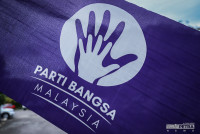
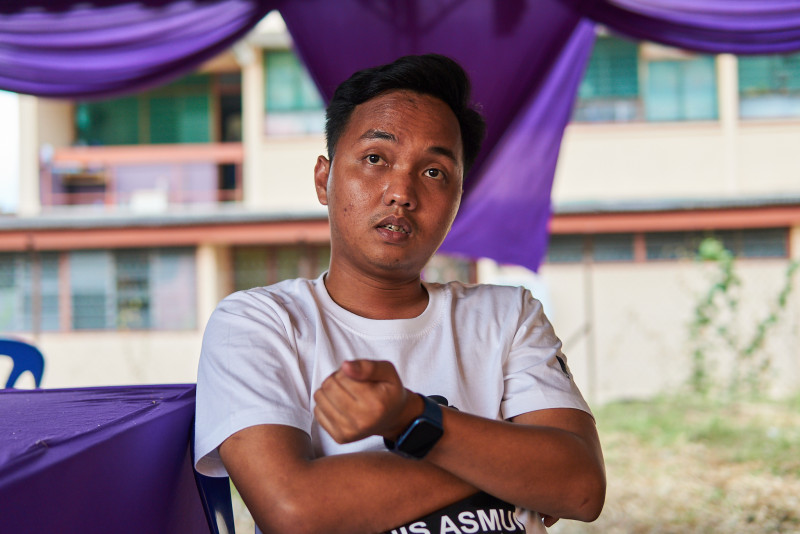
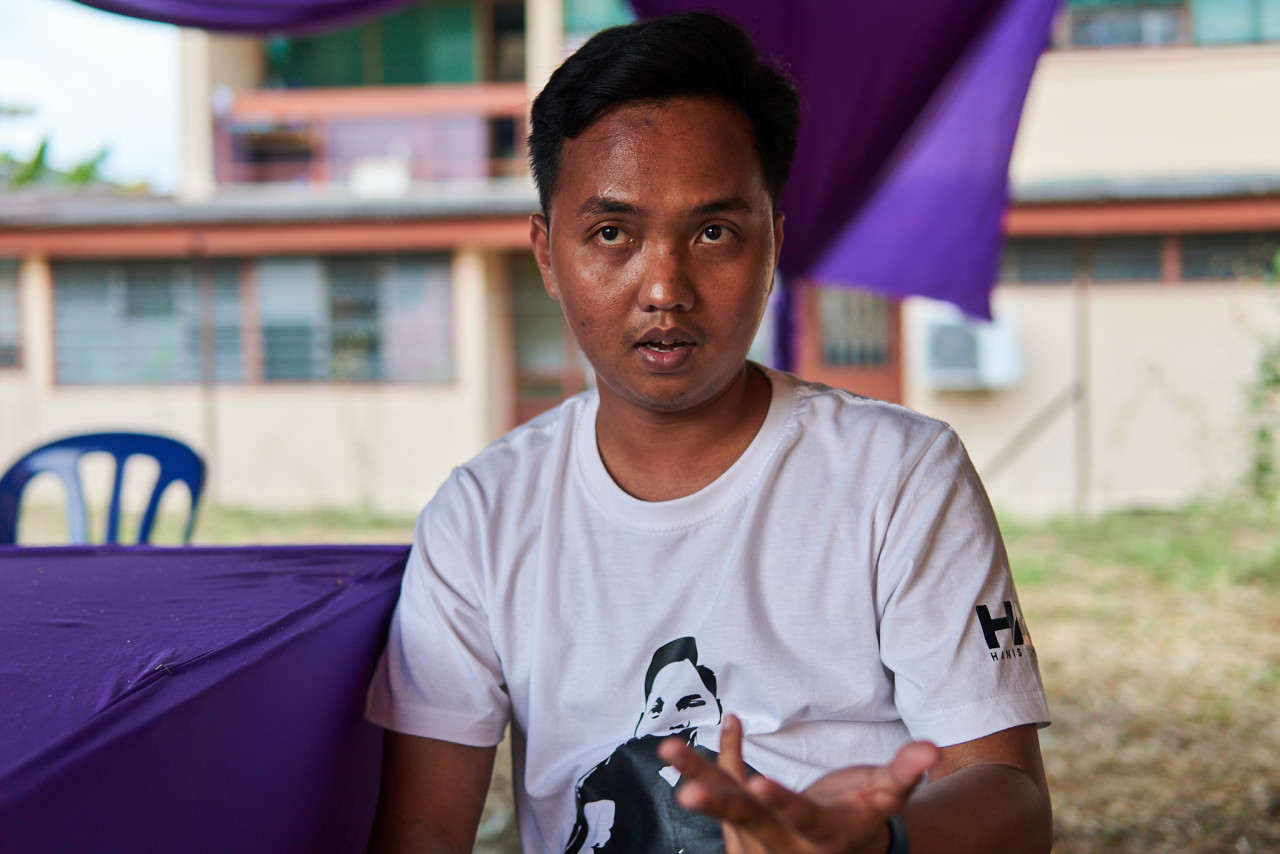
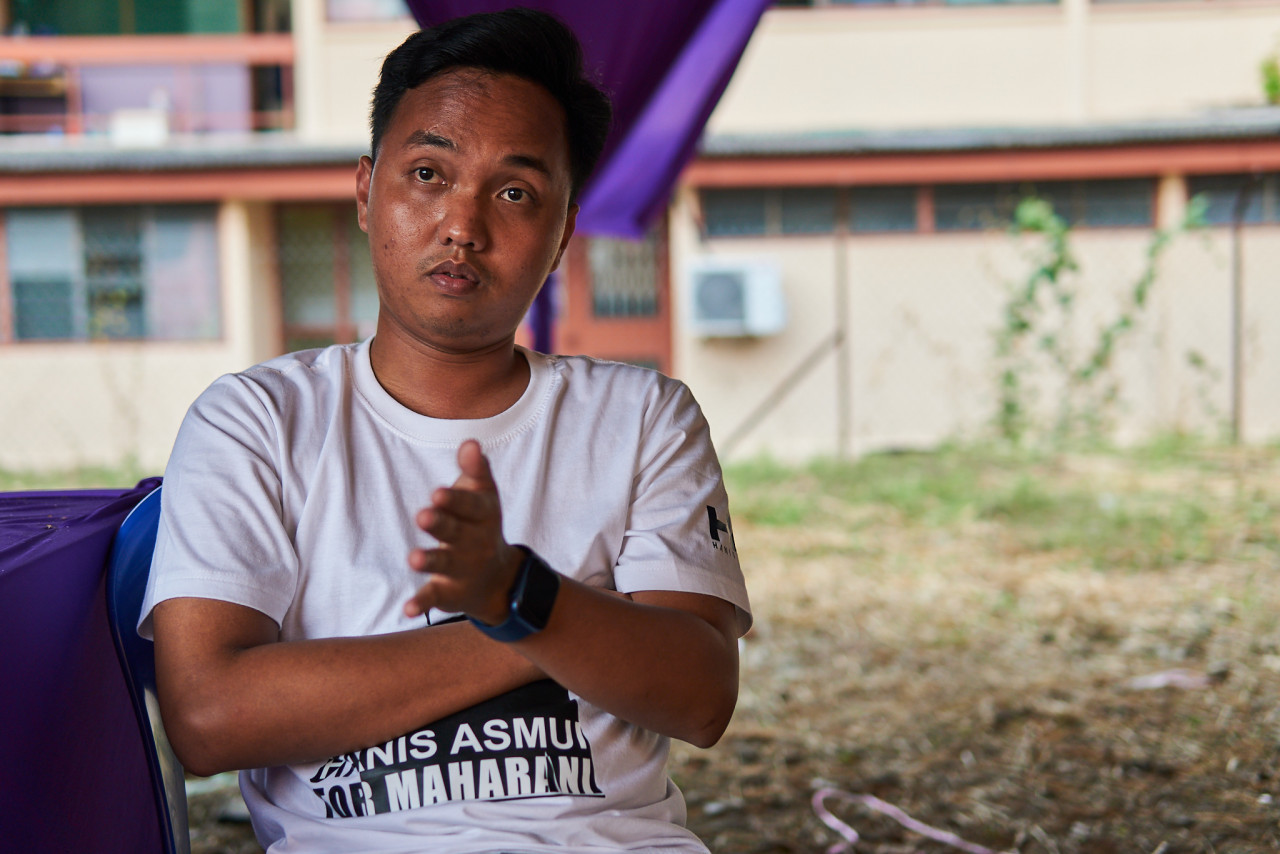
MUAR – As a first-time candidate and one representing a newly formed outfit, Parti Bangsa Malaysia’s (PBM) Maharani candidate believes he has the right vision and recipe to spur the constituency to greater heights.
Speaking to The Vibes, Hanis Asmui, 28, said among the thrusts he plans to implement, if elected, are to forge closer ties among all races, attract investors to Muar to create more appealing job opportunities for the youth here, and improve the area’s overall economic prosperity.
“I feel I am bringing to the table what folks and voters in Maharani want,” he said.
Despite representing a new party, Hanis appears confident in getting his message and intentions across to the masses, while also looking to introduce a new trend of personality politics to guide him to victory in the coming polls.
Luring in high-tech investors: a solution to youth exodus?
Having spent his entire life in Muar, Hanis said he remains committed to creating better job opportunities for local youth here, which would, in turn, halt their exodus.
He conceded that currently, Muar is not the most attractive place for youth in search of the highest paying, most rewarding, and prospect-filled opportunities.
Right now, we see the youth moving to Kuala Lumpur, or Penang, or anywhere outside of Muar, because attractive job opportunities here are far and few, so they are then forced to leave their families.
“We cannot blame the youth, because they are merely seeking greener pastures.
“That is why we need to attract more high-technology investors into this place to create more attractive jobs for the youth, so they are not forced to leave,” he said.
Youth who stay struggle with lack of broadband coverage, stability
For those who choose to remain here, he said one major issue bugging them is the lack of stability and coverage of broadband internet in the constituency.
He said this is a major stumbling block for those trying to build their businesses through e-commerce platforms, only making the decision to leave Muar easier.
“In today’s world, you do not need a physical shop anymore to start a business, so if youth who are trying to make it cannot even rely on the internet connection, there are some very basic problems that need to be fixed,” he said.
‘First time for everything’
Concerning the youth’s political savviness and the addition of voters aged 18 and above to the electoral roll, Hanis said he is confident the younger electorate are smart enough to evaluate their choices and select the right candidate to represent them.
He said although there might be those who appear politically immature or ill-informed, most of them are bright enough to evaluate their choices when it comes to choosing a candidate for the first time.
“There is a first time for everything, even for me – I am the first candidate in his 20s to have ever been fielded in this seat,” he quipped.
Hanis asserted how his meeting with the youth over several engagement sessions and data from research conducted by his party’s machinery revealed that younger voters gravitate more towards personality politics than party politics.
The full-time politician claimed younger voters have no interest in the rhetoric being used by older politicians, which usually harps on racial and religious issues, and said such a dated approach to politics must be phased out.
I will never tell others my party is correct and that the others are wrong, but I will instead condemn the individual actions of another person, regardless of which party they represent, because their actions are not the fault of the party.
“The youth today want a candidate who can be seen as trustworthy and approachable, one who will be on the ground getting things done for the people, and is someone who can relate to them – not so much about which party they are from,” he said.
Social media: campaign medium of choice
In a move aimed at penetrating the youth even more effectively, based on their frequent use of social media, Hanis said most of his campaign material would be pushed out through such channels.
“We have started pushing content onto our social media channels on Instagram, TikTok, and Facebook, because with the youth, your social media game has to be strong to reach them.
“A good amount of our feedback has also reached us through these channels, so it is clear that social media plays a huge role in current times,” he said.
Inter-racial unity: key to progress
Early on in his political career, Hanis said he came to the realisation that the key to moving forward is achieving unity among all races.
Having started his journey with Bersatu, he said he ultimately made the move to PBM to be able to work with individuals of all races and backgrounds.
“In politics, I cannot move solo. If I do that, I cannot progress. I always need support from those around me, who are actually the ones helping me along the way.
When I was in Bersatu, my Chinese and Indian friends would shy away from me. So that was when I realised the beliefs of PBM were better suited to me to forge multiracial unity among all,” he said.
He said attitudes such as inclusivity and approachability must be factored in when vying to become the people’s representative – something he felt was not a priority of the incumbent candidate, Norhayati Bachok from Amanah.
Hanis claimed his surveys on the ground have shown how Chinese voters in Maharani, who are originally DAP followers, felt cheated when they voted for Norhayati, who was supposedly never around to assist her constituents.
There was an ‘uncle’ I was talking to, who told me he doesn’t mind what party the candidate represents, as long as they are around to assist them and will not only make an appearance once in five years during election season.
“Also, I think matters like empowering the youth and forging greater multiracial ties were not among the incumbent’s priorities. I am not sure of it, but it appears so,” he said.
Hanis will face five other candidates in the six-cornered fight for Maharani, which has a demographic breakdown of 64% Malays, 35% Chinese, and 1% Indian voters.
His party, PBM, was launched in December, naming six main thrusts as the party’s building blocks: strengthen inter-racial unity, increase youth involvement, empower women, propel national economic development, generate science and technology development, and improve the quality of education in the country.
A total of four candidates were fielded by PBM to compete in the Johor polls, including party chief and former PKR man Steven Choong, who will be contesting in the Puteri Wangsa seat.
Johor will go to polls on March 12, with more than 2.59 million eligible voters to choose representatives for 56 state seats. – The Vibes, March 2, 2022