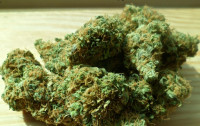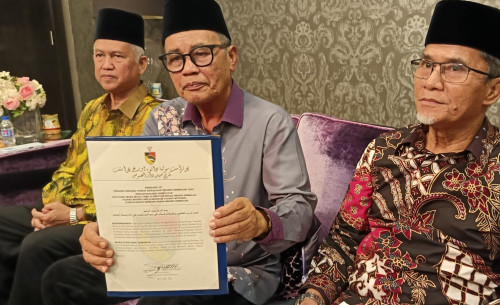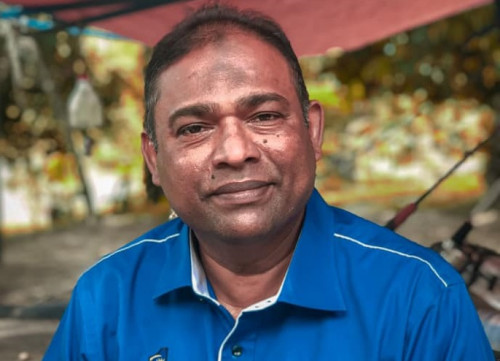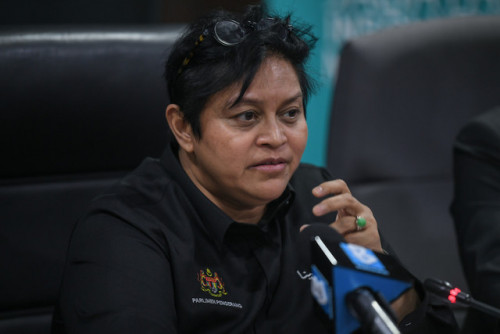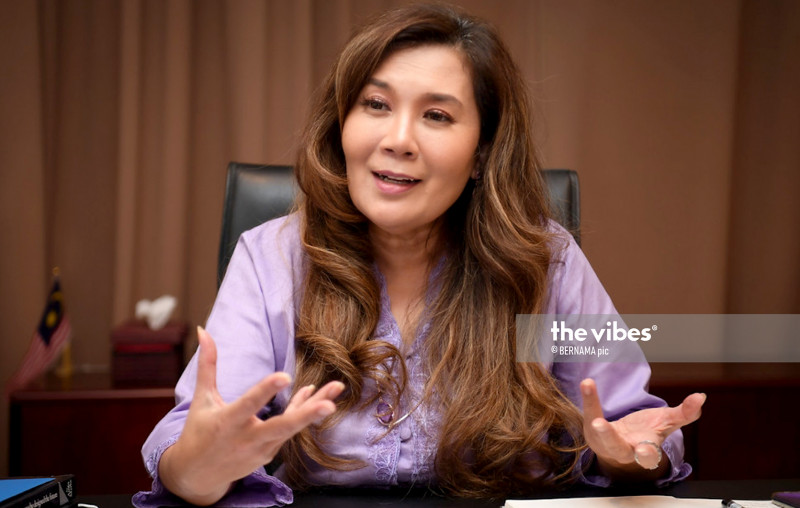
KUALA LUMPUR – Malaysia should play a serious role and take progressive actions to allow the use of cannabis and hemp, especially cannabidiol (CBD) for medical purposes, said Senator Datuk Ras Adiba Radzi.
The Senate member representing people with disabilities said the usage of the substances is to increase access to quality health services for their well-being.
“It is in line with Strategic Thrust 4 of the Action Plan for People with Disabilities 2016-2022, which is to increase access to quality health services for their well-being,” she said in a statement here today.
Ras Adiba said this was also in line with Malaysia’s commitment to Article 25 of the Convention on the Rights of Persons with Disabilities, which emphasises that the disabled have the right to enjoy the highest standard of health without discrimination on the basis of disability.
“The effort would open a new wing in the medical sector that could help reduce the effects of diseases such as chronic anxiety and so on, which have been proven through several scientific studies,” she said.
Ras Adiba said the government and non-governmental organisations must intensify activities, campaigns, and education for the public because knowledge related to cannabis use is still at a low level.
To this end, she proposed nine areas to the government for immediate action to enable cannabis and hemp to be used in the medical sector in Malaysia.
She proposed the creation of a Cannabis and Hemp Roadmap by the Health Ministry, and the Parliamentary Medical Cannabis Caucus comprising stakeholders such as activists, non-governmental organisations, cannabis experts, and representatives of vulnerable groups, especially the disabled and elderly.
She also proposed that the results of the study on the impact of cannabis cultivation be tabled in Parliament by the Agriculture and Food Industries Ministry, and to expedite the amendment of the Dangerous Drugs Act 1952 to differentiate between CBD and tetrahydocannabinol (THC).
In addition, she proposed that the Science, Technology and Innovation Ministry (MoSTI) develop new technologies through gamma radiation to produce new variations of cannabis sativa that have low THC psychoactive substance content, making hemp cultivation in Malaysia as one of the main commodities with similar characteristics to kenaf in terms of cultivation methods and hemp fibre processing technology.
Other proposals include providing research grants to institutes and universities to conduct research activities and clinical studies, and that the Higher Education Ministry and MoSTI should work together to create a consortium research group that focuses on medical cannabis research.
Apart from that, Ras Adiba also proposed that Health Minister Khairy Jamaluddin allow more industries to carry out hemp cultivation activities for research purposes under Section 6B (2) of the Dangerous Drugs Act 1952.
“Most western countries, especially the United States, are now more advanced in the hemp and cannabis industry. Many scientific studies conducted in the country have proven to be effective in various sectors such as health, medicine, pharmaceuticals, beauty products, and so on.
“Therefore, I am confident that allowing the use of CBD and cannabis cultivation in Malaysia will help, among others, the PwD community and chronic patients of cancer, dementia, Parkinson’s, seizures, mental problems, and emotional stress,” she said.
Ras Adiba said Malaysia as a country with world-class health tourism should also give emphasis on the use of medical cannabis.
“When else if not now?” she asked. – Bernama, May 6, 2022