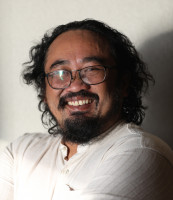
KOTA KINABALU – The Sabah Law Society (SLS) will likely make the first move in suing the federal government over its failure to implement Sabah’s 40% revenue entitlement under the federal constitution, if the state decides not to take necessary action.
Its president Roger Chin said SLS will take the matter to the Federal Court in the event that the appointment of an independent assessor, as constitutionally required under Article 112D(6), still fails to end the dispute.
Article 112D(6) of the constitution states that an independent assessor or assessors can be appointed in the event both parties – the Sabah and federal governments – are unable to reach an agreement on the special grant.
Chin said SLS, the state bar for lawyers practising in Sabah, is prepared to take legal action if the state government itself decides not to pursue the matter legally.
“There will be an extraordinary general meeting by SLS on May 24, and this is one of the things that will be posed to the members,” he said.
“And if it gets the backing of members, it is something that will be looked into. I am of the view that the bar can do a lot of things as long it is provided for in the statute.”
He said that the state bar has the right to sue the federal government as long as it is provided for in the constitution.
In the absence of the state government wanting to challenge this, if that is the case, perhaps the bar is the next best party to do it.”
Chin said this when answering a question during a live talk on the state’s special grant organised by the Wisdom Foundation recently.
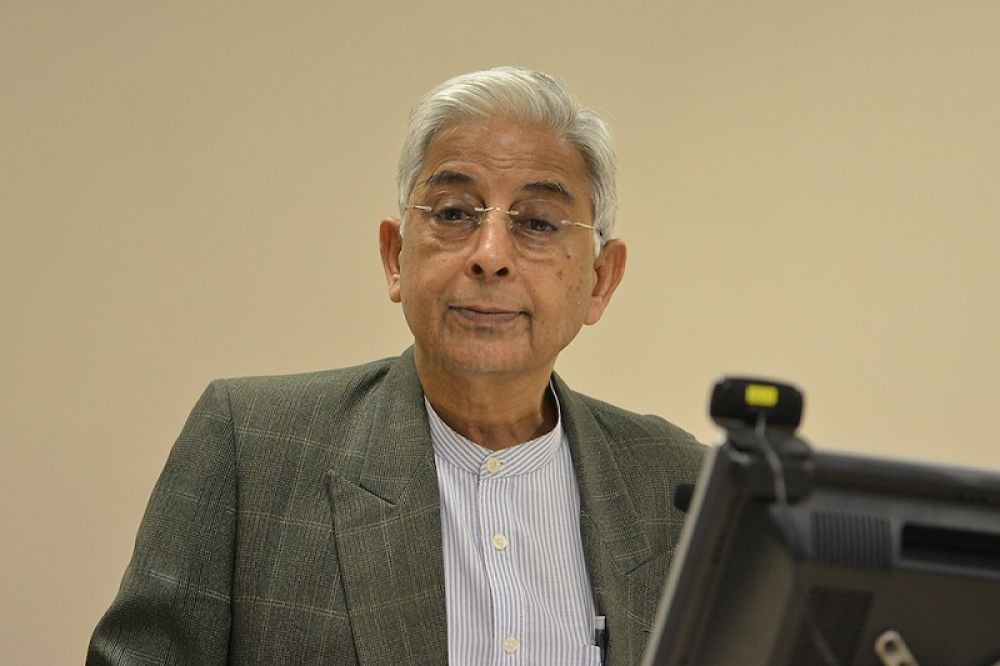
Constitutional law expert Datuk Prof Shad Saleem Faruqi, who also featured in the talk, opined that the state bar, NGOs and individuals have the locus standi (legal right) to bring the matter to the courts.
“But I am aware that the Malaysian court is conservative on this matter,” he said.
“I think if the rights of the poor people of Sabah and Sarawak are being affected, which clearly they are, as pointed out that there’s so much poverty despite so much wealth, surely someone on behalf of the poor should be allowed to go to the courts.
“This is because the poor are unable to go to the courts. Ultimately, we need to find judges receptive to this.”
Shad stressed that locus standi should exist for the mentioned parties, in light of a violation of the constitution and the international agreement on the formation of Malaysia.
He also said SLS could cite Article 13 of the federal constitution as the basis of their argument in court, which states that no person shall be deprived of property save in accordance with the law.
Meanwhile, Shad also said that estoppel (a legal principle preventing someone from asserting a right that contradicts what they previously agreed to by law) cannot be applied to Sabah’s claim, despite an agreement with state leaders in 1973 to forgo the right to the 40% revenue entitlement.
He said there are a number of ways to resolve the issue, including going directly to the federal court, although he stressed this should be the last resort.
Shad also expressed support for the dispute to be brought to arbitration under the new system, which provides for conciliation procedures.
Increase in special grant is interim
The talk also heard that the increase in Sabah’s special grant is an interim agreement between the federal and state governments.
In a joint statement last month, Prime Minister Datuk Seri Ismail Sabri Yaakob and Sabah Chief Minister Datuk Seri Hajiji Md Noor had announced that Sabah would receive RM125 million as a special grant this year, an increase of over four-fold from the RM26.7 million paid annually since 1974, following the first review order in 1969.
The state government agreed to the increase but maintained that it will continue to pursue the 40% entitlement.
Shad pointed out that without a constitutional order by the Agong, the deal is just a political agreement between allies.
“You cannot displace the constitution by a backroom arrangement between political buddies. No…it has to be a formal thing. As pointed out earlier, all the gazette must be made known. Who signed the gazette?” he said.
Meanwhile, Chin said the higher special grant announced for Sabah is very much an interim measure and the figure offered to the state was based on “nothing” and only “what’s available on the table.”
“Sabah is taking something rather than nothing. The state took a practical approach by taking something now without prejudice with back debts and forward debts. This means nothing is lost,” he said. – The Vibes, May 13, 2022





.jpeg)