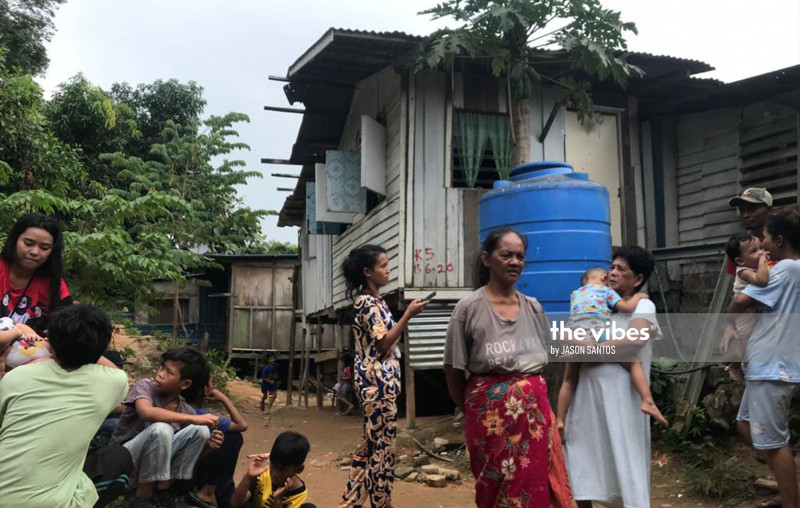
KOTA KINABALU – The true poverty line of residents living in the poorest districts should be reevaluated, as the assessment based on household income may not be accurate.
Universiti Malaysia Sabah political analyst Lee Kuok Tiung said Tongod, Pitas, and Telupid consistently experience traffic congestion, as they are connected to major townships in the east coast such as Sandakan, Lahad Datu and Tawau.
“One interesting fact about these areas is traffic congestion there. By right, if you are poor, how are there so many cars?
“So, we need some research or maybe even redefine the term poverty, because it is inaccurate to just take into account household income.
We need to take note that those in the rural areas who are living under the poverty line may not earn much in cash, but they still have land and crops compared to those in the urban areas who may be earning more.
“This is why land matters are very, very important to the rural folk.
“It is a sensitive issue to talk about, as it is not easy to determine whether those living in the poorest districts are really poor, or what their political affiliations are, or whether they support GRS-BN,” he told The Vibes.
“This is one of the reasons why land issues are important to them,” he said, referring to the land handed over by Chief Minister Datuk Seri Hajiji Md Noor during his recent trip.
Hajiji visited Tongod last Thursday, Telupid the next day, and Pitas on Saturday, all of which are listed as the poorest areas in Malaysia.
Kota Marudu, Kudat, Nabawan, and Beluran are also listed among poor districts in Malaysia.
Lee said the chief minister’s visit over the weekend could be interpreted as an attempt to tighten his political grip ahead of the general election.
He added that on one hand, the chief minister is showing his concern, but on the other, it could be seen as a pre-election trip.
“Different people, different perspectives. It could be the chief minister’s strategy to enhance the economy there, as it is not unusual for him to go for a visit.”
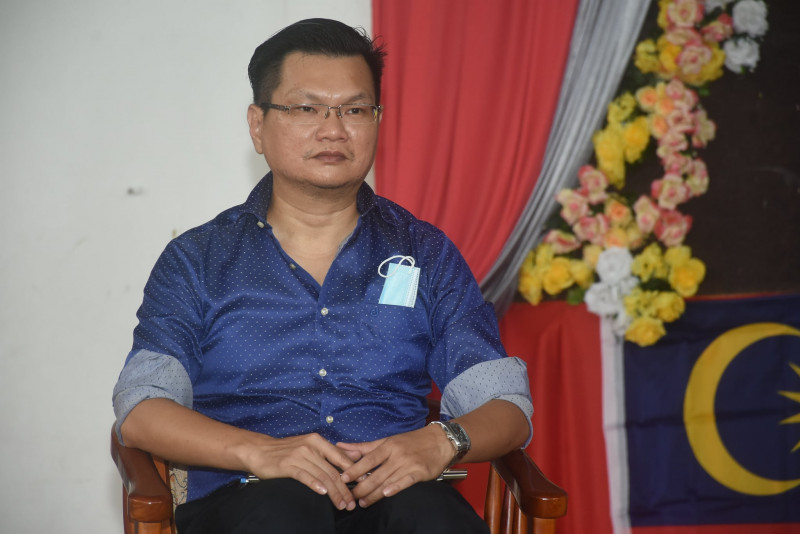
As for Universiti Teknologi Mara lecturer Tony Paridi Bagang, he said Hajiji’s five-year development plan called Sabah Maju Jaya must be clearly translated, as this will be his political capital to get support and retain loyalty.
“It is always a ‘blame game’ whenever we talk about development, especially in the poor districts. It’s sad to see that we’re still struggling with these issues. It’s a sign of poor leadership and reflects on the government (be it at present and previous governments).
The current government cannot merely pay lip service, while opposition parties should contribute constructively. The communities must also play their roles too,” he told The Vibes.
Talk of a looming general election has been rife for months as the government agreed to not dissolve Parliament before July 31 in the memorandum of understanding with opposition bloc Pakatan Harapan.
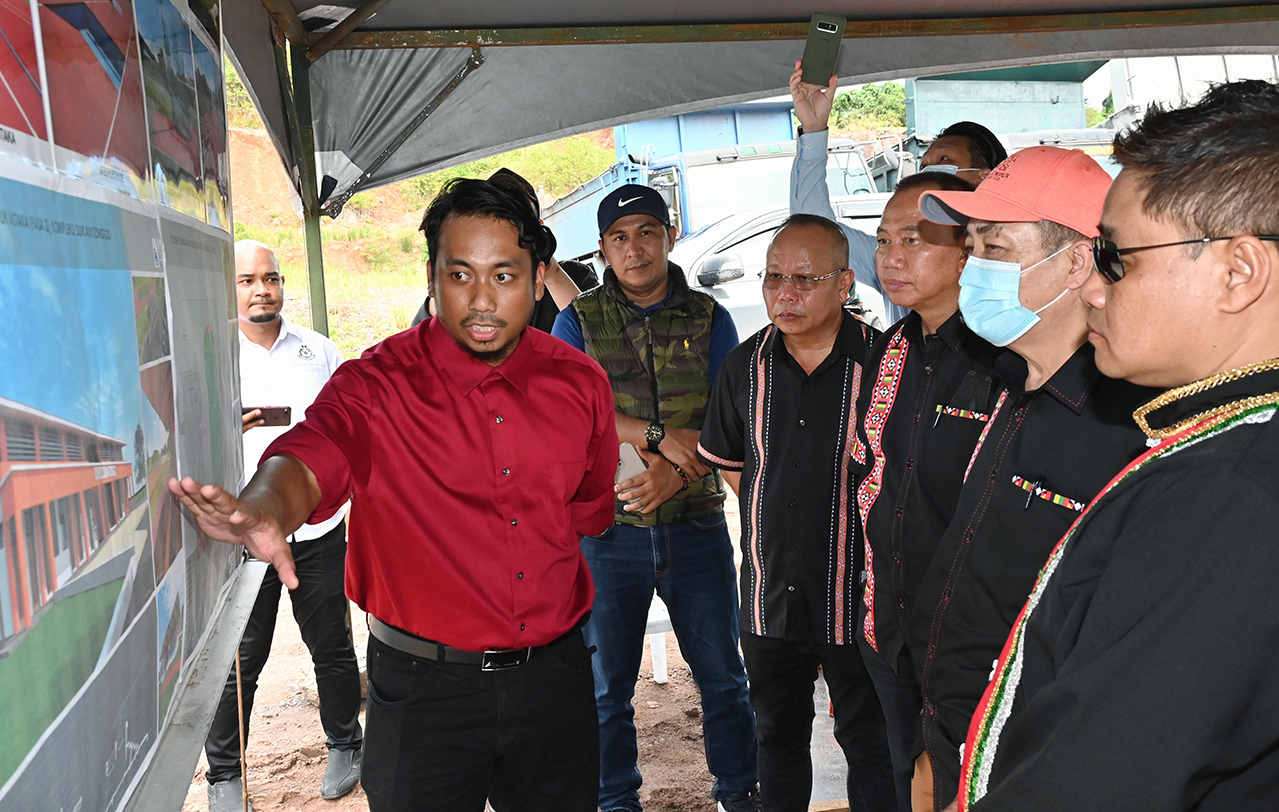
During his visits, Hajiji pledged development after launching some commercial projects in Tongod, Pitas, and Telupid.
He also handed over 611 land titles involving a land size of 3,893 acres in Tongod, 181 native land titles involving a land size of 1,294.296 acres in Telupid and 206 native titles in Pitas.
The land size in Pitas was not revealed by the chief minister’s office, but it was understood the land was initially designated to Sawit Kinabalu, a state-linked company.
A native customary rights dispute had arisen over the land in Pitas involving Sawit Kinabalu and the local communities.
During the Warisan-led government, the state has urged Sawit Kinabalu to give the land to the communities and the government will provide them with another plot as a replacement.
But Hajiji said the process of returning the land started in 2011 during the Barisan Nasional administration in Sabah via the native customary rights land survey work.
However, he did not offer any explanation as to why it took 11 years to hand over the land titles.
In Telupid, Hajiji announced a RM5 million allocation to build a community hall, while in Tongod he urged the communities to cooperate with the government agencies to develop agriculture activities such as oil palm cultivation.
He also failed to mention why many of the oil palm districts are still on the poverty list. – The Vibes, May 18, 2022