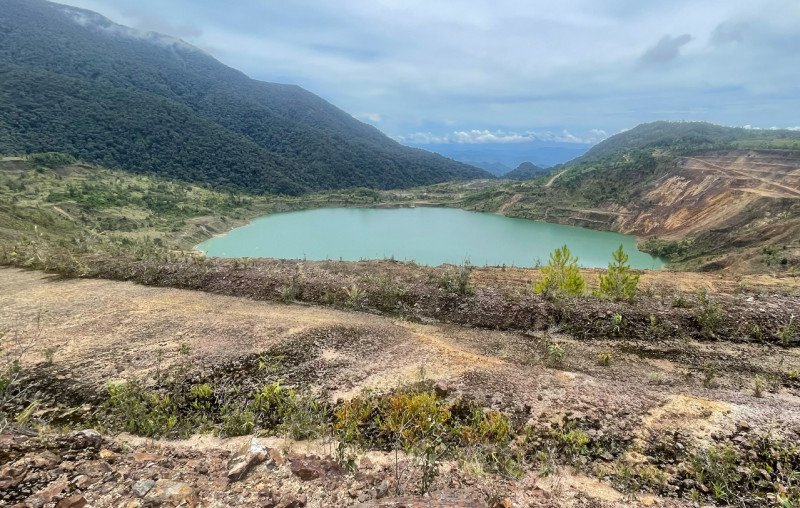

RANAU – It could cost the state government as much as RM500 million to treat 2.3 million cubic metres of heavily acidic water in the abandoned Mamut copper mine pit to redevelop it as an ecotourism attraction in the future.
Studies found that water in the pit, which was abandoned in 1999, is acidic due to the heavy metals left behind.
Experts are now being roped in to look into ways to neutralise its acidity in the 51-year-old quarry, said Sabah Tourism, Culture and Environment minister Datuk Jafry Ariffin.
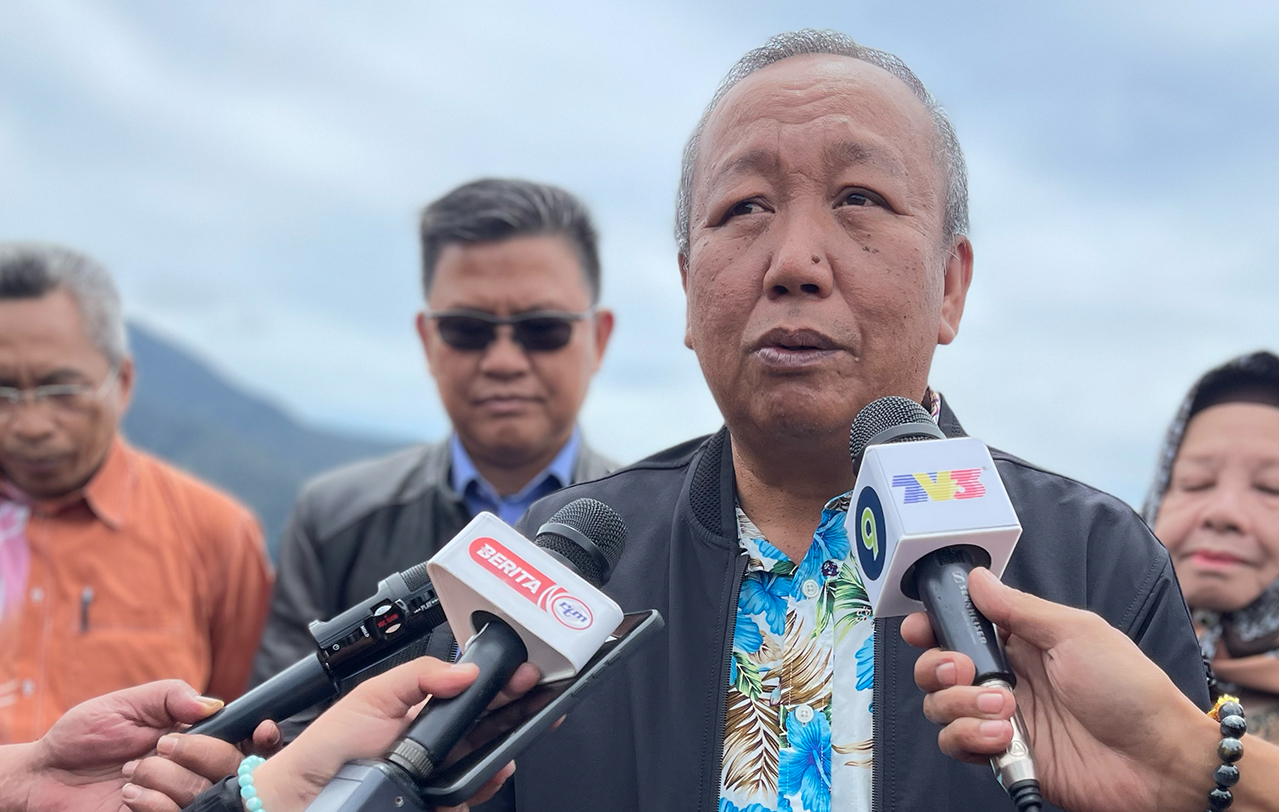
“Professional groups from local universities and local experts as well as those from abroad will be doing a study on it. If we don’t take action in treating the water, it could affect the nearby villages.
“So, after neutralising the waters, we will develop the place into an ecotourism area,” he told reporters here after launching the Scientific Expedition programme organised by Sabah Parks.
More than 50 researchers from 13 universities and government agencies are expected to take part in the study on the area’s biology, hydrology, geology, sociology, toxicology, biodiversity, geophysics, air quality, water quality and phytoremediation.
Interest in the mine came after the state cabinet agreed to gazette the 2,112-ha area as a nature reserve through the Parks Enactment 1984, under the purview of Sabah Parks.
Sabah Parks director Maklarin Lakim said the RM500 million cost is equivalent to 20 years of funding for his agency.
Jafry said he sees great potential in the Mamut mine as an ecotourism destination, adding that Ranau locals could benefit from such economic activities.
Mamut, which is near Mount Kinabalu, can be a new trekking hotspot once safety concerns are addressed, he said.
He also sees the potential of building a museum dedicated to the mining activities in the area, while visitors can get to enjoy the cool air of the highlands here.
He added that infrastructure such as roads should be improved in line with ecotourism development.
Mamut’s history
Exploration of Mamut as a mine started in 1958 when copper was found in the Labuk Valley.
The discovery of copper in Sg Mamut, Sg Lohad and Sg Bambangan was proven through geochemical observation via the United Nations Special Fund for Labuk Valley between 1963 and 1965.
These discoveries led to 1,942ha southeast of Mount Kinabalu marked for mining activities in 1971.
The beneficiary was a Japanese-Malaysian joint-venture company known as Overseas Mineral Resources Development Sabah Sdn Bhd, which was sold to Mega First Bhd in 1991 and renamed Mamut Copper Mining Sdn Bhd.
The Mamut mine began production in 1975, producing 600,000 tonnes of copper, 45 tonnes of gold and 294 tonnes of silver during its 24 years of operation.
The mine was left abandoned for 23 years before it was handed to Sabah Parks this year.
It had generated an export revenue of RM3.4 billion but left behind an open quarry pit with a depth of over 500m and toxic waters that threatened the community and environment.
Concerns about Mamut
After the deadly 2015 quake in Sabah, there were concerns that the quarry pit walls would collapse leading to the release of toxic waters.
The mine, which is some 1,600m above sea level, would threaten the safety of more than 20,000 people from 40 villages if its walls were to collapse.
Questions have also been raised on the poor environmental management on the part of the mining companies which reaped profits from the resources but left behind a hefty clean-up bill.
In 1975, silt from the mine washed into the three rivers, contaminating agricultural land along their banks. – The Vibes, August 25, 2022