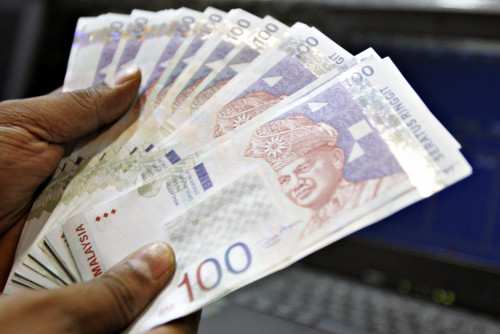

KUALA LUMPUR – As horrendous as it may feel, Malaysians appear compelled to come to terms with the deteriorating currency value as the ringgit sees its weakest point since the Asian Financial Crisis of 1997.
On September 30, it was reported that the ringgit opened marginally higher versus the greenback for the second consecutive day amid tepid market sentiment, improving to 4.6350/6395 from the previous day’s closing of 4.6380/6425.
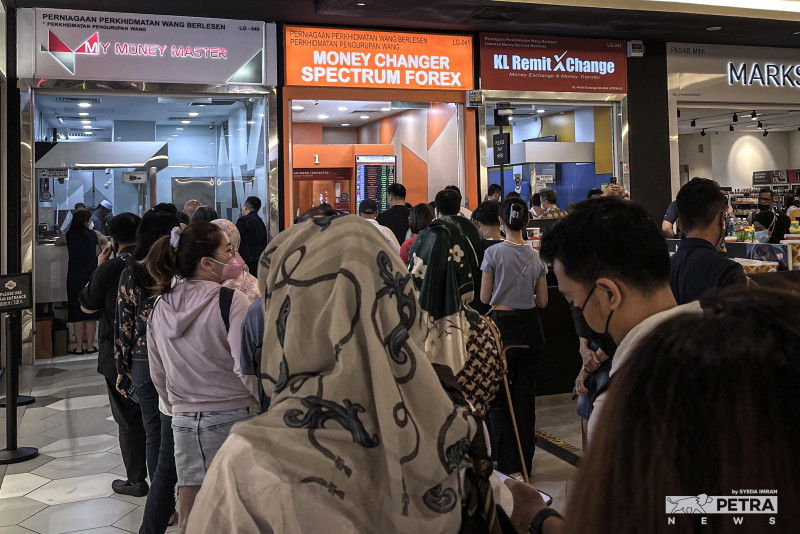
Several patrons of money changers in the city centre here who were approached by The Vibes yesterday seemed resigned to the current conditions, with many seeing no choice but to be prepared to simply bear with the fluctuating exchange rate.
One such customer lamented it feels as though Malaysians have hit a dead end, with apparently no achievable solution at hand to combat the financial difficulties plaguing the people.
“Our currency (value) is dropping and the overnight policy rate (OPR) keeps on increasing – but our salaries are not going up. I don’t know what to do anymore,” the customer, who asked to be known only as Israr, said.
“We don’t have time to work more (than what we are doing). And even if we did, what work can we do? As normal people, we just have to live with the way things are,” he said, theorising that citizens who have been apathetic on economic issues may be unfamiliar with how to tackle the present scenario.
“Economic terms are very complicated (to understand) and the economic literacy among Malaysians is not that great.
“The good thing about Malaysians is that we can endure and patiently sit through any pain… we are either too stupid, we don’t care, or we are too nice,” the 36-year-old freelance writer quipped.
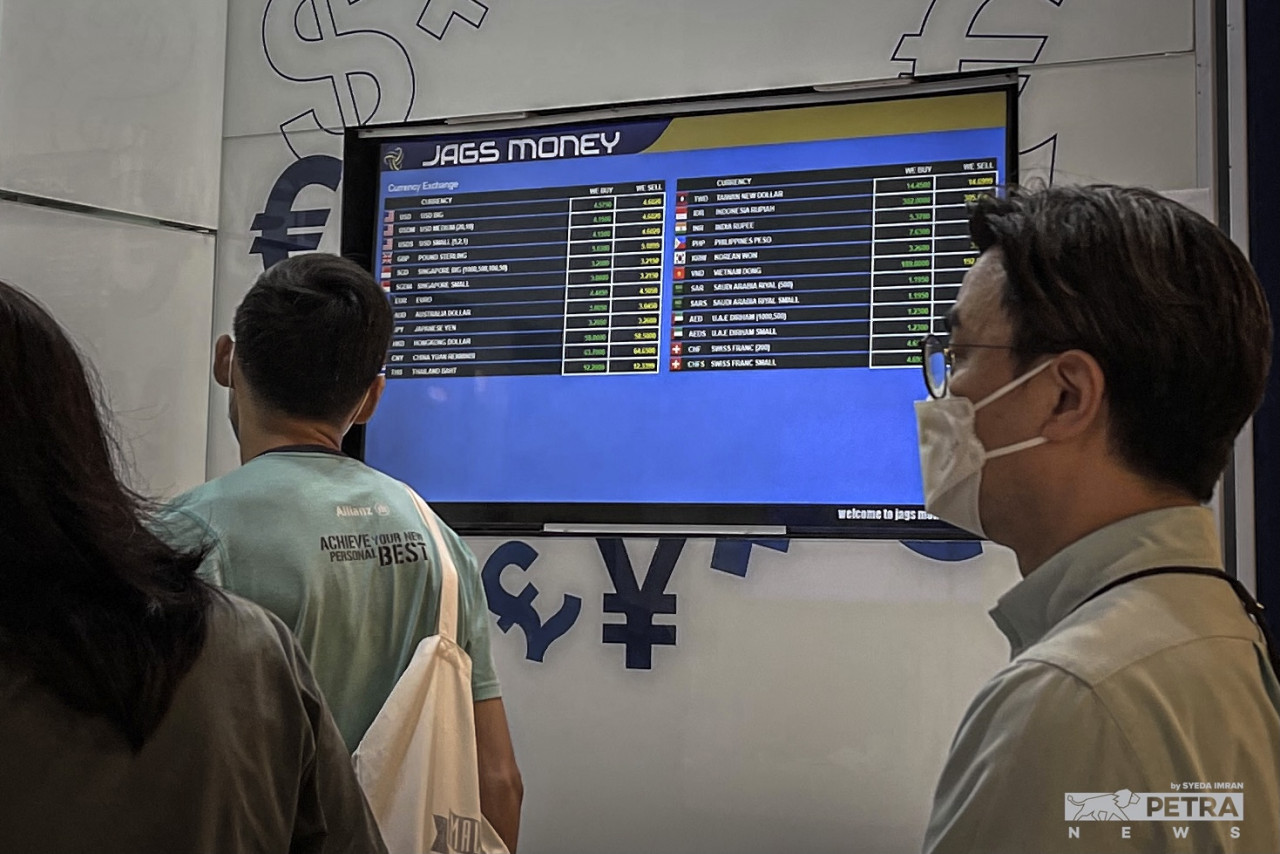
Expressing similar sentiments, 26-year-old business developer Jaden said that while the future of the local note seems bleak, there is not much the people can do to counteract the situation.
“The currency exchange rate now is still acceptable but if things get worse then the only thing we can do is work hard to get a higher salary,” he said.
He added that Malaysians should also endeavour to support locally produced products and choose domestic holiday destinations.
Shameful compared to neighbouring countries
Retired auditor Ong, 71, bemoaned how Malaysians will now “lose face” to citizens of other countries whenever the topic of currency rates is brought up.
This is especially so as the buying power of people from our neighbouring countries is much higher than ours when travelling to developed states.
“The moment we step outside of our country, we realise how small (our ringgit) really is. It is shameful how neighbouring nations can afford to spend more of their money in Western countries,” he said.
“How are we expected to be proud of being Malaysian if we cannot even hold our own whenever we travel overseas and we have to hang our heads in shame?”
However, Ong said that while it is unlikely that the ringgit will drop as drastically as it did during the financial crisis in the late 90s, the anxiety of the debacle repeating itself is ever-present.
“It (collapse of the currency exchange rate) happened to us once, that’s why we are fearful,” he said.
During the financial downturn of 1997 and 1998, the ringgit had once fallen to an abject low of 4.9 to the US dollar.
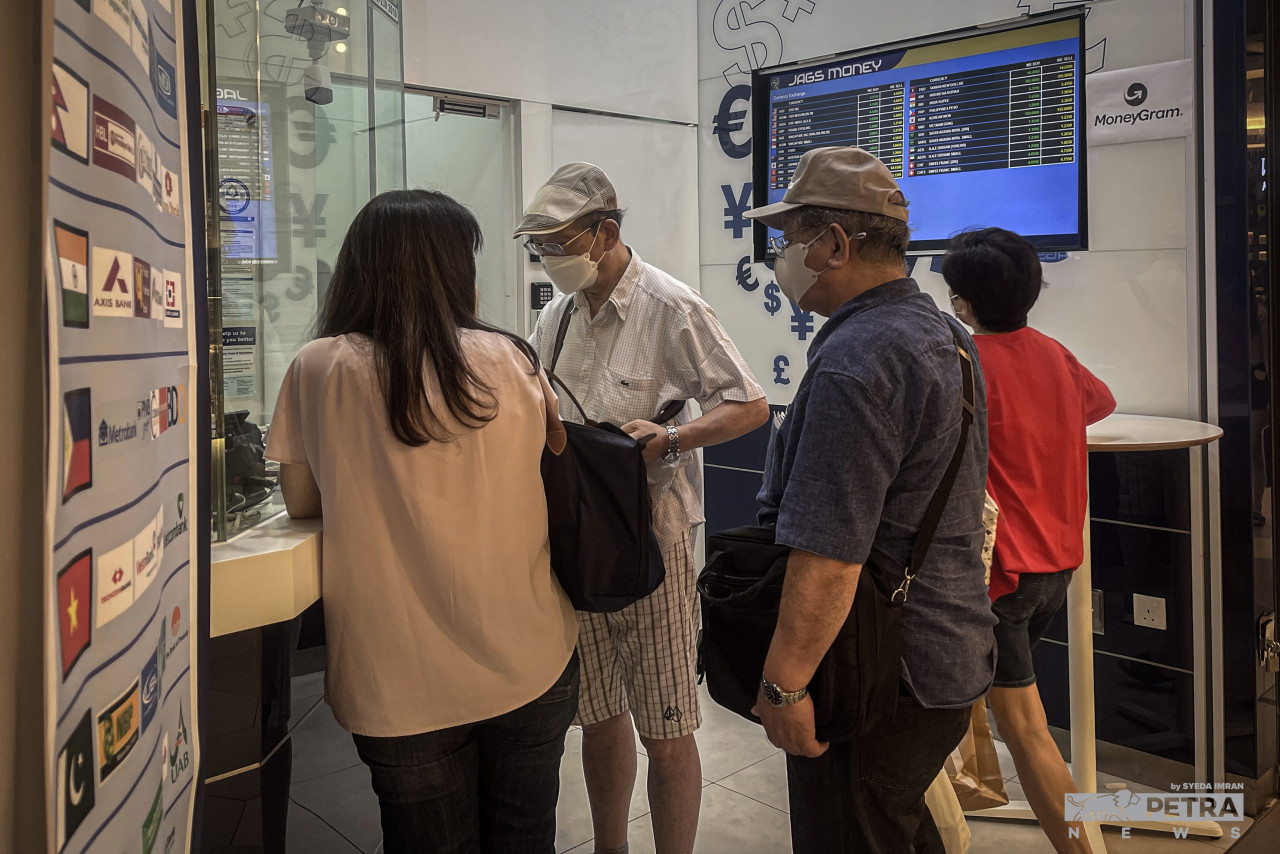
Trying to see positive side
Taking a more optimistic outlook on the situation, Azman Shah, 41, said that now is a “good time” to travel to the United Kingdom as the ringgit continues to strengthen against the British pound.
“The Euro and US dollar are still quite strong (currencies) so I’m trying to travel to places where our ringgit is getting stronger,” said the employee at a private company.
He said that he will be heading to the UK soon to pursue business plans, which were previously postponed due to the Covid-19 pandemic.
Meanwhile, Japanese national Shin Uno, 26, who has worked in Malaysia for the past two years, said that he is in a comfortable position vis-à-vis the devaluation of the ringgit against the Japanese yen, which was last reported to be at 3.1876/1890.
“I’m happy since my family back home can spend more with the money that I send back to them,” he said. – The Vibes, October 1, 2022