![[UPDATED] Focus on pivotal issues, not who OCS is under: Sivakumar](https://media.thevibes.com/images/uploads/covers/_large/12122022_-_Sidang_Media_bersama_Menteri_Sumber_Manusia__V.Sivakumar_mengenai_Skim_Keselamatn_Sosial_Suri_Rumah_di_Kementerian_Sumber_Manusia_-_AZIM_RAHMAN_3.jpg)

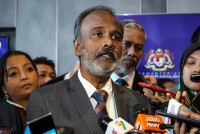
PUTRAJAYA – Human Resources Minister V. Sivakumar has stressed the importance of tackling foreign labour issues in the nation, regardless of which ministry is in charge of the One Channel System (OCS).
Acknowledging statements by certain groups urging his ministry to helm the system, he said that the current priority is to ensure firms have sufficient workforce to continue operating their businesses.
“The issue is not where we should put (OCS), but how we are going to solve the problem of foreign labour (shortages).
“Whether OCS is under my ministry or the Home Ministry, what matters is how we are going to solve the troubles we are facing,” he said.
The Batu Gajah MP added that the OCS is currently ongoing and is under the purview of his ministry, for now.
OCS, a system designed to handle the recruitment and management of foreign workers, is part of the memorandum of understanding signed between Malaysia and Indonesia on the placement and protection of Indonesian domestic workers here.
Yesterday, the Malaysian Employers Federation had urged the ministry, as the “custodian of labour and working with employers and union”, to continue managing the OCS.
Meanwhile, Sivakumar said that over 700,000 approvals for employers to bring in foreign labourers have been released by the ministry since April.
“(Prime Minister Datuk Seri Anwar Ibrahim) has requested that the ministry speed up the entry approvals of foreign workers in Malaysia, so we will see what mechanisms we can implement to fulfill (this directive).
“We realise that there is great pressure for the process to be expedited since many sectors are in need (of foreign labour) having their productivity affected by the manpower shortage,” he said.
After a post-cabinet meeting earlier today, Anwar had called on the ministry and the Home Ministry to hasten the entry approval of foreign labourers, especially in the agriculture, service and construction sectors.
Besides that, Sivakumar also confirmed that the amended Employment Amendment Act 1995 will be implemented on January 1 next year.
Among the key amendments include the extension of maternity leave allocations from 60 days to 98 days, reduced weekly working hours from 48 to 45 hours, and a seven-day paternity leave for married male employees.
Sivakumar pointed out that another amendment to the act involves requiring employers to obtain approval from the Labour Department director-general prior to bringing in foreign workers.
“The approval under Section 60K(4) is subject to all categories of foreign workers in Malaysia.
“The move acts as an effective initial screening mechanism to make sure that employers of foreign workers have a clean record according to labour standards,” he said. – The Vibes, December 21, 2022