By Datuk Seri Dr Irmohizam Ibrahim
A RECENT personal encounter with a highway accident has raised fresh questions about the deteriorating standards of responsible driving in Malaysia, and the broader culture of road use that often neglects safety, courtesy, and accountability.
The incident, which occurred on the North-South Expressway near Seremban, involved the vehicle of a man en route to Johor Bahru to visit his ailing mother. After stopping in time to avoid hitting a crashed car ahead, his own vehicle was rear-ended by another, which had also been struck from behind in a chain collision.
“There were no fatalities, but the emotional impact and the waste of time and resources were significant,” he said, echoing the frustrations of many motorists who drive cautiously yet still fall victim to the negligence of others.
He questioned how such a collision could occur despite his defensive driving, asking, “If I could stop in time, why couldn’t the drivers behind me?” It’s a reflection of a growing unease among careful drivers, who feel let down by others who treat the roads as personal domains.
Many motorists now appear to lack focus and disregard fellow road users. Some behave as though they are the sole owners of the highways, with little regard for basic driving ethics, let alone legal obligations.
Although not all drivers fall into this category, a concerning number exhibit impatience, aggression, and a disregard for speed limits. Often, it’s not the road or weather that causes accidents – it’s the attitude behind the wheel.
Moral responsibility must go hand in hand with legal enforcement. Caution, focus, and empathy should be the norm, not the exception.
This discussion was further intensified by the devastating crash on 13 May involving a Federal Reserve Unit (FRU) truck in Teluk Intan, which left nine personnel dead. The tragedy drew sombre comparisons to the Karak Highway disaster of 28 February 1990, which killed 11 FRU members.
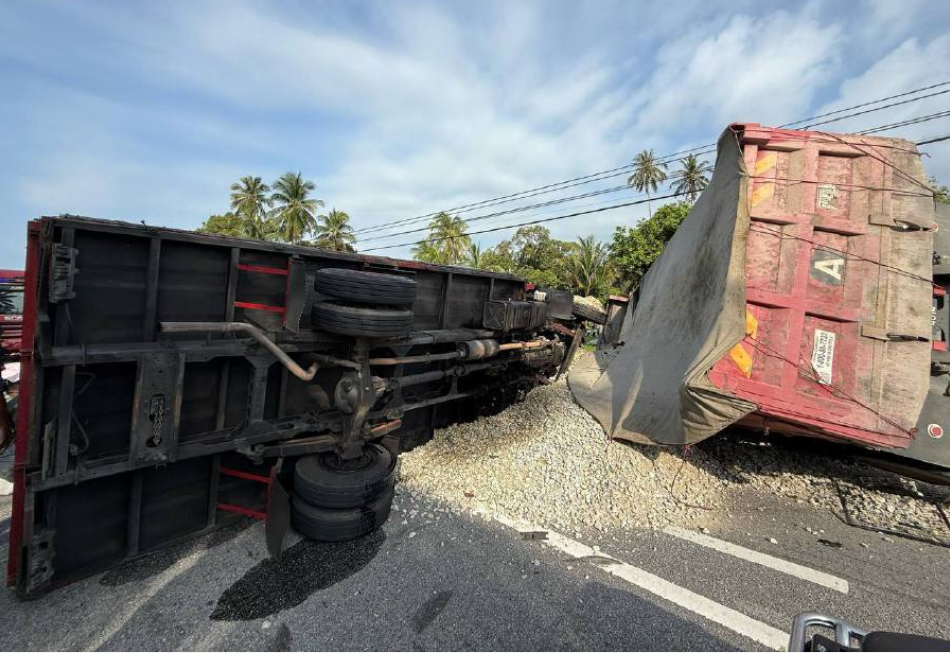
Initial investigations suggest that a faulty steering system in the lorry carrying construction materials may have caused the collision, a fault that could have been prevented through rigorous vehicle inspections. Deputy Prime Minister Datuk Seri Dr Ahmad Zahid Hamidi stated, “This tragedy could have been avoided had the lorry undergone proper, regular inspections by Puspakom.”
Transport Minister Anthony Loke has since announced the formation of a special task force to investigate the incident, comprising independent representatives and road safety experts.
Yet this is just one of many road tragedies to make headlines in recent months. Despite public awareness campaigns and ongoing enforcement, fatal and non-fatal accidents continue to occur at an alarming rate. Often, they are quickly forgotten—leaving only brief moments of public reflection before reckless behaviours resume.
Where does the fault lie? Are existing laws insufficient? Is the quality of driver education lacking? Are vehicle inspections lax? Could poor road infrastructure also be contributing?
These are all valid questions—and they must be addressed together.
A national conversation and a multi-stakeholder approach are urgently required. Beyond task forces, it may be time to establish a permanent commission to examine the root causes of road accidents and propose long-term solutions.
As the 13th Malaysia Plan (RMK13) is being drafted, road safety must be treated as a strategic national priority. Hundreds die on Malaysian roads every festive season. These numbers should never be accepted as inevitable.
We must reject the notion that road accidents are simply unavoidable. They are preventable—but only if there is political will, rigorous enforcement, and widespread public responsibility.
Safety on the roads begins with each individual behind the wheel. True change will only happen when every driver, policymaker, and enforcement agency shares that responsibility. - May 17, 2025
The writer is the Group Managing Director of the World Trade Centre Kuala Lumpur (WTCKL) and a Member of the Board of Directors of the World Trade Centers Association, headquartered in New York, United States