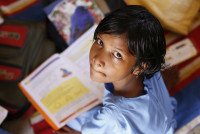
AS 81% of children aged 5 to 17 are found to experience at least one trauma symptom during the early phase of Covid-19, experts warn that the pandemic’s effect on their mental health may leave them with a deep scar and persist for the rest of their lives.
In addition, statistics show that child helplines worldwide have seen a 30% to 40% increase in calls related to psychosocial mental health since March – with a large number of calls related to self-harming among children.
In short, while children are not affected by the economic downturn caused by the pandemic, the chaos, tension and instability of growing up during this crisis threaten to affect the mental health of many children, particularly those from low-income and less-educated households.
While school closures and the work-from-home culture have become global norms, they have reorganised family dynamics and created a potentially stressful home environment.
A parent is not only squeezing in job-related tasks while at home, but also has to spend extra time home-schooling their children, taking care of them, and dealing with their emotions.
These changes have placed parents at increased risk of parental burnout, as they have their usually separate environments converging almost immediately.
This is backed by verbal evidence obtained from Emir Research’s 3Q20 focus group discussion, where several participants highlighted how they are overwhelmed by the current situation (working while caring for their children at home), and worried that this might affect their mental health.
Experts said parenting may become stricter and more aggressive as parents experience elevated levels of cumulative stress.
This concurs with a study by World Vision Malaysia, which found that 69% children said their parents used physical punishment or psychological aggression due to the stress of lockdown measures and job losses.
While children may already be feeling isolated because of school closures and extreme, sudden shifts in their everyday schedules, harsh parenting will, in turn, have a detrimental effect on these children’s mental health, intensifying their behavioural and emotional issues.
Apart from that, as most children have been required to adapt to online learning during the pandemic, some seem to have the uphill task of adjusting to this sudden shift, especially for children who come from the B40 economic group, with limited access to electronic devices and the internet.
This hampers their ability to fully participate and engage in online learning, which may lead to a growing sense of isolation and fear of being left behind.
Consequently, studies show that these factors will negatively impact the development of their brain structure and damage the development of the nervous system’s support cells, which, in turn, affects the development of cognitive function (learning, thinking, reasoning, remembering, problem-solving and decision-making).
Thus, by looking at the magnitude of this issue, what can be done to address this problem before it silently “kills” our children?

As reported by CodeBlue, since Malaysia has only 204 psychiatrists working in government facilities, the Health Ministry needs to hire more psychiatrists and assign them evenly across the country as a means to improve access to mental health services.
This problem should be tackled as a matter of urgency, as a low number of psychiatrists would decrease the ability and efficiency of operations, which would, in essence, increase the waiting time for suffering children to get the care they need.
The ministry also needs to introduce early mental health screening with free consultancy charges to make it easy and possible for everyone, especially those from B40 families, to receive early attention so that intervention can take place, if needed.
This is also vital to lessen the long-term disability of the affected children and prevent years of suffering.
More investments should be made to educate families and the community on mental health literacy through parenting workshops or peer-assistance groups focusing on children, as these will help create a supportive and enabling environment for children.
Next, in order to boost mental healthcare delivery, the government may want to support and expand virtual mental health services. These are not necessarily delivered through websites or applications; they could also be delivered through phone calls.
Although in-person treatment is best for the affected children, the pandemic and the possibility of more outbreaks make it imperative that we pursue options to address their needs.
To support the remote delivery of mental health services, providers must ensure that they offer personalised care that is tailored to the needs of each suffering child, as virtual services may lead to a one-size-fits-all solution.
Most importantly, efforts must be made to ensure children’s safety and privacy in virtual care settings. – The Vibes, December 25, 2020
Afifah Suhaimi is a research assistant at Emir Research, an independent think-tank focused on strategic policy recommendations based on rigorous research