A TARGETED hybrid work model, combining working from home (WFH) and office-based duties alongside rotational schedules, is considered the most effective approach if WFH arrangements are introduced for Malaysia’s public sector.
Economic analysts stress that precise mechanisms are essential, as the model is closely tied to productivity levels and the government’s goal of optimising energy savings.
Dr Adilah Zafirah Mohd Suberi, an economic analyst at the IRIS Institute, said any WFH implementation must be carefully tailored to current circumstances and should not replicate measures adopted during the COVID-19 pandemic.
“What needs to be considered is whether WFH truly saves energy or merely shifts energy costs from the government to the public. In my view, full-scale WFH in the public sector is not feasible because the current situation is not the same as during the previous pandemic,” she told BH.
Earlier, government spokesperson Datuk Fahmi Fadzil confirmed that Prime Minister Anwar Ibrahim has directed Chief Secretary to the Government, Tan Sri Shamsul Azri Abu Bakar, and the Public Service Department Director-General, Tan Sri Wan Ahmad Dahlan Abdul Aziz, to study proposals for implementing a blended work-from-home system.
The initiative aims to ensure continuity of government operations amid geopolitical uncertainty, with decisions expected at the Cabinet meeting next week.
Not All Sectors Suitable
Dr Adilah highlighted that not every public sector role is suitable for WFH, and positions should be categorised based on the nature of duties.
“Roles most suited for WFH include administration, finance, and data analysis, while sectors such as research, higher education, and certain agencies are moderately suitable.
“At the same time, jobs in security, healthcare, counter services, and field operations are not suitable for remote work,” she said.
She added that to achieve the desired energy savings, WFH should align with government building operational zones and help reduce office space usage.
She also recommended flexible working hours and enhanced digital services to support the model.
Dr Muhammad Daaniyall Abd Rahman, Senior Lecturer at the School of Business and Economics, Universiti Putra Malaysia, said that WFH arrangements could help mitigate rising fuel costs caused by global geopolitical uncertainty while ensuring the continuity of government operations.
“WFH offers advantages such as reduced commuting costs, lower office utility bills, and more flexible work schedules. The challenges, however, include task coordination, performance monitoring, and data security. Clear coordination is therefore essential for successful implementation,” he said.
From a cost-saving perspective, WFH has the potential to reduce operational expenses related to office utilities, official travel, and facility usage.
However, significant savings require optimisation of existing infrastructure and digital tools.
“In the current context, a targeted hybrid or rotational model may be the most practical. In the future, the government could also consider a four-day workweek model, as adopted in some countries.
“This approach not only cuts costs but also benefits employee wellbeing and the environment,” he added.
Before the pandemic, WFH was largely theoretical or limited to multinational companies leveraging global remote workforces or specific professional exemptions.
The COVID-19 crisis fundamentally shifted perceptions, forcing both public and private sectors to adopt digital workflows in a short timeframe.
While initially challenging, the global and collective experience demonstrated that government, economic, and educational operations could continue effectively through communication technology and flexible work methods.
Now, with heightened geopolitical tensions following US and Israeli strikes on Iran, including strategic passages like the Strait of Hormuz, global oil prices are surging. Malaysia’s fuel subsidies have increased to RM3.2 billion per month — RM2 billion for RON95 petrol and RM1.2 billion for diesel — compared with RM700 million before the West Asia conflict.
Yesterday, Prime Minister Datuk Seri Anwar Ibrahim directed the Chief Secretary and Public Service Director-General to study WFH proposals for public servants to ensure operational continuity while reducing fuel usage amid mounting energy subsidy pressures.
Cabinet will decide on the matter on Tuesday (March 17).
Experts note that well-planned WFH could be a pragmatic strategy to reduce fuel consumption, ease subsidy burdens, maintain public service delivery, and minimise operational costs.
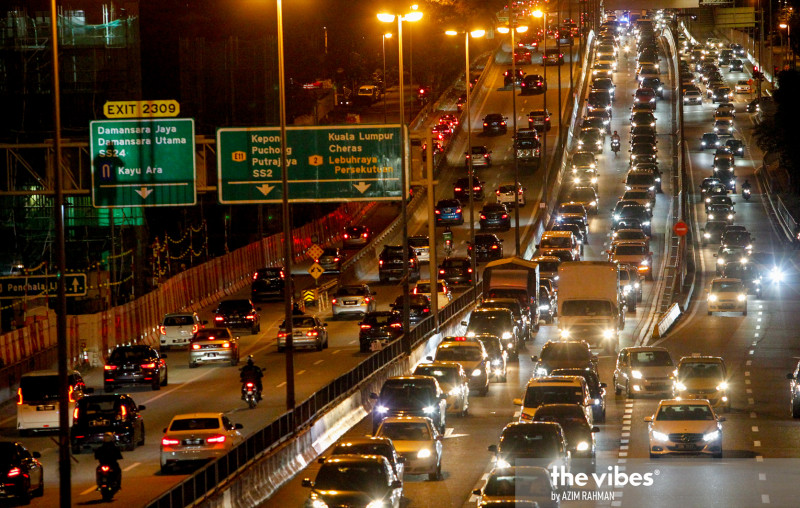
It could also reduce traffic congestion and carbon emissions, aligning with global sustainability priorities.
Effective implementation depends on clear work procedures, results-based performance monitoring, and robust digital infrastructure, balanced with professional discipline and respect for employee privacy.
With these conditions in place, WFH could be extended even to private sector roles suited to remote work, supported by comprehensive national guidelines for consistent and effective adoption.
The consensus among analysts is clear: in times of geopolitical uncertainty and rising energy costs, strategically implemented WFH offers a practical tool to reduce fuel consumption, manage subsidy pressure, and ensure continuity of public services and economic activity. - March 14, 2026