.jpeg)

THERE is an old principle that has protected justice for centuries.
You do not change the rules in the middle of the game.
Yet that is precisely the perception now surrounding the International Criminal Court.
As the Assembly of States Parties prepares to decide the future of Prosecutor Karim Khan, reports suggest that attention has shifted from simply applying the Court’s established procedures to debating how those procedures themselves should operate in this unprecedented case.
Whether these changes are technically permissible is almost beside the point.
Justice is not only about reaching the right decision.
It is about ensuring that every reasonable observer believes the process was beyond reproach.
That is the standard the ICC asks of every nation it scrutinises.
It should demand nothing less of itself.
This is no longer merely about Karim Khan.

It is about something far larger.
If the rules governing accountability can be adapted because a case is politically difficult, then every future prosecutor will quietly receive the same message.
Be careful.
Not because you may have broken the law.
But if your work becomes sufficiently inconvenient, the system itself may change around you.
That should concern everyone who believes in international justice.
Let me be clear.
If Karim Khan has committed misconduct, then the consequences should follow.
Justice demands accountability from everyone.
But accountability without procedural integrity is simply another form of power.
And power, however well-intentioned, is exactly what the ICC was created to restrain.
Over the past several years, the Court has demonstrated a willingness to investigate individuals who, until recently, many believed were politically untouchable.
That courage came at a cost.
The Court faced sanctions.
Political attacks.
Attempts to delegitimise its work.
Pressure from some of the world’s most powerful governments.
Against that backdrop, every procedural decision the Assembly now makes will be viewed through a geopolitical lens.
That is why extraordinary care is required.
Institutions earn legitimacy through consistency.
Not convenience.
Not expediency.
Not by rewriting procedures because a particular case is awkward.
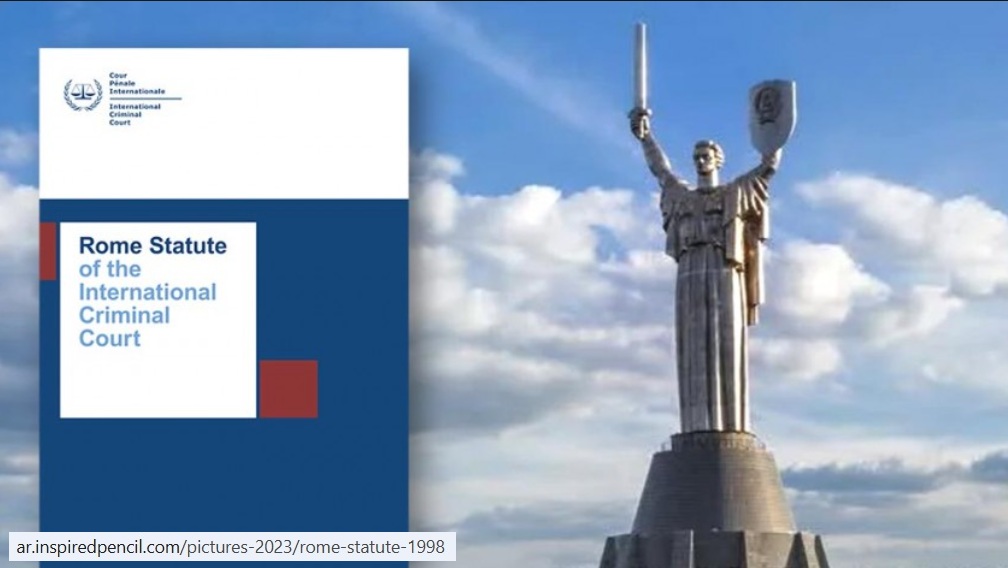
The Rome Statute was never intended to protect individuals.
It was intended to protect principles.
And principles only matter when they are applied consistently—even when doing so is uncomfortable.
If the international community wishes the ICC to remain the moral guardian of international criminal justice, then it must hold the Court to the same standard it expects every nation to uphold.
Predictable rules.
Transparent procedures.
Independent decision-making.
Nothing less.
Because the moment justice appears to change its rules depending on whose name appears on the file, it stops looking like justice.
It starts looking like politics.
The ICC has survived wars, diplomatic retaliation, sanctions and relentless political attacks because it represented something bigger than governments.
It represented the idea that law should stand above power.
The Assembly now has an opportunity to prove that this principle still means something.
Not by deciding in favour of Karim Khan.
Not by deciding against him.
But by ensuring that history remembers this process as one in which the rules were honoured - not rewritten.
That is the only verdict that will ultimately preserve the credibility of the Court itself. – July 5, 2026
Datuk Dr Vinod Sekhar is the publisher of The Vibes and Chairman of the Petra Group






.jpeg)