By Murray Hunter
A CONSISTENT thread of light, humanitarian socialism, the social-democratic and developmental variety, has long run through Malay society and politics in Malaysia.
It appears in traditional cultural traits, interpretations of Islamic social ethics, the policies of major Malay parties including UMNO and PAS, and the structure of the modern economy.
This form of socialism today is focused on mutual help, social justice, state intervention for equity, and protection of the community, especially the Malay majority.
Private ownership, markets and individual enterprise remain, but they operate within a framework of collective responsibility and guided redistribution, through both the New Economic Policy (NEP) and reserved Malay land.
Several deep-rooted Malay cultural traits help explain why such ideas found fertile ground throughout Malaya’s contemporary history.
Almost forgotten traditions in the traditional kampong, gotong royong was a practical expression of communal cooperation. Villagers regularly came together to build or repair houses, plant and harvest rice, clear drains and paths, maintain the surau or cemetery, and assist with weddings, funerals and other life-cycle events.
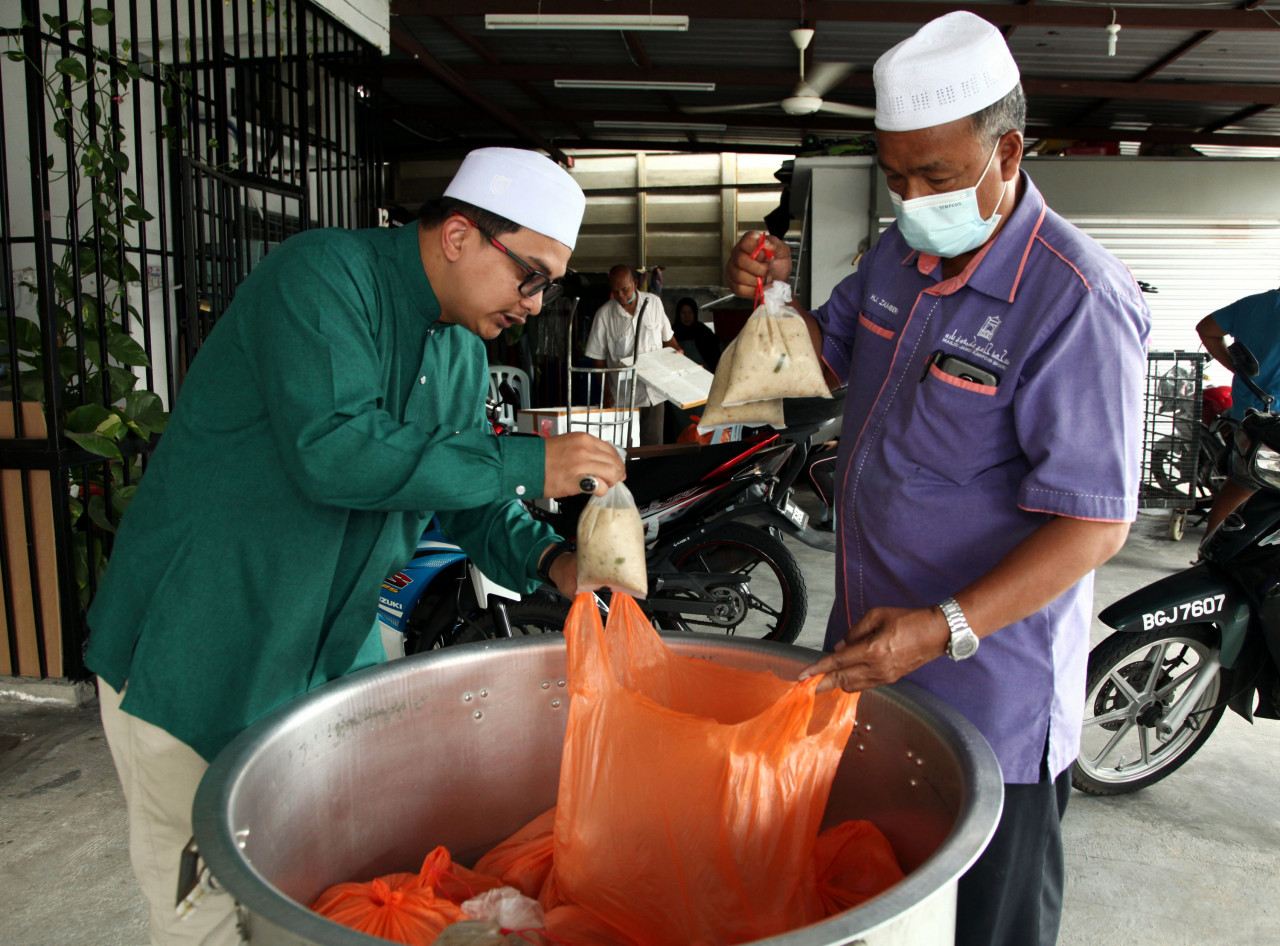
The familiar proverb “berat sama dipikul, ringan sama dijinjing” captured the expectation that burdens should be shared. More broadly, Malay society has tended to favour communalism rather than strong individualism.
Group harmony, collective responsibility, loyalty to kin and community, and the avoidance of open confrontation often take precedence over assertive personal autonomy or pure self-interest.
This cultural orientation creates a natural affinity for policies that stress mutual support, shared welfare and the idea that the community’s well-being is more important than unchecked individual gain. This is partly explained by Malaysia’s high power-distance score on widely used cultural dimensions such as those developed by Geert Hofstede.
In high power-distance societies, hierarchy is accepted as normal, and people are generally more willing to follow authority without extensive public questioning. Among many Malays, this has historically translated into relatively high deference to traditional leaders, the state, religious figures and those in positions of formal power.
When government programmes are presented as serving the uplift of the Malay community, this readiness to accept direction from above has made large-scale state intervention more readily accepted than it might be in strongly individualistic, low power-distance cultures.
The combination of communalism and hierarchical acceptance helped legitimise ambitious top-down social and economic programmes.
Islamic teachings have reinforced the same outlook for many.
Obligatory zakat functions as a structured redistribution of wealth from those with surplus to the poor, the needy, debtors and other designated categories.
The duty to care for orphans, widows and the vulnerable, the prohibition of riba (usury), and the repeated Qur’anic emphasis on adl (justice) have been interpreted by some Muslim thinkers as containing important socialist elements.
Early PAS leader Burhanuddin al-Helmy explicitly combined Islamist, nationalist and socialist ideas in the struggle against colonialism and inequality.
Malaysian sociologist Syed Hussein Alatas, in his work Islam and Socialism, argued that Islam’s principles of anti-exploitation and social justice made it compatible with non-Marxist forms of socialism focused on fairness and community welfare rather than atheistic materialism or the abolition of private property.
In formal politics, the pattern is clear. Early Malay leftist and populist groups drew on ideas of uplifting ordinary people (marhaen).
Within UMNO, the decisive shift came after the 1969 racial riots under Tun Abdul Razak. Razak, who had been exposed to British Labour Party and Fabian socialist thought during his studies, spoke of a form of “nationalist socialism” suited to a developing multi-ethnic nation.
The New Economic Policy (NEP) that followed introduced large-scale state intervention with two main prongs: the eradication of poverty regardless of race, and the restructuring of society so that Malays and other Bumiputera could participate more fully in the modern economy and no longer be identified primarily with subsistence agriculture.
This was deliberate social engineering aimed at equity and national unity.
Key institutions created or expanded in the Razak era still shape Malaysia today.
FELDA (Federal Land Development Authority) organised large-scale land settlement schemes that moved hundreds of thousands of rural Malay families onto new agricultural plots, complete with housing, infrastructure, technical support and a structured pathway out of poverty.
It was a classic state-led redistributive and developmental programme.
MARA (Majlis Amanah Rakyat) was established to advance Bumiputera participation in education, skills training, business and entrepreneurship through scholarships, loans, commercial ventures and institutional support.
Together with other agencies, these bodies embodied the belief that the state had a positive duty to correct economic imbalances and uplift the Malay community through organised collective effort.
There was an assumption that those privileged leaders would always take the interests of the people into action.
PAS has contributed its own version of this tinge. Although primarily an Islamist party, it has at various times emphasised welfare provision, rural development, anti-elite rhetoric and social justice framed through Islamic ethics.
In the states it has governed for long periods, PAS has pursued policies with clear redistributive and protective elements that appeal to lower-income and rural Malays who value collective support and moral economy over pure market outcomes.
That is partly the reason PAS has been in government there for a long period of time.
Today’s economy is reflective of this history
The contemporary Malaysian economy continues to reflect the Razak-era model and retains strong features of a light socialist or developmentalist system. Government-linked companies (GLCs) play a dominant role in strategic sectors.
The public bureaucracy remains large and central in directing economic activity, allocating resources and implementing preferential policies.
Equity ownership targets, subsidies, public education and housing programmes, and extensive state involvement in the economy persist.
FELDA and MARA continue to operate alongside a wider network of agencies dedicated to Bumiputera economic advancement.
Markets and private enterprise function, freehold land ownership is secure, and individual initiative is encouraged, yet they operate within a framework of heavy government guidance and redistributive goals aimed at social and ethnic equity.
This is a mixed economy with a pronounced interventionist and welfare character.
The Malaysian economy is not laissez-faire capitalism, nor is it Soviet-style central planning.
The focus has always been practical and humanitarian, aimed at reducing poverty, correcting historical imbalances, fostering mutual support, and using the state as an instrument of community uplift.
Cultural communalism, acceptance of hierarchy, Islamic ethics of justice, and the institutional legacy of Tun Razak’s era have all sustained this approach.
The light socialist colouring remains one of the quieter but durable features of Malay society and politics.
It can be traced from the kampong practices of gotong royong and communalism, through the cultural readiness to accept authoritative direction for the common good, the ethical teachings of Islam on justice and redistribution, the ambitious nation-building of Tun Razak’s time with institutions such as FELDA and MARA, and the continuing role of GLCs and state guidance in today’s economy.
Unfortunately, many politicians today appear to have forgotten this deeper aspect of the Malay political psyche.
Too often they have become focused primarily upon their own personal wellbeing, status and material advancement rather than the broader communal and redistributive responsibilities that once animated Malay political culture.
When the ethic of shared burden and collective uplift is neglected in favour of private gain, the original spirit that helped shape both society and policy risks being hollowed out.
Recovering an awareness of that older communal and humanitarian strand may be necessary if Malay politics is to remain connected to the values that long gave it meaning. – September 4, 2026