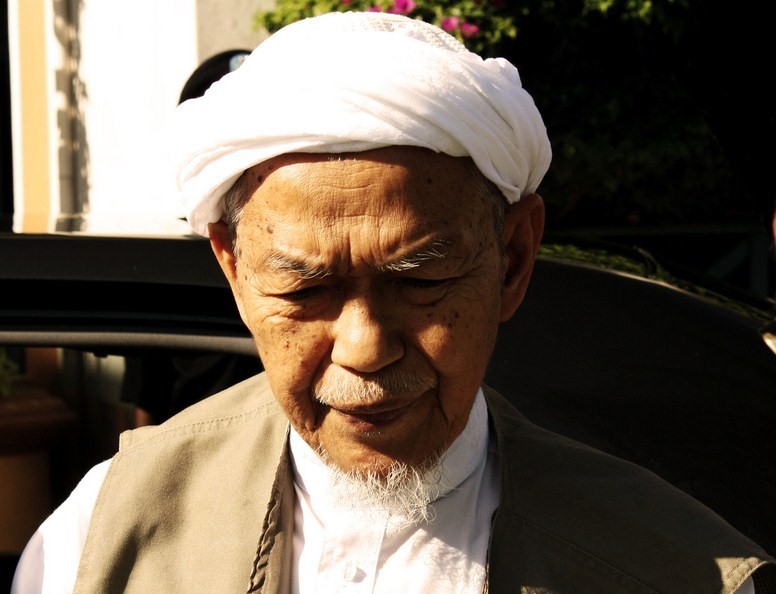

THE late Tan Sri Nik Abdul Aziz Nik Mat once made a pointed argument about race and morality: being Malay does not make someone more honourable, just as being Chinese or Indian does not make someone any less worthy in the eyes of the Creator.
His remarks, made in December 2010, have resurfaced amid renewed discussions on corruption, abuse of power and the tendency to judge individuals by their racial identity rather than their conduct.
The former PAS spiritual leader maintained that piety and character, not ethnicity, were the true measures of a person’s worth.
“Whether Malay, Chinese or Indian, race carries no additional value in the sight of Allah SWT except through piety.
“A Chinese person who is devoted to Allah SWT is far more honourable than a Malay who engages in corruption, oppression, betrayal and other wrongdoing,” he said.
Nik Aziz also cautioned against mistaking religious appearance for genuine righteousness, arguing that outward symbols meant little without the values they were supposed to represent.
“Even if someone wears a songkok three handspans high, without piety towards Allah SWT, it has no value,” he said.
His views were not confined to personal conduct. They extended to the question of who should be allowed to lead the country.
Nik Aziz had argued that a non-Malay Muslim with good character and strong religious convictions should not be denied the opportunity to hold the country’s highest office.
He considered a Muslim who was righteous and trustworthy, regardless of ethnicity, more deserving of public confidence than a Malay involved in corruption.
The underlying message was that neither race nor religious appearance should be used to excuse wrongdoing or determine a person’s suitability to hold public office.
More than a decade later, the argument remains relevant in Malaysia, where corruption allegations and questions of accountability are often caught up in racial and political rivalries.
The case of former prime minister Datuk Seri Najib Razak illustrates why public officeholders must be judged by their actions and the findings of the courts, rather than their political or ethnic identity.
Najib was convicted in the SRC International case involving RM42 million in funds and initially sentenced to 12 years in prison and fined RM210 million.
Following a royal pardon, his prison sentence was reduced to six years and the fine to RM50 million.
On November 10, 2026, he began serving the remainder of his SRC sentence under house arrest, with the term scheduled to end on August 23, 2028.
In a separate case involving 1Malaysia Development Berhad (1MDB), Najib was convicted on December 26, 2025, on 25 charges, including abuse of power and money laundering involving approximately RM2.3 billion.
He was sentenced to 15 years in prison and fined RM11.4 billion. On October 14, 2026, the High Court rejected his application to stay the sentence pending appeal.
The 1MDB conviction is separate from the SRC case, for which he is currently serving his sentence under house arrest.
Nik Aziz’s remarks went beyond a warning against corruption.
They challenged the practice of treating race as a measure of moral standing, particularly when those in positions of power are expected to answer for their actions.
His point was simple: no one is above scrutiny because of their race, and no one should be judged by it either.
Ultimately, integrity is reflected in what a person does, not the community they come from. – November 17, 2026