THE government has been urged to deepen its cost-cutting measures by downgrading the class of air travel used by ministers and senior officials during overseas trips, following recent steps aimed at curbing public spending.
Social activist Tan Sri Lee Lam Thye said the proposal should be considered as part of a broader effort to demonstrate financial prudence, particularly as global economic uncertainty intensifies amid the ongoing conflict in West Asia.
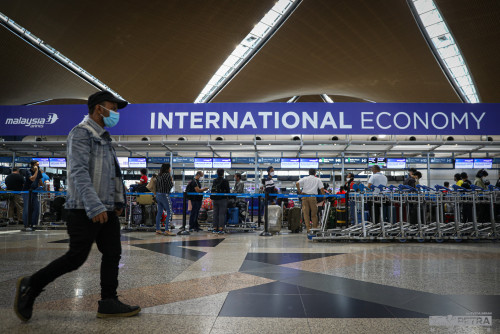
Lee, chairman of the Safe Community Alliance, suggested that ministers and top government officials should travel in business class rather than first class whenever official overseas visits are necessary.
He also called for official delegations to be limited to small groups comprising only essential personnel so that trips remain focused while reducing costs.
“Meetings should also be conducted virtually, and digital platforms should be expanded to reduce travel expenses as part of this cost-saving effort.
“Ministries and government agencies can also reassess other non-urgent expenditures to ensure that every sen of public funds is spent efficiently and responsibly.
“This step will increase public confidence that the government is truly committed to financial discipline and is willing to lead by example in facing current economic challenges.
“Prudent management of national resources today will help ensure that the country remains resilient and better prepared to face uncertainty,” he said in a statement.
The suggestion comes after the government recently announced a series of austerity measures designed to reduce non-essential spending.
Last week, Prime Minister Anwar Ibrahim decided that ministries, government agencies and government-linked companies would not organise open house celebrations for the Aidilfitri festival this year.
The decision, approved by the Cabinet, was presented as a cost-saving measure in response to global economic uncertainty triggered in part by the escalating conflict in West Asia.
Anwar also said ministers and members of the administration would be restricted from undertaking overseas travel unless the visits were already scheduled or considered essential.
Lee welcomed the government’s broader move towards more prudent spending, describing the measures as timely and responsible given the fragile global economic climate.
He noted that the prolonged crisis in West Asia could continue to affect economic stability, energy prices and the overall cost of living.
“At a time when many people are tightening their belts and practising greater frugality, it is only appropriate for the government to also demonstrate prudence and fiscal discipline in managing public funds.
“This move sends a positive signal that the government recognises the need to prioritise truly essential spending and ensure that national resources are channelled into programmes that directly benefit the people,” he said. - March 17, 2026