PRIME MINISTER Datuk Seri Anwar Ibrahim has implemented a series of austerity measures in response to ongoing global economic instability caused by the escalating Israel–US–Iran conflict, which is expected to continue in the near term.
Among the measures, the Prime Minister has directed that all government agencies, including government-linked companies (GLCs) and government-linked investment companies (GLICs), refrain from organising Aidilfitri open house celebrations this year.
Observers have praised the move as a timely and practical step to prevent wasteful expenditure while promoting savings that ultimately benefit the public.
In light of the same principle of fiscal prudence, former officials and political commentators have urged the government to consider cost-saving measures in managing upcoming elections.
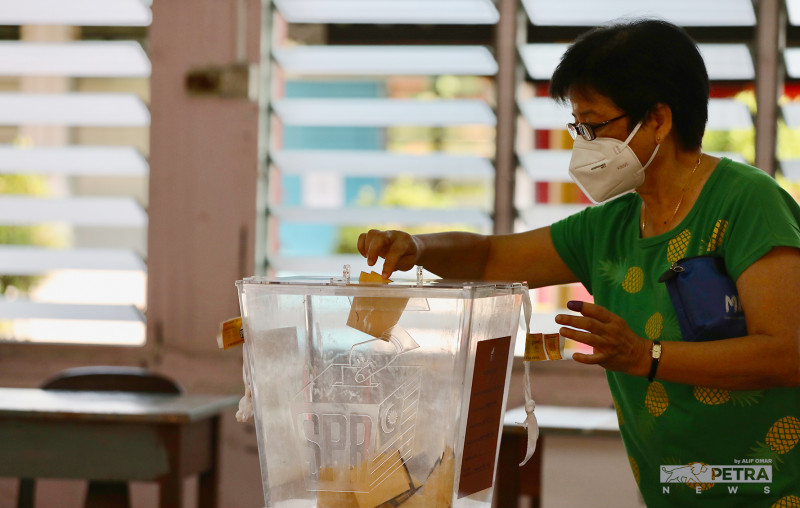
Specifically, if the 16th General Election (PRU16) is scheduled this year, it has been proposed that the election be synchronised with three state elections in Sarawak, Melaka, and Johor.
Experts estimate that combining these polls could save approximately RM250 million in administrative costs alone.
Former Election Commission Deputy Chairman Datuk Seri Wan Ahmad Wan Omar said: “The savings from managing the elections are not limited to the costs borne by the Election Commission as the body administering the process, but also include the various expenses incurred by government agencies supporting the elections, such as the Royal Malaysia Police, district offices, local authorities, and other departments involved in executing the democratic process.”
With inflation and rising operational costs, the management of PRU16 alone is expected to exceed RM1 billion.
Conducting the three state elections separately could add another RM500 million in expenditure, making synchronisation a potentially significant fiscal advantage.
The proposal also accounts for election-related costs incurred by political parties, including campaign expenses, training, posters, celebrations, and transportation.
Coordinating the general and state elections could therefore conserve substantial public and party funds.
Beyond cost savings, synchronised elections are believed to invigorate political engagement and boost voter turnout. “If elections are held separately, public fatigue with political campaigns increases.
This was evident in several by-elections following the 15th General Election, where voter turnout was low,” the expert said.
Frequent elections can also disrupt government operations, affecting the work of agencies such as state education departments, schools, and teachers.
The police face added responsibilities to maintain security, manage campaign activities, traffic control, and public order. Extended campaign periods can also disturb daily life, undermining social harmony and increasing public tension.
Simultaneous elections, on the other hand, tend to generate higher turnout, which often results in candidates winning with larger majorities. This ensures that elected parties or coalitions, whether forming the federal government or state assemblies, enjoy a strong and stable mandate.
“Synchronised elections offer both fiscal prudence and reinforce democratic legitimacy by producing governments with clear majorities and the confidence to govern effectively,” the former official said.
The Wan Ahmad emphasised that this approach could provide the government with a practical strategy to manage resources efficiently while upholding democratic principles. - March 17, 2026