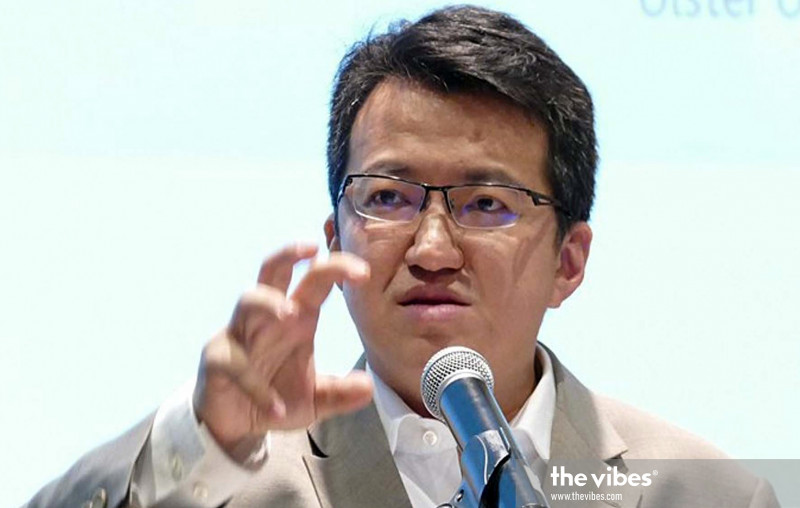
DEPUTY Finance Minister Liew Chin Tong has said that the two-week ceasefire in West Asia has provided temporary relief, but stressed that the conflict remains unresolved and continues to pose serious global economic risks.
In a statement today, Liew said the wider West Asia crisis, which escalated after attacks involving the United States and Israel against Iran on 28 February, has pushed the world into a period of instability comparable in scale to the COVID-19 pandemic.
For Malaysia, he said, the principle of “Build Back Better”, first adopted during the pandemic recovery phase, should now form the foundation of the country’s response strategy.
Liew outlined three key considerations for Malaysia in navigating the ongoing crisis, stressing that while the country currently enjoys relative economic strength, it must not become complacent.
He said Malaysia enters the period from a position of relative resilience, supported by its dual commodity base in oil and palm oil, a strong and complex manufacturing supply chain, and continued inflows of regional and global investment.
He also noted the ringgit’s relative strength against the US dollar and other currencies, adding that one international analyst had described Malaysia as “the only country whose central bank dares to forecast economic growth despite the war in Iran.”
Bank Negara Malaysia (BNM) has projected economic growth of between 4.0 and 4.5 per cent for 2026, based on first and second quarter 2025 data from the Treasury, released in October 2025.
For the third and fourth quarters of 2025, growth is expected to range between 4.0 and 5.0 per cent.
Liew said Prime Minister Datuk Seri Anwar Ibrahim’s management of fuel subsidies over the past two years had helped shield domestic consumption, a key driver of economic activity, from external shocks.
He warned that without such intervention; consumer demand would likely have weakened significantly during the crisis.
Instead of adopting conventional policy prescriptions such as full price liberalisation, Liew said the government introduced targeted fuel subsidies under the BUDI95 scheme.
As part of crisis preparedness measures, the monthly fuel quota was reduced from 300 litres to 200 litres, based on data showing that 90 per cent of Malaysians consume less than 200 litres per month.
However, he cautioned that Malaysia’s relative strength should not lead to complacency, stressing the need for strategic mobilisation of national resources to manage ongoing risks.
On the second point, he warned that the West Asia conflict is unlikely to end quickly and could have deeper and more prolonged economic consequences than initially expected.
He noted that around 80 per cent of global oil shipments and 90 per cent of gas passing through the Strait of Hormuz are destined for Asian markets, making the region highly exposed.
He said a swift resolution would simplify Malaysia’s challenges, limiting them mainly to broader global economic slowdown effects.
However, he added that there is no guarantee the conflict will end soon, despite hopes that the temporary ceasefire could evolve into a longer-term peace settlement.
On the third point, Liew said Malaysia must fully embrace a “Build Back Better” approach, urging policymakers to rethink the country’s energy structure, transport systems, renewable energy mix, supply chain resilience, and urban planning model.
He pointed to historical lessons from the 1973 oil crisis, referencing commentary by veteran economic journalist Azam Aris in The Edge Weekly, which credited Malaysia’s early response through the Petroleum Development Act 1974 and the establishment of Petronas as decisive crisis management measures.
Liew said Malaysia must now ask fundamental questions about its long-term energy and development model, including the balance between private and public transport, the expansion of renewable energy, and the redesign of cities to reduce reliance on private vehicles.
He stressed that Malaysia’s heavy dependence on private petrol-powered transport remains a structural vulnerability in times of global energy shocks.
To address this, he called for increased investment in public transport, particularly bus systems, alongside greater adoption of energy-efficient and electric vehicles across all transport categories.
He also proposed a national consensus to curb urban sprawl and promote compact urban living, including housing models where residents can rely entirely on high-quality public transport without owning private vehicles.
On diesel use across industries such as construction and fisheries, Liew warned that large price differentials between subsidised and market rates increase the risk of arbitrage, smuggling and illegal resale.
Instead of broad fuel subsidies, he suggested exploring alternative support mechanisms, including “non-fuel second best options” to assist affected industries.
In construction, for example, he said cost pressures linked to diesel should be assessed alongside other structural inefficiencies such as monopolistic practices in cement and concrete supply chains.
In sectors such as deep-sea fishing and agriculture, he proposed output-based support mechanisms, where assistance is tied to verifiable production rather than input subsidies.
He said businesses and government must now work together to clarify whether support is intended to protect profit margins, safeguard jobs, or ensure production of essential goods for domestic or export markets.
Liew added that Malaysia should use the crisis period to strengthen supply chain resilience, identify gaps in industrial capability, and encourage local or regional substitution for imported goods where feasible.
He said incentives and investment should be directed towards sectors capable of filling supply chain gaps during periods of disruption, while also building long-term industrial capacity.
He acknowledged that shortages in imported goods may occur, but said this also presents opportunities for domestic firms and ASEAN partners to develop alternative production capabilities.
Ultimately, he said Malaysia must promote electrification of industry and accelerate the transition towards renewable energy, stressing that the country should not react with alarm but instead remain united in implementing a “Build Back Better” strategy to safeguard long-term resilience. - April 13, 2026