AS Putrajaya searches for ways to contain ballooning subsidy expenditure while preserving fiscal space, economists and policymakers are increasingly debating who should genuinely be classified as wealthy under the proposed targeted subsidy mechanism.
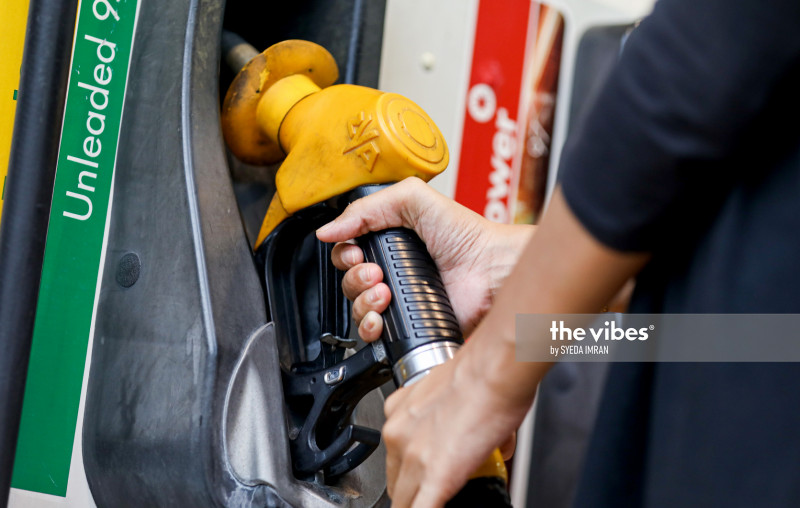
Fuel subsidy costs are now estimated to have surged to as much as RM5 billion a month, with total subsidy spending projected to approach RM60 billion this year — far exceeding the RM15 billion annual estimate outlined under Budget 2026.
Universiti Utara Malaysia, Institute of Economic and Financial Policy (ECOFI) Senior Associate Fellow Associate Professor Dr Irwan Shah Zainal Abidin suggested that the government’s proposal to exclude higher-income groups from receiving RON95 subsidies has been widely viewed as fiscally necessary amid volatile global oil markets and continued geopolitical tensions in West Asia.
However, growing concerns are emerging over whether Malaysia’s existing household income classifications accurately reflect real financial hardship faced by urban families.
The current framework categorises households into the B40, M40 and T20 groups based on income distribution, with the T20 segment generally regarded as the country’s highest-earning households and therefore the most likely to lose access to fuel subsidies.
According to the latest Department of Statistics Malaysia data, T20 households earn an average monthly income of RM12,556, while T15 households record around RM13,941 a month.
Critics of a blanket exclusion policy argue that such figures may appear comfortable on paper but often fail to account for modern urban financial realities.
Irwan told Berita Harian that a dual-income household made up of two teachers, for example, could already fall within the T15 category despite carrying substantial financial obligations including housing loans, vehicle repayments, insurance costs, university expenses for children and elderly parental care responsibilities.
“For many such households, expenditure patterns are centred on maintaining basic dignity and stability rather than luxury or excessive lifestyles.”
Analysts caution that once household income is broken down on a per capita basis or adjusted against disposable income after fixed commitments, many families classified as T15 could effectively resemble M40 or even B40 households in terms of actual spending power.
“The issue is compounded by stagnant wage growth relative to rapidly increasing living costs, resulting in a steady erosion of purchasing power despite nominal salary increases Irwan said, noting that while income classification systems are useful statistical tools for policymaking, they do not automatically define whether a household is genuinely rich or poor in practical terms.
Irwan argued that subsidy reforms should not be rushed and must consider broader multidimensional realities rather than relying solely on gross household income categories.
The academic also stressed that the T20 and T15 groups represent the country’s largest income tax contributors, accounting for roughly 80 per cent of Malaysia’s total income tax collection.
As the government moves closer towards implementing targeted fuel subsidies, pressure is mounting for authorities to refine the criteria carefully to avoid penalising financially stretched middle-income earners under labels that may no longer reflect actual economic conditions.
He added that social justice considerations must remain central to any subsidy rationalisation effort, particularly as households continue to grapple with inflationary pressures and economic uncertainty linked to the global crisis environment. - May 21, 2026