
ARTIFICIAL intelligence is no longer a distant technological possibility for Malaysians. It is increasingly becoming part of the workplace, businesses and public services — and its biggest impact may ultimately be felt not by technology companies, but by ordinary people.
For Malaysians, the AI revolution presents a straightforward but difficult question: will it make life better, or simply make businesses more productive while putting jobs and incomes under greater pressure?
Founder of 27 Group Girish Mavath Ramachandran opines the answer could be both.
AI can help a worker complete in an hour what once took several hours. It can help a small business prepare accounts, translate documents, respond to customers, create marketing material and analyse sales without hiring specialists for every task.
It can help a farmer monitor crops, a doctor process information, a manufacturer detect faults and a logistics operator optimise deliveries. For consumers, greater productivity could eventually mean better services, lower costs and more choice. For workers, however, the transition could be far more complicated.
Malaysia is already seeing the benefits. A 2026 EY survey found that 81% of Malaysian employees who actively use generative AI reported significant time savings. But 68% also said their workloads had increased.
That finding captures the central challenge for Malaysians. AI can save time without necessarily giving workers more time. If companies use the technology simply to expect employees to produce more, workers may become more productive without becoming better paid or having a better quality of life.
The real economic benefit comes when productivity gains translate into higher incomes, better jobs, lower prices, shorter working hours or new opportunities.
That is where Malaysia’s AI strategy will ultimately be judged.
More Productive Malaysians Could Mean A Stronger Economy
Malaysia needs to raise productivity if it is to achieve higher incomes and compete with advanced economies. AI offers a potentially powerful way to do that.
Instead of replacing every worker, businesses can use AI to remove repetitive tasks and allow employees to concentrate on work requiring judgement, creativity, communication and problem-solving.
A junior executive could spend less time formatting reports and more time analysing what the numbers mean. A salesperson could spend less time preparing paperwork and more time with customers. A small manufacturer could use AI to identify production problems before they become expensive breakdowns.
A farmer could use data and AI-assisted forecasting to make better decisions about planting, fertiliser and harvesting. This is particularly important for Malaysian SMEs, which often operate with limited staff and resources. AI could give a small Malaysian business capabilities that were previously available only to larger companies.
But there is a catch.
Malaysia's Economic Outlook has warned that AI adoption among companies remains uneven, particularly among SMEs, with barriers including limited expertise, uncertainty over returns on investment, financing constraints and gaps in digital infrastructure.
If only large companies can afford effective AI, productivity gains could widen the gap between large corporations and smaller Malaysian businesses.
That would eventually affect workers too.
What Happens To Malaysian Jobs?
The biggest fear surrounding AI is job losses. That concern should not be dismissed.
AI can already perform parts of many administrative, analytical and creative jobs. Routine document preparation, basic customer service, translation, data processing, research and content production are increasingly being automated or accelerated.
The danger for Malaysians is not necessarily that millions of jobs disappear overnight. It is that fewer people may be needed to perform the same amount of work.
That could weaken demand for certain roles and make competition for entry-level jobs more intense. There is another, less obvious problem.
Young Malaysians traditionally enter professions by performing basic tasks before gradually acquiring the experience needed for more senior positions.
If AI performs too much of that junior work, young workers may struggle to acquire the experience required to become tomorrow's managers, accountants, lawyers, engineers and business leaders.
Companies therefore need to redesign entry-level jobs rather than simply eliminate them. AI should allow young Malaysians to learn faster, not prevent them from learning at all.
But AI Could Create Better Jobs Too
The other side of the equation is new employment.
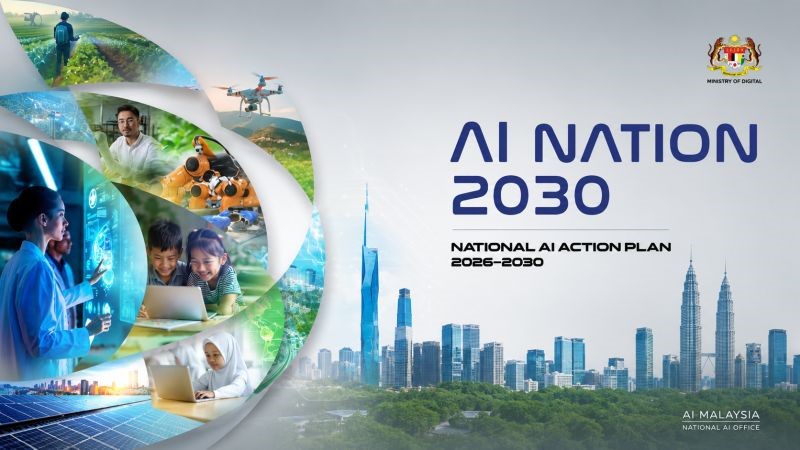
Malaysia's National AI Action Plan 2026-2030 targets between 300,000 and 500,000 new AI-related jobs by 2030, while seeking to generate an additional 0.8 to 1.2 percentage points of GDP growth annually through AI.
These opportunities will not all be for computer scientists.
Malaysia will need people who can implement AI in factories, plantations, hospitals, banks, farms, logistics companies, government agencies and SMEs.
It will need AI trainers, data specialists, cybersecurity professionals, system integrators, engineers, auditors and people who understand both technology and individual industries.
PwC's 2026 Global AI Jobs Barometer found that Malaysian job postings requiring AI skills had increased by 7.4%, while highlighting the growing value of human skills such as judgement, empathy and creativity.
That means the future Malaysian worker may not necessarily compete against AI. The worker may compete against another worker who knows how to use AI better. That makes access to training a national economic issue.
AI Could Help Malaysians Earn More
The most important benefit of AI should ultimately be reflected in household incomes.
If a Malaysian worker becomes substantially more productive because of AI, the economic value created should not flow entirely to shareholders and technology providers.
Workers need a pathway to share in that value through higher wages, better career progression and greater job security. Otherwise, Malaysia risks creating a productivity paradox: companies become more efficient while households see little improvement in their standard of living.
The World Bank has warned that AI can support productivity when accompanied by job redesign, skills upgrading and workforce adaptation, but that without these measures it could increase labour-market polarisation.
For Malaysians, this means reskilling cannot be treated as a slogan. Training must be practical, affordable and directly linked to jobs.
A factory worker needs to know how AI changes factory operations. A plantation worker needs technology relevant to plantations. A teacher needs tools that improve teaching. A small trader needs technology that helps increase sales or reduce costs.
AI education cannot simply mean teaching everyone how to use a chatbot.
SMEs could become major winners
Malaysia's small businesses could potentially benefit enormously from AI.
A small restaurant could use AI to analyse customer demand and reduce food waste. A small retailer could forecast inventory requirements. A contractor could automate quotations and documentation. A family-owned plantation could use digital tools to monitor operations. A small exporter could translate product information and communicate with overseas customers without maintaining a large administrative team.
These may seem like small changes individually. Across hundreds of thousands of Malaysian businesses, however, they could translate into significant productivity gains.
The challenge is ensuring that smaller companies have affordable access to technology, financing and expertise.
Malaysians Could Also Benefit From Better Public Services
AI's impact should not be limited to the private sector.
Government services could potentially become faster and easier to access.
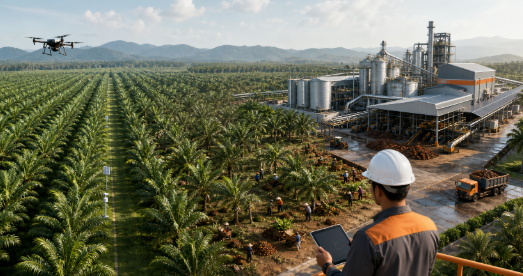
AI could help process applications, identify bottlenecks, improve public-service responses, analyse infrastructure problems and provide information in multiple languages. Healthcare could benefit from better administrative systems, earlier identification of risks and more efficient use of medical resources. Education could become more personalised, allowing students to receive additional explanations and learning support. Agriculture could benefit from better monitoring of crops, weather and disease.
Transport systems could use data to improve traffic management and public transport planning. These applications matter because productivity is not only about how much a company produces. It is also about how much time Malaysians spend dealing with bureaucracy, travelling, waiting and completing repetitive tasks.
If AI can reduce that burden, it can improve quality of life.
The Biggest Risk Is An AI Divide
The benefits, however, will not automatically reach everyone.
A professional in Kuala Lumpur with a good internet connection, modern equipment and an employer willing to pay for training has a very different ability to benefit from AI than a worker in a rural area or a small business operating with tight margins.
Malaysia's own Economic Outlook has identified uneven digital infrastructure, particularly in remote and rural areas, alongside gaps in AI skills and SME readiness.
This means AI could create a new divide. Those who can use it could become significantly more productive. Those who cannot could see their jobs become less valuable.
Bridging that gap must therefore be part of Malaysia's AI strategy.
Malaysians Should Own Part Of The AI Economy
There is another question that deserves greater attention: who owns the value created by AI?
If Malaysian businesses simply pay foreign companies for AI software, cloud services and platforms, much of the economic value could leave the country.
Malaysia therefore needs more domestic capability. That does not mean trying to build every technology from scratch. It means developing Malaysian expertise in AI implementation, data, cybersecurity, software, industry-specific applications and intellectual property. The opportunity is particularly significant in areas where Malaysia already has established industries.
AI could strengthen the country's semiconductor sector, manufacturing base, plantations, agriculture, logistics, financial services, healthcare and tourism.
The aim should be to make Malaysian companies more productive — and then help those companies compete internationally.
What This Means For The Average Malaysian
For an ordinary Malaysian, the AI transition could eventually mean several things.
It could mean doing more valuable work instead of repetitive tasks. It could mean access to new types of jobs and higher-paying careers.It could mean cheaper and faster business services. It could mean a small business competing with much larger companies. It could mean better healthcare, education and government services.
It could mean farmers and small businesses making better decisions with information that was previously expensive or difficult to obtain. But it could also mean some jobs disappearing, entry-level opportunities becoming harder to find and workers being expected to do more for the same pay. That is why the central issue is not whether Malaysia should embrace AI. It is how Malaysia distributes the benefits.
The National AI Action Plan already frames Malaysia's ambition around becoming a value-driven AI nation, with an emphasis on economic competitiveness, national capability and socioeconomic transformation. The next step is ensuring that ambition can be felt at household level. If AI raises productivity, Malaysians should see better wages. If it lowers business costs, consumers should eventually see better prices and services.
If it creates new industries, Malaysians should have the skills to fill the jobs. If it makes government more efficient, citizens should spend less time navigating bureaucracy. And if it replaces certain jobs, workers should have a realistic pathway into new ones.
That should be the measure of Malaysia's AI success. Not how many data centres are built. Not how many companies announce AI initiatives. Not how many chatbots are deployed.
But whether ordinary Malaysians become more productive, better paid, better served and better prepared for the economy of the future.
The real choice is whether Malaysia allows that change to happen to its people — or makes the technology work for them. - September 8, 2026