DID you know that if everyone in the world consumed as much as a Malaysian, Earth’s natural resources for this year would already have been used up by today?
This calculation, provided by international research organisation Global Footprint Network, shows that we are exhausting our resources at an alarming rate. It is only a matter of time till already-degraded ecosystems begin to collapse.
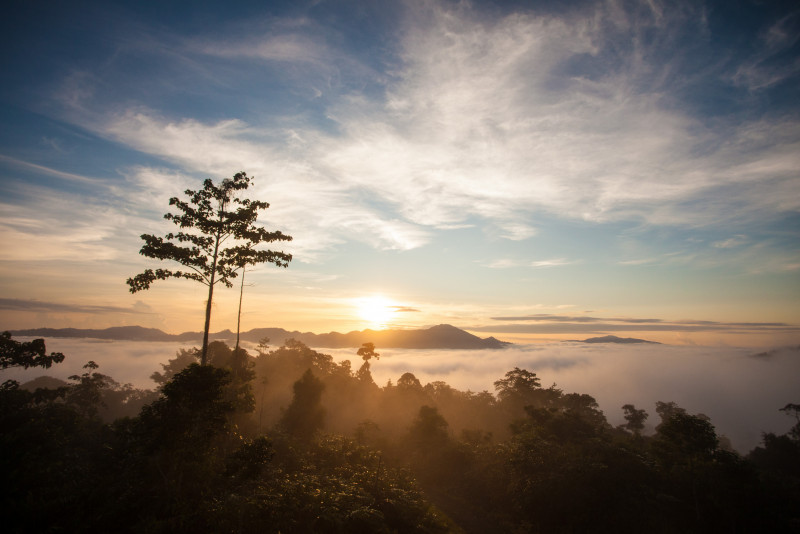
With this in mind, the pandemic has forced us to think deeply about the link between environmental and human health. We cannot have a healthy population if our planet is sick. The destruction of natural habitats brings people and wildlife into closer contact, and this subsequently increases the risk of disease outbreaks.
Time and again, the Covid-19 crisis has shown us that systemic changes must happen to address the environmental drivers of pandemics. Planetary health is the achievement of the highest attainable standard of health, well-being and equity worldwide through judicious attention to political, economic and social systems. It emphasises that to advance humanity’s well-being, the declining state of planet Earth can no longer be ignored. As the late conservationist John Muir aptly said: “When one tugs at a single thing in nature, one finds it attached to the rest of the world.”
Earth Overshoot Day marks the date when we – all of humanity – have used more from nature than our planet can renew in the entire year. This means that from that date until December 31, we are in debt to the planet. Many countries, including Malaysia, are unsustainably consuming natural resources beyond Earth’s capacity to replenish them. This is evident from Malaysia’s Overshoot Day, which falls today, less than halfway through the year.

Change starts with us individuals
Human overconsumption, overpollution, intensive farming practices and overfishing are among the reasons why nature is running out of resources, and we are being increasingly exposed to health risks. The resulting deforestation, rapid species extinction, soil erosion and climate change are, quite simply, wreaking slow but certain havoc on the planet. We must wake up, reduce our damaging ecological footprint, and live in such a way that we create positive change for a sustainable future. This starts with us – thinking, feeling and breathing individuals. Yes, we need to work with the larger community and the government to achieve sustainability, but change starts with you and me.
So, what can we, as individuals, do? Certification labels can guide us in making responsible choices, such as the Roundtable on Sustainable Palm Oil (RSPO) or Malaysian Sustainable Palm Oil (MSPO) logo for palm oil products, and the Forest Stewardship Council (FSC) logo for forestry products. Sadly, when we go to the supermarket, we hardly see any product labels that give us assurance of products produced in a sustainable manner.
So, let us demand information where it is not already provided. Producers need to inform consumers of what they are offering. For example, we should be a leader in labelling our palm oil products with certified sustainable palm oil logos. But we are not even close. The WWF Palm Oil Buyers’ Scorecard last year revealed that most brands around the world have fallen short when it comes to supporting sustainable palm oil. The results were dismal for Malaysia, with only one company scoring in the scorecard and others declining to participate.
For change to be implemented, we need to make noise. As consumers, we should demand more certified sustainable products on our supermarket shelves. We can petition supermarkets to have sustainability labels on their products through social media, and build an active community of consumers demanding that the products we consume support environmental protection. At the end of the day, our demand will spur producers and manufacturers to increase the sustainable production of these commodities. Certification, coupled with strong governance, is key to establishing sustainable palm oil and timber production.

Reduce carbon footprint
We must also learn to think carefully and choose responsibly before making a purchase, and make every effort to reduce our consumption of raw materials. Simple, everyday actions like recycling, reducing food waste, reducing meat consumption, using water prudently, walking to the local store rather than driving, and bringing our own shopping bags can reduce our carbon footprint and prevent us from being ecological bigfoots.
Government conservation initiatives can help reduce human-animal encounters by establishing wildlife corridors to reconnect fragmented forests and enable wildlife to roam freely. Companies should endeavour to produce sustainably, with clear and traceable supply chains, so that any breakdowns in a sustainable supply chain can be identified and rectified immediately. But, none of these things will happen without pressure from us, the people.
The science is clear – if we carry on as we are, at some point, society, as we know it, will collapse as ecosystems degrade to the point of no return, resources become increasingly scarce, and vulnerability increases. Changing our habits to live sustainably, and generate pressure for producers and those in authority to do the same are vital.
If we take only what we need rather than what society tells us we must have, we will give our younger generations a fighting chance for a better future. – The Vibes, May 30, 2021
Tan Sri Dr Jemilah Mahmood is special adviser to the prime minister on public health, and Sophia Lim is executive director/CEO of World Wide Fund for Nature-Malaysia (WWF-Malaysia)