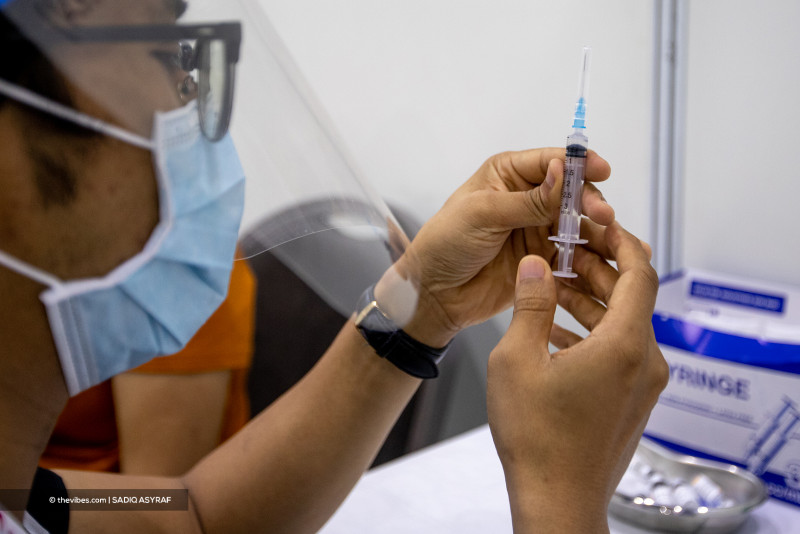

NEWS that the Penang government is set to work with humanitarian agencies to get migrant workers and refugees vaccinated against Covid-19 via the United Nations High Commissioner for Refugees (UNHCR) and Doctors Without Borders set my heart racing.
Fresh off the phone with an exco who gave me the update, I texted a contact, a woman aiding such families.
“How are the families doing? Are they open to getting vaccinated?” I asked.
“The migrant families are being very careful because they know they cannot get vaccinated.”
I tried explaining that vaccination is very much possible for them as it is the state government’s stance that everyone is immunised so as to attain herd immunity.
Despite making my case and giving assurances, my contact continued to express doubt, saying even if the state is keen, federal agencies like the Immigration Department could swoop in and deport such families at will.
I have to agree with her. After all, how would any refugee family be brave enough to get out of their squatter home to be vaccinated after learning news of such operations during the movement control order?
The recent raid in Cyberjaya, where hundreds of undocumented migrants were hauled up, surely induced fear in other refugees across the country.
A video of the operation, which has gone viral on social media, showed immigration personnel spraying sanitiser on the detainees, as if using pesticide on insects.
How demeaning can the authorities be? The ill treatment of immigrants and refugees in the country is another subject for another time, I suppose.
With Home Minister Datuk Seri Hamzah Zainudin openly declaring plans to carry out large-scale operations to detain illegals for vaccination purposes, I highly doubt that any refugee or migrant would want to volunteer for the jab. Who would be so naive as to walk right into a trap?
This begs the question: are those without MyKad less human than those with the document?
Is there scientific evidence that those without MyKad are resistant to the coronavirus, or will not infect people they come into contact with?
The truth is plain and simple. Refugees are human, and unsurprisingly, they are not virus-proof. And, they are potentially the close contacts of Malaysians – something we cannot afford to ignore at this critical juncture.
At present, there are 178,920 refugees registered with UNHCR and at least four million undocumented workers in Malaysia.
Let’s not be hypocrites. If we can rally the people to send financial and other aid to refugees in other countries, would it be so difficult to get those in Malaysia vaccinated without issue?
If the authorities sincerely believe that undocumented workers are a big problem, the clampdown on them could have started before the pandemic and continue after it is contained.
However, in the name of key performance indicators and to prove a point, the Immigration Department continues its raids during the health crisis, and despite our need for a foreign workforce.
One of the major reasons why immigrants and refugees are undocumented is the unscrupulous behaviour of agents and middlemen, who often get away scot-free – but not so the foreign workers.
Going back to the issue of getting them vaccinated, I believe there are two obvious ways for it to be done.
First, round them up, by hook or by crook, at selected detention centres for a mass inoculation exercise before they are most likely deported.
Hearing this, however, immigrants and refugees will likely run helter-skelter. So, skip it.
The other way is to work with humanitarian agencies – and use a single-dose vaccine.
I’m all for the second method, which uses fewer resources and has a lower chance of sending immigrants and refugees into hiding. It will also decrease the probability of Covid-19 clusters at detention centres.
If we fail to properly address this issue, only 10 infected immigrants or refugees are needed for us to have to start from scratch, again.
I hope the authorities, both at the federal and state levels, proactively engage with human rights groups to convince foreigners to get vaccinated, as is being done in Penang.
The Immigration Department should also have a three-month moratorium on hauling up these individuals, so that they can confidently turn up for vaccination.
In the end, to quote former South African president Nelson Mandela, “to deny people their human rights is to challenge their very humanity”. – The Vibes, June 29, 2021