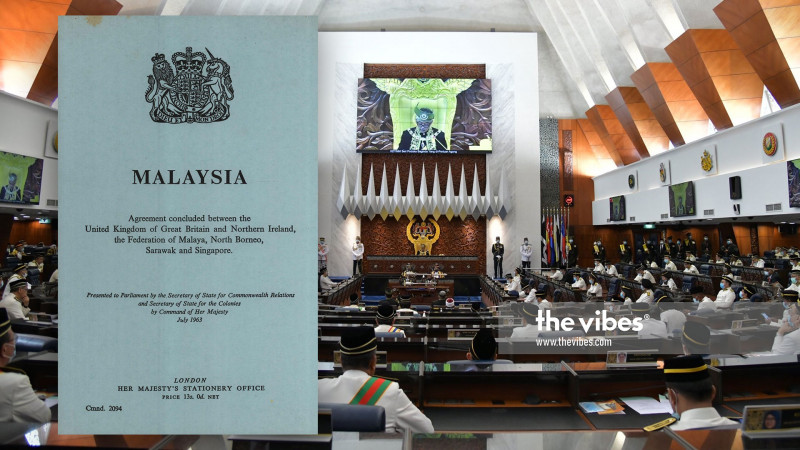
KOTA KINABALU – Some years back, discussions on the Malaysia Agreement 1963 (MA63), oil revenue and state rights never saw the light of day in the Sabah Legislative Assembly, not even once.
But all this has changed now with the Gabungan Rakyat Sabah local government and state opposition groups attuned to the long-standing call.
Chief Minister Datuk Seri Hajiji Mohd Noor himself affirmed that all elected reps in the state assembly want a speedy resolution to the matter.
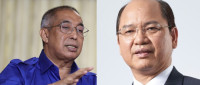
While speaking on the establishment of federal-state Commercial Solution Agreement (CSA) deliberations, Hajiji – in a visibly cool response to Sabah opposition leader Datuk Seri Mohd Shafie Apdal – said that the most important thing in hastening the realisation of state rights is for leaders in Sabah to stand united.
“I will take into account the suggestions of the Senallang assemblyman. I think they are very good for us in the negotiation with Petronas.
“I think all of us in this state assembly and the people of Sabah want a speedy resolution on the issues of the MA63 and matters linked to petroleum.
“God willing, if we are all together, we will be able to do this with a firm and clear stand from the state,” he said as he continued to read out his winding-up speech.
In laying out Sabah’s goals in CSA talks, Hajiji wants the state to have more deciding powers in oil and gas development, a bigger share of oil and gas revenue extracted from Sabah, and bigger participation in oil and gas production.
On the MA63, Hajiji said Sabah will stand firm on its territorial rights as stated in the North Borneo (Alteration of Boundaries) Order in Council 1954, which includes the continental shelf and other related matters.
The issue of state rights has come a long way before it could be discussed in the assembly like this.
The start of the Sabah fight can be traced back to the 1990s when Parti Bersatu Sabah was the state opposition, with the focus being largely on the 20-point agreement that formed the basis of the MA63.
The state rights struggle later evolved among political parties in Sabah, where many used the issues as political fodder to gain voters’ support.
It was also clear also at the time that this issue was immensely suppressed by the then Barisan Nasional government, with some calling it a secessionary move.
It was between 2008 and 2013 that the MA63, oil revenue rights, equal status of Sabah and Sarawak and such matters gained traction, thanks to Sabah Star led by Datuk Seri Jeffrey Kitingan who insistently raised the issues at the assembly.
At the end of Barisan Nasional’s reign in Sabah, the state rights issue became a topic oft discussed in the state assembly.
Then Sabah chief minister Tan Sri Musa Aman also had a change of heart when the first federal-state committee on the MA63 was formed. It was jointly chaired by Musa’s brother Datuk Seri Anifah Aman and an MP from Sarawak, Datuk Nancy Shukri.
Datuk Seri Najib Razak was prime minister then and the committee was largely focused on revenue rights.
Note that this was not the first time Sabah had called for such efforts.
In the 1970s, the late Tun Fuad Stephens, chief minister until his untimely death in a plane crash in June 1976, had also called for a review of the MA63, which was supposed to be reviewed every five years.
But the federal government had declined, and decided to provide a fixed annual state grant as opposed to a 60:40 division as agreed in the MA63 and federal constitution.
This marked one of the earliest violations of the MA63 deal by the federal government, aside from the constitutional amendment to downgrade Sabah and Sarawak as mere states in the Federation of Malaysia in 1976.
Still, the MA63 topic further evolved when Parti Warisan Sabah took power after the 2018 general election and, along with the then Pakatan Harapan (PH) federal government, formed a new committee to relook the MA63.
It was noted that 17 of 21 demands brought by Sabah to the PH federal government were approved.
But when the Perikatan Nasional (PN) government took over last year, it said the demands were only agreed to in principle but never implemented.
It was also clear that the PN government refused to make public the report of the previous government’s effort to realise the MA63.
Now, a new committee has again been established to look into the MA63 under the new “PN 2.0” federal government.
Sabah can only hope that this will be the last. – The Vibes, September 24, 2021
Jason Santos is The Vibes’ Sabah bureau head