WATER flows through all major global issues – from health to hunger, gender equity to jobs, education to industry, disasters to peace.
For that reason, it has to be made an integral part of all global meetings to make the world a better, safer and fairer place. Right now, this is not the case.
In the 2030 Agenda for Sustainable Development – the primary framework of the international effort to eradicate extreme poverty – the success of every one of the 17 Sustainable Development Goals (SDGs) depends on a well-functioning global water cycle.
At COP 27, the fact that water and climate change are inextricably linked was reflected in the event’s format, but even so, water is still not a standalone topic for regular review and reporting in the COP process.
As we fight climate change and strive to build a better world, water must be embedded in landmark global frameworks, including the Paris Agreement, 2030 Agenda, Sendai Framework for Disaster Risk Reduction, Committee on World Food Security and others.
Without that integration, we will fail to get a grip on the major crises that threaten life on Earth and the hope of a better tomorrow.
In the case of climate change, water must be at the heart of our plans to mitigate and adapt to the impacts of more extreme and erratic weather.
For instance, the protection, restoration and expansion of water-related ecosystems are essential for safeguarding biodiversity and capturing carbon from the atmosphere.
At the same time, water and sanitation systems – existing and new – must be designed to withstand an increasingly hostile context.
The writing is on the wall. In only 20 years, flood-related disasters have increased by 134%, and the number and duration of droughts by 29%.
Against this backdrop, around 2 billion people have no access to safe drinking water and 3.6 billion live without a safe toilet. Clearly, progress towards achieving SDG 6 – water and sanitation for all by 2030 – is seriously off track.
We have no choice but to act faster and smarter, across sectors, to solve the water crisis for the sake of every aspect of sustainable development.
Water-related climate mitigation and adaptation should be seen as a new “social contract” between ourselves and future generations.
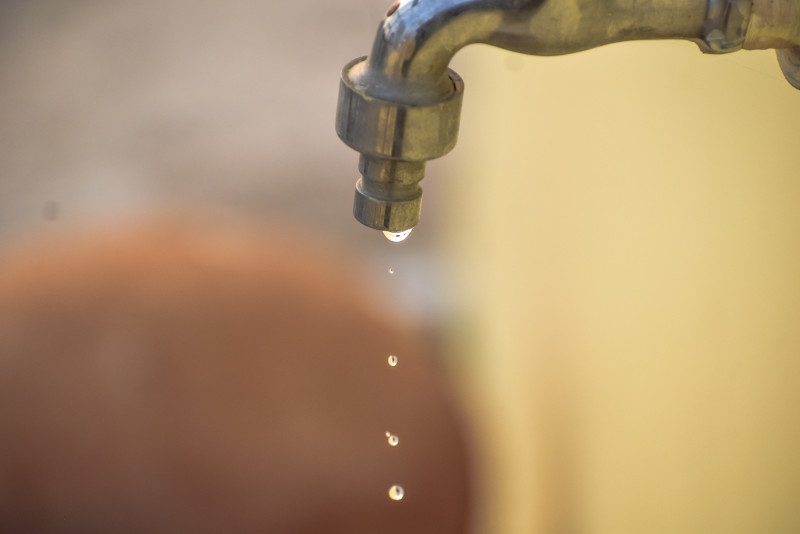
In our own lives, we can all be more aware of our water footprint and be less wasteful of water.
At the individual level, this will be a small price to pay to protect our great-grandchildren. However, the cost to the global system will be considerable yet essential.
Financial resources must be better targeted, and new funding mobilised, towards the infrastructure and systems needed to build and maintain water-related services across society and the economy.
There are encouraging signs. At the national level, more attention is already being paid to water as countries make national plans to adapt to climate change impacts and reduce emissions. I welcome this and encourage all countries to follow suit.
But this is too large an issue for nation-states to tackle individually. The multilateral system exists precisely for the purpose of orchestrating a response to complex global challenges just like this.
The Egyptian government, which hosted COP27, launched the Action for Water Adaptation and Resilience, designed to make integrated water and climate action standard practice in SDG-related actions.
This is a welcome signal that decision-makers are starting to recognise water for what it is: a medium of resilience, a problem-solver and a primary connector between all the major challenges we face.
The momentum from COP27 will carry us to next year’s United Nations 2023 Water Conference, the first of its kind since 1977. Co-hosts Tajikistan and the Netherlands are urging the world to unite around water to follow an approach that is “action-oriented,” “inclusive” and “cross-sectoral”.
We need to take the momentum built up at COP27 and convert it into a new Water Action Agenda.
It’s down to everyone to solve the water crisis. And that can only be done when water is on everyone’s agenda. – The Vibes, December 6, 2022
Gilbert F. Houngbo is United Nations Water chair and International Labour Organisation director-general