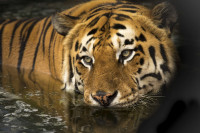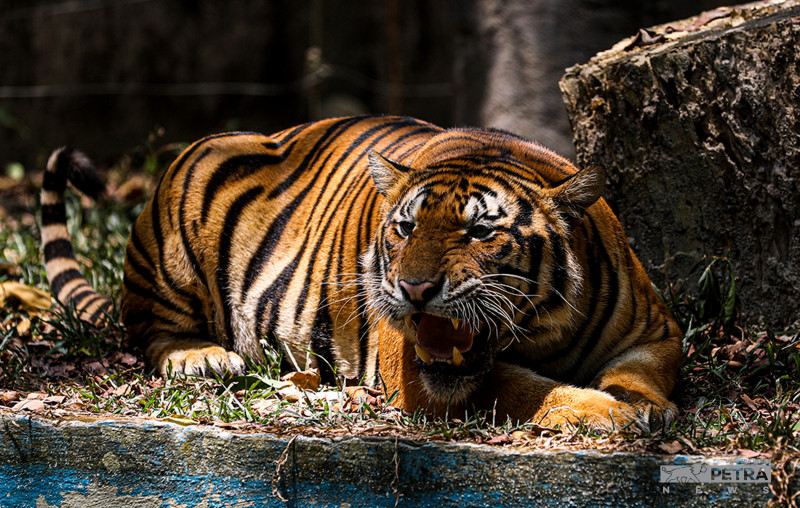
THE tiger is by nature a shy, elusive, and solitary creature, preferring to avoid human contact, but are its roars coming closer; or are we in its space?
The perceived battle between tigers and humans is a complex issue that arises due to the overlapping interests and needs of both species.
Historically, as human populations have expanded and encroached upon tiger habitats, conflicts have increased, some with less than ideal outcomes for both man and tiger.
In areas where human populations are adjacent to tiger habitats, people may occasionally hear the roars of tigers, particularly during mating season or when conflicts arise.
When tigers vocalise, their roars can carry for long distances, serving as a way to communicate with other tigers and establish territory boundaries. These roars are an impressive display of their strength and dominance.
The increasing audibility of tiger roars is a reminder of the need to protect their habitats and ensure their conservation.
But while the tiger is to be feared, it has to be given a chance to survive and thrive in its natural habitat. As an iconic and keystone species, the survival of tigers is crucial for maintaining ecosystem balance and biodiversity.
By focusing on tigers, and ensuring the forest they live in is protected to the highest standard, all the other species in the same forest benefit too.
It has become imperative to find ways to coexist with these magnificent creatures while minimising conflicts and ensuring their survival – and ours. Let us not miss the big picture.
In the Belum-Temengor forest complex, the tiger population saw a staggering 50% decline within a mere decade, from 2009 to 2018, with poaching being the biggest culprit.
While tigers hunt merely to survive as nature’s way intended, poachers hunt for personal gain, primarily driven by the illegal wildlife trade and monetary rewards.
We can definitely live without poachers, but the tiger, fearsome as it may be, is key to our survival. The tiger must stay.
Simply put, a tiger needs a huge amount of space, sufficient prey for food, and a healthy pool of mates. A healthy tiger habitat ensures a harmonious natural environment that can provide ample food sources and clean water for countless other species.
Unfortunately, human activities such as poaching, deforestation, land conversion, and infrastructure development continue to disrupt this delicate equilibrium.
How are we protecting the fewer than 150 Malayan tigers that remain in the entire peninsula if we are running out of space?
We can raise awareness and run campaigns year after year; the cows may come home, but will our tigers return to rule our forests?
Can we double our tiger numbers the way Nepal and India have? It took a nation to make that happen.
Closer to home, in March this year, Royal Belum State Park, after six long years, achieved Conservation Assured | Tiger Standards (CA|TS) accreditation. CA|TS is a set of criteria which allows tiger sites to check if their management will lead to successful tiger conservation.
It takes a holistic approach, focusing on key pillars such as tiger population assessment, habitat and prey management, and community engagement.
To date, we have seen the establishment of the National Tiger Conservation Task Force and the Wildlife Crime Bureau.
We have seen increased collaboration between government agencies, conservation bodies, and non-governmental organisations; we have school students rallying to protect the Malayan tiger.
Best of all, our camera traps have captured footage of a mother tiger with four cubs. To us, these are triumphs of the journey, but all the more reason why we need to do all we can as a nation to protect the next generation of tigers.
The roars are coming closer – what are the roars telling us? – The Vibes, June 2, 2023
WWF-Malaysia is part of the World Wide Fund for Nature (WWF), the international conservation organisation. Working to sustain the natural world for the benefit of people and wildlife, WWF-Malaysia’s efforts to conserve nature focus on six major goals – forests, oceans, wildlife, food, climate, and energy, as well as freshwater – and three key drivers of environmental problems – markets, finance, and governance