.jpg)
SINCE the coronavirus bewildered the world more than a year ago and upheaved the lives of many, efforts have been made to revitalise the gig economy to help those affected by the pandemic.
However, there is still a group of individuals whose cries remain unheard and who remain underrepresented in their journey to economic recovery.
What once were organisers who would have fought tooth and nail in the competitive world of the sports industry, have since banded together to form the Sports Industry Coalition.
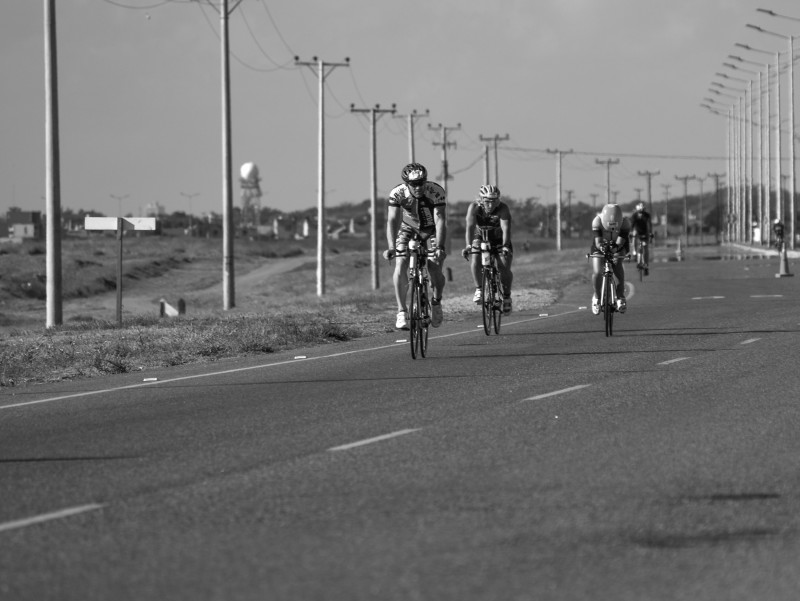
Despite having a huge presence with past events, such as the KL Standard Chartered Marathon, Ironman Malaysia, Spartan Race and more, their pleas for assistance during these trying times have been muffled.
The onset of strict regulations and Movement Control Orders (MCO) have left organisers of mass participation sports in the dark, unable to organise or stage any event in the near future.
Although this once-thriving industry had injected approximately RM544 million into the country’s economy in 2019, its contribution fell significantly to a mere RM19.5 million the following year, given the fact that only 558 events took place in 2020 compared to a whopping 2,627 the previous year.
The repercussions of such a drop proved detrimental when you take into account the drastic reduction of a workforce from 287,000 to just 21,085 in a single year.
Albeit these figures pertain to those directly affected by the postponement and cancellation of mass participation events, such as the organisers, the ripple effect is felt by everyone attached to the pre-and post-stages of events, which largely goes unseen by the public eye.
We are all familiar with the phrase, ‘misery loves company’, the same one shared by sports medicine consultant and National Sports Institute (ISN) part-timer, Datuk Ramlan, with regards to how athletes are brought together to live and train in isolation within the Bukit Jalil sports bubble.
Well, this exact sentiment was what a group of SMEs in the event industry felt in response to the pandemic.
A total of 77 companies in the Sports Industry Coalition, ranging from sports event organisers to equipment rental, F&B, medical and event product suppliers, have rallied together to amplify their voices in their time of need.
Despite the government’s efforts to help SMEs, most of these companies do not fit the criteria for financial aid.
This disparity is worlds’ apart from that of neighbouring countries, such as Singapore, where the government has set aside S$25m (RM77m) to help the sports industry recover from the pandemic with new grants for freelancers.
In a survey conducted amongst the 77 companies, the 43 that did respond clearly showed that 44.2% of these businesses had to lay off their staff as a result of the pandemic.
Essentially, an integral sector of the economy, one with multi-level impact and the capability to generate enormous returns, is still unable to move forward.
Even as night markets, conventions, and ‘live’ performances ─ which all have the potential to attract large crowds ─ have resumed operations, these sports organisers are not permitted to do the same.
In an effort to be more pragmatic and stage events on a smaller scale, this coalition has proposed possible Standard Operating Procedures (SOP), such as reducing the number of participants, staggering the starting lines for races and forgoing post-event carnivals to the Ministry of Youth and Sports (KBS) but to no avail.
Elsewhere in the world, successful marathons with thousands of participants have been held amidst the pandemic, the most recent being the Nagoya Women’s Marathon in Japan.
Playing host to 4,704 participants, this marathon had strict measures in place to ensure that the runners, as well as the on-site personnel, were kept safe; even after two weeks, no infections or suspected cases of Covid-19 have been reported.
Even with the plethora of events abroad and the continual conversations with KBS, mass participation events have yet to see the light of the day in Malaysia.
This coalition does not expect to open the floodgates to events with thousands of participants anytime soon, but they are hoping that the door to smaller-scaled ones, that can keep their businesses afloat, will be opened soon. ─ The Vibes, 9 April, 2021