DOHA − Qatar passed their first test with a successful hosting of the Arab Cup but bigger challenges lie ahead when 1.2 million fans and 32 international teams arrive for the World Cup one year from now.
Algerians rejoicing at yesterday’s 2-0 extra-time win over Tunisia in the final − exactly a year before the 2022 World Cup decider and with FIFA president Gianni Infantino in the stands − will have been accompanied by satisfaction from Qatari officials.
But now comes the hard work as Qatar prepares for the unique task of hosting a World Cup in and around a single city, Doha, with limited hotel accommodation and a transport network that is likely to come under strain.
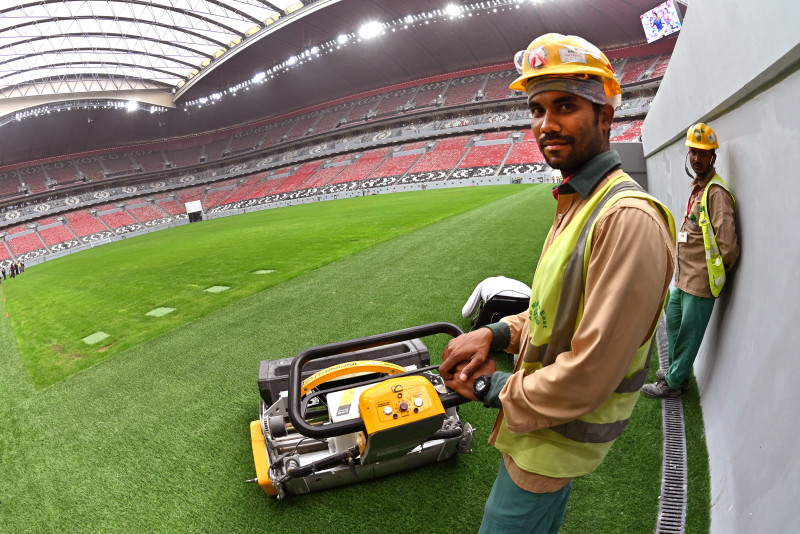
The wealthy Gulf state will also be bracing for intense scrutiny after coming under fire over the rights of the migrant labourers, who have built its infrastructure, including the World Cup stadiums.
And it will be mindful of a cultural gap when fans from around the world arrive in a conservative Muslim country with restricted access to alcohol and where public drunkenness and homosexual relations are illegal.
More than 600,000 tickets were sold for the 16-team Arab Cup, including a Qatari-record 63,439 crowd when the hosts played fierce rivals the United Arab Emirates in the quarterfinals.
Six of the eight World Cup venues were employed as Qatar took the chance to test its stadiums and training sites, transport, accommodation, volunteers and other areas, including security.
A fan ID system was dropped midway through the tournament following reports of long queues and complaints from fans but crowd trouble appeared limited to some damaged seats at the quarterfinal between Tunisia and Oman.
Qatar will “take account of the lessons learned to organise the best World Cup”, said Jassim Al-Jassim, the organising committee’s vice-president of operations.
The Lusail Stadium, which will host the World Cup final, was notably not used for the tournament. In October, its project manager told AFP that it still needed final checks and tests.
Coaches were impressed by the facilities − with Algeria’s Majid Bougherra, a World Cup veteran, saying “everything is perfect” − apart, perhaps, from the accommodation.
“The stadiums are great, the pitches are great. Perhaps, one small downside, but it won’t be the case at the World Cup, is that we were in the same hotel as everyone else,” he said.
“We congratulate (Qatar) on this beautiful Arab Cup and I think the World Cup will be exceptional,” Bougherra added.
Egypt coach Carlos Queiroz − the former Iran, Portugal and Real Madrid boss − said the Qatar World Cup has “all the ingredients to succeed” but called for better communications.
“If there is one advice I will give to everybody (is) we need to talk, because the better we talk, the better the harmony between the needs inside and outside (of) the pitch,” he said.
Daniel Reyche − a sport policy and politic researcher and visiting associate professor at Qatar’s Georgetown University − said he was impressed by the organisers’ ability to learn from their mistakes, for example, by dropping the fan ID.
“Overall, I think the test went well but it is difficult to compare the FIFA Arab Cup and the FIFA World Cup since most visitors, this time, came from within the country and next year, they will come from outside the country," he told AFP.
And after Qatar dismissed concerns from the LGBTQ+ community about attending the World Cup, FIFA secretary-general Fatma Samoura gave assurances next year’s tournament would be inclusive.
“People are free to display any kind of flag they want, including the rainbow flag, without them being targeted or singled out,” she said this week. – AFP, December 19, 2021