SAUDI Arabia issued security alerts over Mecca and other major cities on Tuesday as Yemen’s Iran-aligned Houthis intensified attacks on the kingdom, with the warning for the holy city marking the first such alert since the Middle East war began.
The alerts, which also covered Jeddah and Taif, were swiftly lifted after authorities said the danger had passed. Saudi authorities did not immediately say whether any incoming projectiles had landed or identify the nature of the threat.
Reuters reported on Wednesday that Saudi air defences later intercepted and destroyed a Houthi drone south of Mecca before it entered prohibited airspace over the holy city, according to a spokesman for the Saudi-led military coalition fighting the Houthis.
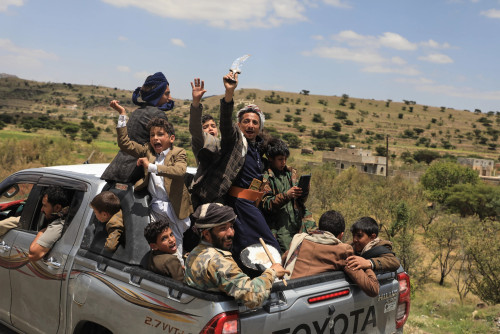
The warnings were the widest-ranging since the conflict escalated last week, as the Houthis have seized territory along Yemen’s western Red Sea coast and moved closer to the Bab el-Mandeb, one of the world's most important shipping straits.
The group has announced several attacks on Saudi targets over the past week, including a strike on an air base on Monday that it said was retaliation for Saudi-led airstrikes in Yemen.
A Saudi-led military coalition said 13 civilians were wounded in Houthi attacks on Saudi Arabia on Monday.
Saudi Arabia has also blamed a separate pro-Iranian movement based in Iraq for an attack last week that knocked out the kingdom’s East-West Pipeline, one of its most important oil transport routes.
U.S. Energy Secretary Chris Wright said on Tuesday that crude should begin flowing through the pipeline within days.
The Houthis' advance along the Red Sea coast has added a new threat to Saudi oil exports, which have been rerouted away from the Strait of Hormuz as shipping through the strategic waterway has been disrupted by the wider war.
Yemeni officials aligned with the Saudi-backed government said Saudi and Yemeni air forces had stepped up strikes against Houthi positions in response to the group's advances, including around the historic Red Sea port of Mocha, which the Houthis captured last week.
The officials said the Houthis now effectively control almost the entire western coast of Yemen along the Red Sea.
Saudi Arabia's 1,200-km (745-mile) East-West Pipeline links the kingdom's Gulf oil fields to the Red Sea and has become a crucial alternative export route while shipping through the Strait of Hormuz is disrupted.
Traders have said a prolonged closure of the pipeline could cut off as much as 4% of global oil supply.
Riyadh has not said when the pipeline will resume operations, but Wright said he expected the disruption to last “days” rather than weeks.
He said Saudi Arabia was taking steps to move more oil out of the Strait of Hormuz with assistance from the U.S. military.
The Houthis' growing presence near the Bab el-Mandeb could further threaten the alternative route, potentially tightening pressure on global energy supplies.
Brent crude futures rose above US$108 a barrel on Tuesday, while the average U.S. retail price of diesel reached a record high of nearly US$6.27 a gallon.
The United Nations Security Council discussed the worsening crisis around the Bab el-Mandeb on Tuesday.
U.S. Deputy Ambassador Jennifer Locetta told the council that the Houthi advances near the strait threatened global energy security and that the group's maritime attacks had already killed mariners and endangered international trade.
She urged the council to prevent Iran from sending weapons and financial assistance to the Houthis, which Washington says violates UN arms embargoes.
Saudi UN Ambassador Abdulaziz Alwasil said the Houthi militia is "militarizing international straits to blackmail the global economy."
The United States, which bombed the Houthis for two months last year, now faces a dilemma over whether to provide greater military support to Saudi Arabia, potentially drawing it deeper into another regional conflict.
Saudi Arabia has led a coalition fighting the Houthis since 2015. The conflict had largely quietened under a ceasefire in recent years, but fighting reignited this month as the Houthis pushed back forces aligned with Yemen’s internationally recognised government.
Saudi Crown Prince Mohammed bin Salman met Egyptian President Abdel Fattah al-Sisi in Cairo on Tuesday, with the two leaders stressing the need to ensure freedom and security of navigation in the Bab el-Mandeb and Red Sea, according to the Egyptian presidency.
The crown prince also met U.S. regional military commander Admiral Brad Cooper in Jeddah on Monday and spoke to President Donald Trump last week seeking military support, which so far has been limited to intelligence assistance. - September 16, 2026