THAILAND is stepping up a crackdown on foreigners accused of using nominee companies and other arrangements to control businesses and property illegally, as growing local resentment over foreign investment threatens to reshape the country’s lucrative tourism industry.
The campaign, which began on the southern resort island of Koh Phangan, has expanded to seven provinces and resulted in more than 110 arrests and dozens of search warrants, as the government moves to curb foreign ownership structures it says undermine Thai businesses and national economic security.
The island, home to fewer than 10,000 people but visited by more than one million overseas tourists a year, has become a symbol of the tensions.
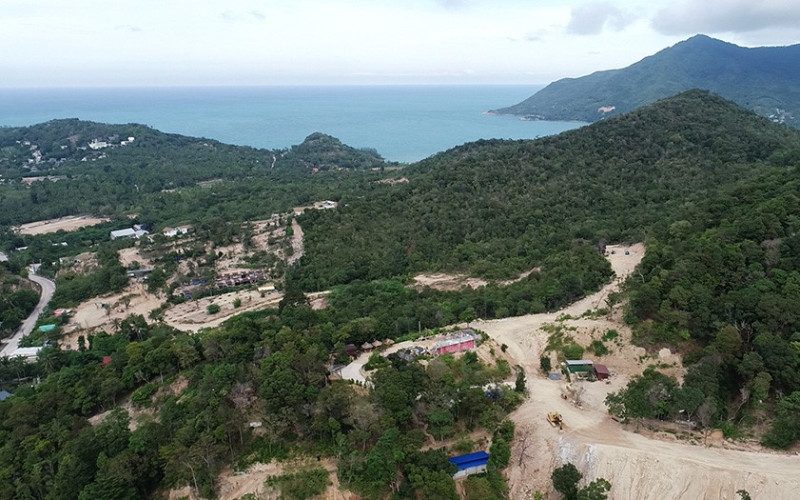
Bloomberg cited locals saying a surge in foreign-owned businesses, villas and property developments is transforming the island, with luxury projects spreading into hillsides once covered by greenery.
“All the projects we see up on the hillside belong to foreigners. There are so many new villas being built,” said Preecha Thongyad, a Koh Phangan-born real estate investor.
“It wasn’t like this before. In the past, when you looked at the hills, they were still green.”
Thailand has long promoted itself as a relatively accessible destination for foreign visitors and investors, with affordable tourism, generous visa arrangements and a large service economy built around its beaches and nightlife.
But protests under the slogan “Take Back Thailand” have emerged in recent months, reflecting concerns that foreigners are exploiting loopholes to remain in the country for extended periods and profit from businesses that are legally restricted to Thai ownership.
Prime Minister Anutin Charnvirakul has framed the issue as one of national and economic security, saying the government must address foreign control of businesses through Thai nominees.
“Ultimately, foreigners are the ones who control the companies. We need to fix this,” Anutin said in May after joining a police raid on villas on Koh Phangan linked to Israelis and suspected of having illegal ownership structures.
Foreigners are restricted from majority ownership of certain tourism-related businesses, including hotels and restaurants, unless they obtain permission or qualify for exemptions. They are also subject to restrictions on land ownership.
Authorities say a common illegal workaround involves Thai nationals being listed as majority shareholders despite not making genuine investments, allowing foreigners to exercise effective control over businesses or acquire land that is otherwise reserved for Thai ownership.
The scale of foreign involvement is particularly pronounced on Koh Phangan and neighbouring Koh Samui, where almost 70 per cent of about 16,800 registered companies have foreign co-ownership, according to Commerce Ministry data. That compares with about 12 per cent nationwide.
Authorities have identified more than 240 businesses on the two islands that allegedly exploited nominee structures involving nationals from Russia, Germany, Israel, Switzerland and France, with thousands more under investigation.
The government has also examined Thai professionals suspected of facilitating such arrangements, including about 140 accountants at 29 firms who appear as shareholders in more than 2,000 companies with foreign involvement.
The crackdown comes as Thailand’s dependence on international tourism makes the issue particularly sensitive. The sector employs about four million people and contributes up to one-fifth of gross domestic product.
Foreign investment has also helped fuel property markets in resort destinations such as Phuket, where Russians arrived in large numbers after Russia’s invasion of Ukraine in 2022, creating sizeable communities around affluent beach areas.
On Phuket, foreigners hold shares in about 35 per cent of some 32,000 registered companies, according to Thai government data, with Russians, Chinese and British nationals among the leading foreign groups.
Authorities are also concerned that nominee structures could be exploited by transnational criminal networks to launder money through Thai property.
In a 2024 case in Chonburi, police dismantled a Chinese-led scam network that allegedly converted some proceeds into cryptocurrency and used Thai nominees to acquire property. Authorities seized more than 152 million baht in assets and pursued money-laundering and illegal foreign-business charges.
The government has simultaneously tightened immigration rules, cutting visa-free stays for most nationalities from 60 to 30 days from September and making it harder for foreigners to use tourist entry arrangements for long-term stays or business activities.
The backlash has become particularly visible around the growing Israeli presence on Koh Phangan.
Israeli arrivals to Thailand rose 46 per cent in 2025 to more than 400,000, even as overall foreign arrivals fell 7 per cent, according to Tourism Ministry data.
On Koh Phangan, Israeli influence is increasingly visible through kosher restaurants, Hebrew-language services and memorials commemorating victims of the Oct 7, 2023 Hamas attacks and Israel’s subsequent war in Gaza.
Some locals accuse Israeli investors of establishing businesses aimed primarily at serving their own community rather than contributing to the wider local economy.
“They came to build villas and cater to their own people,” said Pattharachai Ruangsiri, a Koh Phangan restaurant owner. “I’m certain the money for the rooms doesn’t pass through here at all or circulate in the Thai economy.”
The opening of Chabad Houses, Orthodox Jewish community centres affiliated with the Chabad-Lubavitch movement, has also become a flashpoint. Thailand is investigating the expanding network, which includes seven centres, as well as other sites such as a Jewish cemetery.
However, analysts caution against viewing the backlash as being directed solely at Israelis.
“It isn’t just about Israelis,” said Jirayudh Sinthuphan, deputy director of the Institute of Asian Studies at Bangkok’s Chulalongkorn University.
“We’ve witnessed similar patterns with arrivals from China, Russia, and India. It’s been building up over time and has just come to a head now.”
He said the tensions reflected a broader trend across Asia, where younger populations are increasingly questioning what he described as a form of “neo-colonialism” involving foreigners moving to lower-cost countries to exploit local resources and economic opportunities.
Thailand’s authorities insist the crackdown is aimed at illegal activity rather than legitimate foreign investment.
“We encourage foreigners to invest in the country, but they must operate in full compliance with the law,” Deputy Interior Minister Polapee Suwunchwee said.
He has led raids on hotels in Phuket and other southern tourist destinations suspected of being illegally controlled by Russian and Chinese nationals.
“This is our land, we shouldn’t let foreign entities simply come in and run things. Thailand must remain Thai,” Polapee said.
The government has also tightened deportation rules, making it easier to remove foreigners deemed threats to public order or found to have broken Thai law.
Yet the challenge for Thailand is to balance those measures against an industry heavily dependent on foreign visitors and investment.
As the peak tourist season approaches, Koh Phangan and other southern resorts are preparing to welcome millions more visitors.
Naruemon Maisopa, president of the Koh Phangan Hotel and Tourism Association, said the island’s long-standing reputation for hospitality was being accompanied by greater scrutiny of foreign investors and visitors.
“Locals are now becoming more discerning about the kind of people and partners they welcome into their community, something they hadn’t really considered in the past,” she said. - October 5, 2026
.jpeg)