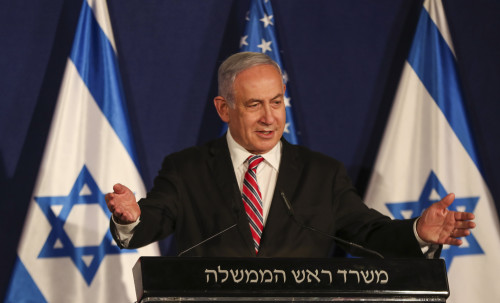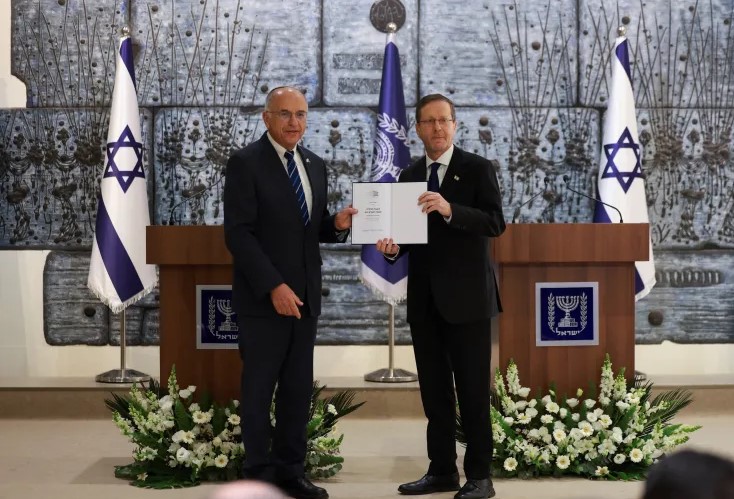
ISRAELI President Isaac Herzog has accepted last week's parliamentary election results as legally binding and begun consultations with political parties to form a new government, despite Prime Minister Benjamin Netanyahu's continued allegations of electoral fraud.
The move follows a declaration by Israel's elections commission that its investigation found no evidence of irregularities that compromised the integrity of the Oct 27 vote or affected its outcome.
Netanyahu and his allies have repeatedly alleged, without providing evidence, that Arab-led parties had stolen the election, potentially with foreign assistance, after their bloc lost its parliamentary majority in the 120-seat Knesset.
"The elections are over. Now is the time to face reality," AP reported Herzog saying on Wednesday.
The elections commission's chairman, Supreme Court Justice Noam Sohlberg, said claims of foreign interference remained suspicions and that even if substantiated, their potential impact on the results would be limited.
He warned that casting doubt on the election outcome could undermine public confidence in the electoral process, which was difficult to restore once damaged.
Meanwhile, the Shin Bet intelligence agency is conducting a separate investigation into allegations of foreign interference, following claims of substantial funding entering Israel from foreign states, including countries hostile towards it.
However, the agency has not provided evidence to substantiate the allegations.
Attorney-General Gali Baharav-Miara on Tuesday rejected the Shin Bet's request to interrogate several elected officials, including Ra'am party leader Mansour Abbas, saying there was insufficient evidence to justify questioning citizens or lawmakers.
The Joint List of Arab parties condemned the request, describing it as an attempt by Netanyahu and his allies to delegitimise the Arab vote.
Herzog said the investigation into possible foreign interference should continue but cautioned against targeting Arab Israeli voters with unsubstantiated allegations.
"I condemn the coarseness and racist expressions that we have heard recently," he said.
Herzog began consultations with political parties on Wednesday, with three factions aligned with Netanyahu's religious-nationalist bloc recommending that he be given the opportunity to form a government.
A fourth faction, led by a former Netanyahu ally who has since become a rival, recommended opposition leader Gadi Eisenkot.
Eight other parties, including two Arab-led factions, are scheduled to meet Herzog on Thursday as part of the coalition-building process.
Neither Netanyahu's bloc nor the alliance of parties backing Eisenkot secured the parliamentary majority needed to form a government, leaving open the possibility of a cross-party coalition involving their respective camps or an arrangement between Eisenkot and some Arab-led parties.
Herzog is expected to designate the candidate he believes has the best chance of forming a coalition after completing the consultations.
The selected candidate will then have several weeks to negotiate an agreement. If neither Netanyahu nor Eisenkot succeeds, Israel could face another election early next year. - November 5, 2026