US President Donald Trump has embarked on an Asian tour aimed at securing economic agreements and holding unprecedented trilateral nuclear disarmament talks with Chinese President Xi Jinping and Russian President Vladimir Putin, amid mounting domestic political pressure.
Trump said he would discuss Russia’s war in Ukraine with Xi and Putin during their anticipated meeting in Shenzhen, despite earlier indications from US officials that the conflict would not feature on the agenda.
“We’ll talk about, my favourite subject, Ukraine. Ukraine’s losing Ukraine,” Trump told reporters at the White House on Monday before departing for Asia.
“Russia is losing 25,000 soldiers in the month. So, we’ll be talking about that.” Reuters reported Trump saying today.
His remarks appeared to contradict an earlier administration briefing that the discussions would focus on nuclear disarmament and the war in Iran.
The proposed meeting has also raised concerns in Kyiv, with Ukrainian President Volodymyr Zelenskyy warning against any arrangement that could redraw global spheres of influence without Ukraine's participation.
“We really don’t want this to turn into ‘Yalta 2, 3, 4’ with a redistribution of influence,” Zelenskyy said last month, referring to the 1945 conference at which the United States, Britain and the Soviet Union agreed on post-war arrangements for Germany and Berlin and laid the groundwork for the United Nations.
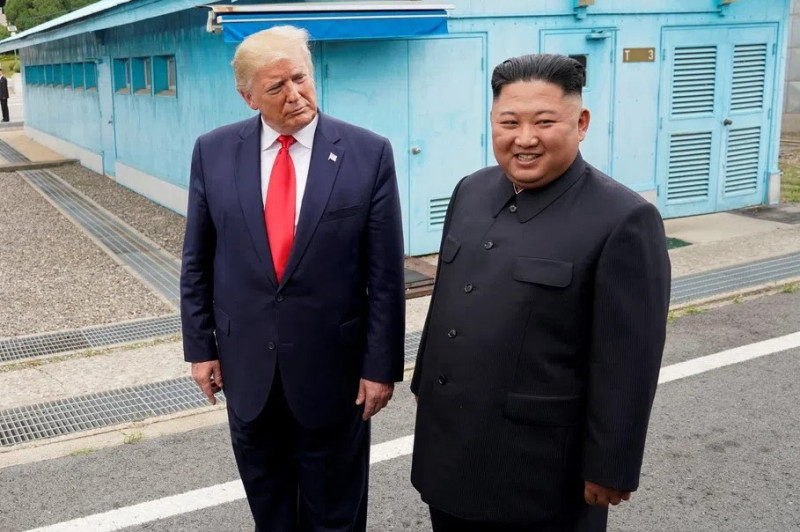
Trump also indicated that North Korean leader Kim Jong Un could meet him in China, although he said any such encounter would depend on Xi.
“That's up to President Xi,” Trump said, adding that Kim “may come” to Shenzhen.
Trump met Kim three times during his first term but has yet to secure substantive renewed engagement since returning to the White House. His administration has sought to lay the groundwork for further talks, including through an order in August to scale back joint military exercises with South Korea.
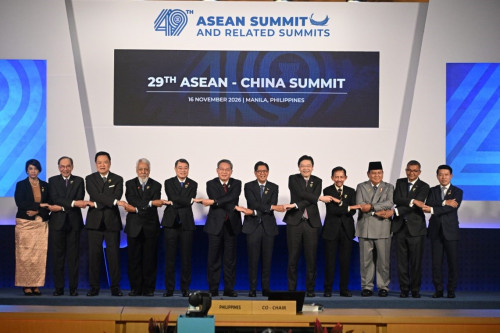
The tour begins in Manila, where Trump is scheduled to meet Southeast Asian leaders and sign a trade agreement with Thailand, before travelling to China for the Asia-Pacific Economic Cooperation (APEC) summit.
The proposed trilateral talks would mark the first meeting between the three leaders specifically to discuss their countries' nuclear arsenals. The ongoing US war with Iran is also expected to feature, given Tehran's ties with Beijing and Moscow.
Chinese Foreign Ministry spokeswoman Mao Ning described the proposed discussions as having “groundbreaking significance”, saying Beijing wanted in-depth exchanges on safeguarding world peace and promoting stability.
Kremlin foreign affairs adviser Yuri Ushakov also indicated that arrangements were under way for a separate bilateral meeting between Trump and Putin in Shenzhen.
The trip comes as Trump faces domestic political repercussions following his party's losses in the November midterm elections, which saw Democrats take control of both chambers of Congress.
His departure also follows several days during which he remained largely out of public view amid a nationwide ground stop that disrupted air travel and prompted questions over his administration's response.
Trump said Transportation Secretary Sean Duffy and Homeland Security Secretary Markwayne Mullin had kept him informed about the disruption, defending his decision to leave public briefings to Cabinet officials.
“I didn’t think there was any reason for me to do it,” he said, adding: “I thought they did a very good job.”
Meanwhile, scrutiny of the administration's handling of Nvidia and US export restrictions is expected to follow Trump to China.
The controversy centres on the company's dealings with Megaspeed, a Singapore-based cloud computing and artificial intelligence infrastructure provider, and its former chief executive Jensen Huang, who resigned last week after acknowledging an affair with an alleged Chinese government agent.
Beijing has denied involvement, while US officials said Trump did not intend to raise the matter with Xi.
Trump defended Huang, saying there was no evidence that the woman was a Chinese agent, and expressed a desire to see the executive reinstated as Nvidia's chief executive.
“Well I don’t know that she’s a spy at all. Nobody’s proven that. He probably shouldn’t have been doing on a personal basis what he did,” Trump said. “That’s a different story.”
The president also acknowledged differences within his administration over the timing of export restrictions on Nvidia chips supplied to Megaspeed, suggesting Commerce Secretary Howard Lutnick may have delayed action to avoid damaging relations with China.
Treasury Secretary Scott Bessent, meanwhile, said the matter warranted scrutiny of whether Nvidia had maintained adequate compliance standards concerning US export controls.
“I’ll leave the internal workings of the Commerce Department to the Commerce Department,” Bessent said in an interview broadcast on Sunday, while stressing the importance of examining the company's compliance practices.
Trump's delegation includes SpaceX and Tesla chief executive Elon Musk, who is expected to face investigations by the incoming Democratic-led Congress.
The journey also drew attention after Air Force One diverted from a scheduled refuelling stop in Anchorage to Fairbanks, Alaska, with the White House attributing the change to extreme weather conditions.
During the stop, an older presidential aircraft bearing the traditional light-blue paint scheme was seen alongside the Qatari-gifted aircraft being used by Trump. There was no indication that the president transferred between the two planes.
The diversion recalled a reported incident in Turkey in July, when Trump was said to have left the country aboard a catering truck after a NATO summit. The White House had initially given the impression that he was travelling aboard Air Force One, with the aircraft change reported publicly only later. - November 17, 2026