


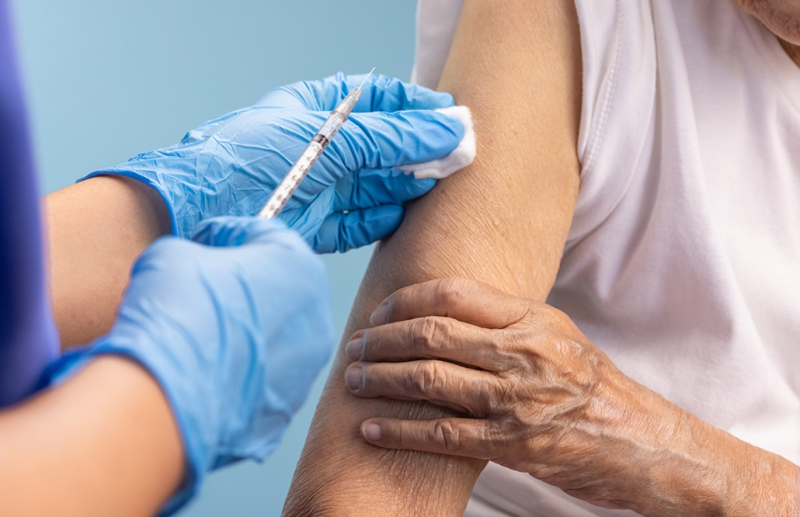
PARIS – Should a third dose of Covid-19 vaccine be recommended for the general population?
Some say it’s vital to boosting immunity as the Delta variant spreads, while others say precious vaccines should go to countries – mostly in the Global South – where most people haven’t even had their first jab.
France was among the first countries to start distributing third jabs to the elderly and people with compromised immune systems, among others.
Those eligible can get the shot six months after their second dose.
Countries who are offering the shots say the additional dose is justified because vaccines have reduced efficacy against the Delta variant that diminishes over time.
Other governments have gone even further or have plans to – children in Israel who are 12 and older can get a third dose five months after full vaccination.
The United States plans to launch a booster shot distribution campaign for all Americans with Pfizer and Moderna shots.
But the World Health Organization (WHO) has more than once expressed its opposition to such measures.
“We do not want to see widespread use of boosters for healthy people who are fully vaccinated,” WHO chief Tedros Adhanom Ghebreyesus told journalists on Wednesday.
Speaking from WHO’s headquarters in Geneva, he called on countries to avoid giving out extra Covid-19 jabs until the end of the year, pointing to the millions worldwide who have yet to receive a single dose.
“I will not stay silent when the companies and countries that control the global supply of vaccines think the world’s poor should be satisfied with leftovers,” he said.
What are the benefits?
There is scientific consensus that the third dose is recommended for immunocompromised patients, including people fighting cancer or those who have received an organ transplant.
Studies show that these patients’ immune systems do not produce a significant amount of antibodies when they receive the standard vaccine dosage.
While there is less data to back it up, the same principle applies to the elderly whose immune systems have been rendered less efficient by ageing.
What scientists are less convinced about is the usefulness of a booster shot for young people and people in good health. The data is just not there, say some.
“We aren’t sure the benefits are significant,” cardiologist Florian Zores said.
“We could do studies or think about target populations instead of offering the third dose to everyone,” he said, adding that tests could determine who might – or might not – need a booster.
“That might be a bit smarter in terms of science,” added the doctor, who is a member of French scientific integrity watchdog, On the Side of Science.
‘Boomerang effect’
The question of unequal vaccine access raised by WHO is not only an ethical issue but a practical one, say experts.
“I am not at all convinced that rich countries ought to be giving a third dose before a large proportion of people on the planet get their first two,” epidemiologist Antoine Flahault said.
By allowing the virus to spread throughout a large part of the world, rich countries expose themselves to a “particularly severe boomerang effect”.
“Foreign epidemics could generate new variants that could be even more contagious, virulent, and resistant to current vaccines,” he said.
Flahault, who heads up the Global Health Institute at the University of Geneva, says that Israel’s widespread use of the third dose will act as an experiment for the rest of the world.
“If the benefits of a third dose there are substantial, experts will be more likely to back the idea of giving it out,” he said.
“If the benefits are negligible then we have to ask ourselves what the best strategy is,” he continued.
Do we vaccinate the richest people on the planet, giving them a marginal benefit while leaving the poorest minimally protected?”
“Or first do we vaccinate the whole planet?” – AFP, September 10, 2021














