World

S. Korea to begin vaccinating children aged 5 to 11 in late March

1,200 clinics nationwide to participate, says interior minister

Updated 4 years ago · Published on 14 Mar 2022 11:00PM

S. Korea to begin vaccinating children aged 5 to 11 in late March
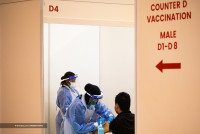
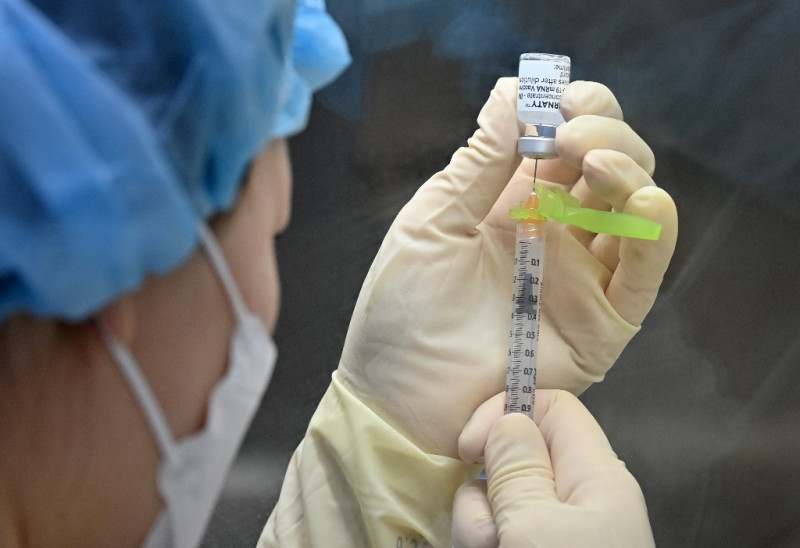
The South Korean government has approved the use of Pfizer Inc’s Covid-19 vaccine for the age group last month ahead of the reopening of schools for the new spring semester in early March. – AFP pic, March 14, 2022

SEOUL – The South Korean government will begin vaccinating children aged 5 to 11 against Covid-19 late this month, Interior Minister Jeon Hae-cheol said today.

The safety of Covid-19 vaccines for children has been sufficiently proven abroad while Covid-19 patients aged 11 or under have surpassed 15% of all cases in the country, Jeon said during a Covid-19 response meeting, Yonhap news agency reported.

He said vaccination for the age group will begin on March 31 at 1,200 clinics nationwide, with reservations available starting on March 24, the minister added.

The South Korean government approved the use of Pfizer Inc’s Covid-19 vaccine for the age group last month ahead of the reopening of schools for the new spring semester in early March.

On Monday, the government will also begin administering a third vaccine booster shot for teenagers aged 12 to 17 who completed their two-dose vaccination at least three months ago, Jeon said.

The Omicron wave is expected to enter its “peak period” this week, the minister said.

“The daily average of seriously ill Covid-19 patients reached 1,032 last week, jumping 35.7% from the previous week, but the hospital bed occupancy rate for them remained at around 66.8%,” he noted.

Jeon also said the government will retain the current antivirus management system for high-risk people while revising the testing and confirming systems according to reality.

Later in the day, the education ministry said high-risk children with underlying diseases in the age group would be “strongly” recommended to get vaccinated, but for the rest of the children in the age group, the decision would be left entirely up to individual choice.

A total of 3.07 million children will be entitled to get vaccinated in the plan, it also said. – Bernama, March 14, 2022

Related News

Malaysia / 8mth

Perlis Mufti reveals existence of deviant movement from South Korea

Malaysia / 2y

Current health ailments not related to AstraZeneca vaccine, says Noor Hisham

Malaysia / 2y

Govt aware of AstraZeneca vaccine side effects when it was deployed, says Noor Hisham

World / 2y

AstraZeneca Covid-19 vaccine to be withdrawn globally

World / 2y

AstraZeneca admits Covishield can cause blood clots, low platelet count

Sports & Fitness / 2y

Revive inter-state league to spot new talents, says former team manager

Spotlight

Malaysia

Elderly man admits to hitting neighbour with iron rod

Malaysia

Body found at KLIA2 in tyre storage compartment of aircraft from Japan

Malaysia

Factory operator faces rape, unnatural sex charges involving polytechnic student

Malaysia

Ismail Sabri granted RM300k bail after pleading not guilty to asset declaration charge

By Alfian Z.M. Tahir

Malaysia

Sunway Lagoon ride halted as safety probe seeks to protect public - DOSH

Malaysia

Malaysia ready to deploy military expertise for Nepal flood relief, says Defence Minister

Malaysia

Violence in Thailand: Visitors drop by almost 50 per cent

By Ian McIntyre

You may be interested

World

US and Canada pledge emergency aid as Nepal flood death toll reaches 160

World

Ukrainian Commander braves Russian kill zone to rescue wounded soldiers

World

Iran sets conditions for reopening Strait of Hormuz, including end to regional war

World

US to deploy new aircraft carrier to Middle East as Iran conflict drags on

World

Six months into Iran war, Trump’s war goals remain elusive as conflict drags on

World

US to press G20 allies to cut remaining economic ties with Iran

World

Glacier collapse triggers catastrophic floods along Nepal-Tibet border, leaving 1,300 missing

World

More than half of world’s land poorly managed, threatening food security and biodiversity