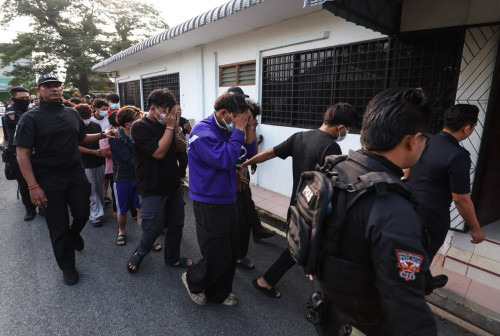
SHANGHAI – In the middle of the night, Shanghai resident Lucy said she and her neighbours were forced into buses and taken hundreds of kilometres away from the locked-down Chinese metropolis to a makeshift quarantine centre.
Most of Shanghai’s 25 million residents have been confined to their homes for weeks as the city battles a major Covid-19 outbreak. Hundreds of thousands of virus-positive people have been taken to makeshift facilities as China does not allow them to quarantine at home.
But some residents who tested negative told reporters that they were also forced out of their homes and taken to camps outside the city, some hundreds of kilometres away.
“The police told us that there were too many positive cases in our compound and if we carried on living here, we’d all become infected,” Lucy told reporters, using only her first name for privacy reasons.
“We had no choice.”
She said the virus-negative group were sent to a quarantine site containing hundreds of single-room prefab cabins in neighbouring Anhui province, 400km away, and that it was not initially clear where they were going.
Lucy added that she does not know when she can go home.
Reporters spoke with other Shanghai residents who said healthy, virus-negative people in some housing compounds were sent to other provinces for quarantine.
One said his neighbours had protested and refused to join.
Another from the city’s Jing’an district said she was taken, along with dozens of people from her residential compound, to a single-room quarantine centre in Anhui late one night.
“We all received calls from the neighbourhood committee saying that since there are too many positives in our compound, the negatives need to be transferred to hotels for isolation,” that resident said, preferring to stay anonymous.
She said they “felt terrified” on seeing the temporary accommodation, and had “lost trust in the Shanghai government.”
Extreme measures
Shanghai today is under a patchwork of different restrictions as new virus cases dropped to around 7,000, with 32 dead.
City authorities have imposed a three-tiered system of “freedoms”, although stringent local enforcement appeared to still restrict the majority of residents to within compounds or neighbourhoods.
China’s relentless pursuit of a zero-Covid-19 policy has left many Shanghai residents chafing under the tight curbs.
The Shanghai government did not immediately respond to a request for comment.
Officials in the economic hub are likely under more pressure than elsewhere to achieve “zero-Covid-19 at the community level” – meaning no transmission outside quarantine centres – according to Yanzhong Huang, senior fellow at the New York-based Council on Foreign Relations.
“When they face strong pressure from above to achieve zero-Covid-19 targets, these heavy-handed, excessive measures become more likely.”
“Moving negative people could be considered a pre-emptive strategy, with the expectation that more positive cases may be found if they stay there,” Huang added.
Chinese officials are routinely sacked after virus outbreaks for perceived failures in Covid-19 control.
Tens of thousands of close contacts of virus cases have been quarantined in neighbouring provinces, according to official news agency Xinhua.
But there has been no mention in official media of the relocation of negative cases.
Shanghai authorities have faced wide criticism after they initially announced phased four-day lockdowns in different parts of the city that were not then lifted.
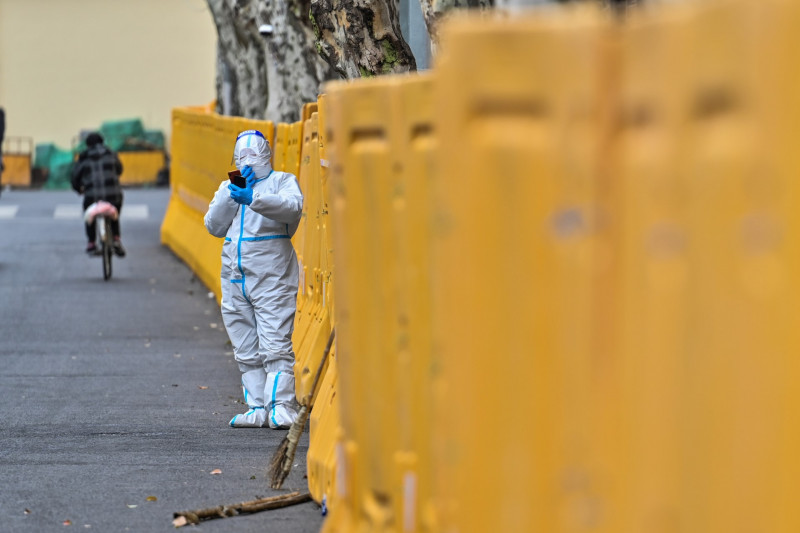
Tall metal barriers were erected around some locked-down compounds in recent days, as part of measures described as a “hard lockdown”. – AFP, May 2, 2022









.jpeg)